Clear Sky Science · en
NPM3 functions as a lactyltransferase to promote necroptosis in male diabetic cardiomyopathy mice models via FASN transcription modulation
Why this heart study matters
People with diabetes often develop heart problems even when their blood pressure and coronary arteries look normal. This condition, called diabetic cardiomyopathy, quietly stiffens the heart and can lead to heart failure. The study summarized here uncovers a hidden molecular chain reaction inside heart cells that links high blood sugar to a particularly destructive form of cell death—and points to an existing drug ingredient that might help interrupt this process.
From high blood sugar to a struggling heart
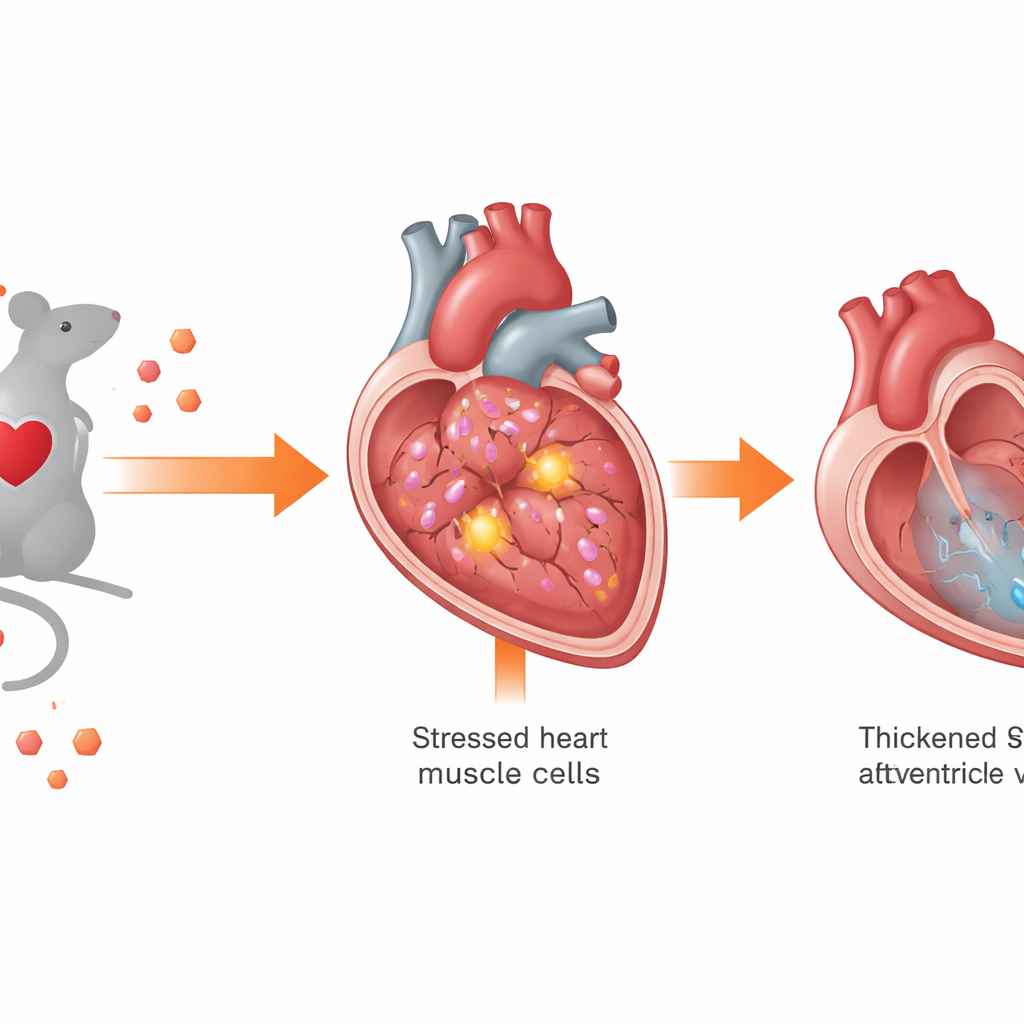
In diabetes, excess sugar in the blood reshapes how heart muscle cells handle energy. Instead of burning fuel efficiently, these cells produce more lactate, a small molecule best known from intense exercise. The researchers worked with mice fed a high-sugar, high-fat diet and treated to mimic type 2 diabetes, as well as with human heart cells grown in high glucose. In these models, they saw not only structural damage and scarring in heart tissue but also a clear rise in lactate and the enzyme that makes it. The animals showed classic features of diabetic cardiomyopathy: thickened heart walls, stiff chambers, and impaired filling of the left ventricle, while pumping strength remained mostly preserved.
Lactate’s unexpected role as a gene switch
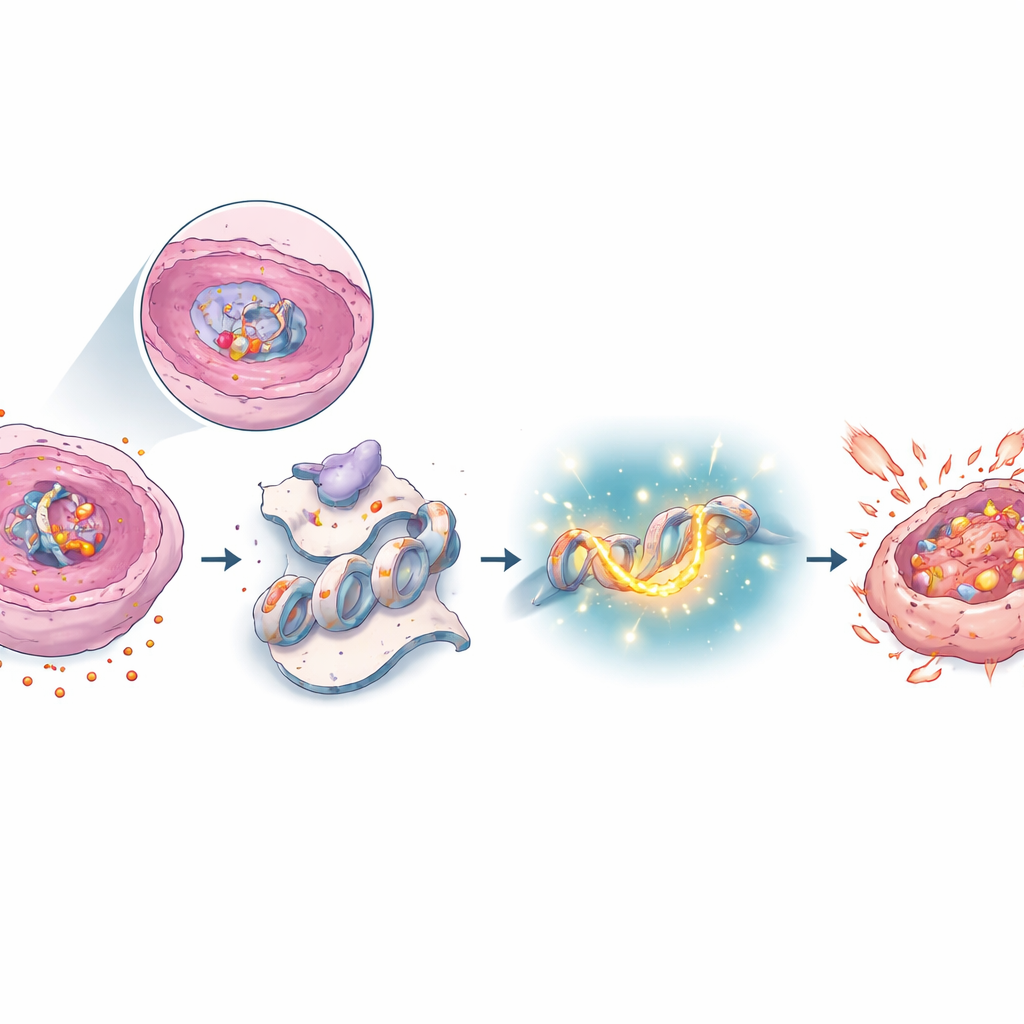
Beyond being a simple metabolite, lactate turned out to act like a molecular switch on the cell’s genetic material. Inside the nucleus, DNA is wrapped around proteins called histones, which carry chemical tags that control which genes are turned on. The team focused on a newly recognized tag called lactylation, in which lactate is attached to specific positions on histone H3. In diabetic hearts and in patient samples with diabetes, two such marks—on positions known as K18 and K27—were strongly increased. When the scientists blocked lactate production, or genetically prevented these particular marks from forming, heart damage, tissue scarring, and markers of cell injury all decreased in both cells and mice.
A destructive chain reaction ending in cell rupture
Digging deeper, the researchers discovered that these lactate-based tags boost the activity of a fat-making enzyme called fatty acid synthase. Extra activity of this enzyme drove up harmful reactive molecules inside heart cells and fueled a form of regulated cell rupture called necroptosis. Unlike tidy, silent cell death, necroptosis bursts cells open and inflames surrounding tissue, worsening heart injury. In diabetic mice lacking a key necroptosis protein, heart structure and filling function were much better preserved, even though lactate levels remained high. This showed that necroptosis is a crucial final step in the damage pathway rather than a side effect of altered metabolism.
A new enzyme at the heart of the problem
A central advance of this work is the identification of NPM3, a nuclear protein, as a previously unrecognized "writer" of lactate marks on histones. Using structural analysis, protein–protein binding tests, and purified components in a test tube, the team showed that NPM3 can bind both lactate and histone H3 and then directly attach lactate to the K18 and K27 positions. When NPM3 was overproduced, the two histone marks rose, the fat-making enzyme gene became more active, and necroptosis increased. When NPM3 was removed in mice, these marks and their downstream effects dropped, and diabetic hearts showed less injury, less scarring, and improved relaxation. Intriguingly, lactate-driven histone changes also boosted NPM3’s own gene activity, creating a self-amplifying loop that sensitizes heart cells to sustained high sugar.
Turning an antimalarial into a heart protector
Armed with a clear molecular target, the researchers searched a library of approved drugs for compounds that might block NPM3. They found that dihydroartemisinin, a derivative of a widely used antimalarial medicine, can occupy the same binding pocket on NPM3 that normally holds lactate. In biochemical tests, this drug outcompeted lactate and prevented NPM3 from adding lactate marks to histones. When given to diabetic mice, the compound reduced NPM3 levels, lowered the harmful histone marks and fatty acid synthase expression, decreased necroptosis, and eased heart stiffness and thickening—all without impairing the heart’s pumping ability.
What this means for people with diabetes
To a non-specialist, the core message is that the study reveals how a byproduct of sugar metabolism, lactate, can reprogram heart-cell genes in a way that drives a particularly damaging form of cell death and scarring. The protein NPM3 sits at the center of this process by placing lactate marks on histones that turn on a fat-building enzyme and ignite necroptosis. By blocking NPM3’s activity—potentially with a drug already known from malaria treatment—it may be possible one day to protect the diabetic heart from stiffening and failure. While this work is still at the animal and cell stage, it charts a detailed path from high blood sugar to heart damage and offers a concrete new target for future therapies.
Citation: Xu, H., Jiang, X., Wang, F. et al. NPM3 functions as a lactyltransferase to promote necroptosis in male diabetic cardiomyopathy mice models via FASN transcription modulation. Nat Commun 17, 3685 (2026). https://doi.org/10.1038/s41467-026-70513-0
Keywords: diabetic cardiomyopathy, necroptosis, histone lactylation, NPM3, dihydroartemisinin