Clear Sky Science · en
TrialMatchAI: an end-to-end AI-powered clinical trial recommendation system to streamline patient-to-trial matching
Why matching patients to trials matters
For many people with serious illnesses, especially cancer, clinical trials can offer access to new treatments when standard options have run out. Yet finding the right trial for the right patient is surprisingly hard and time consuming. This article describes TrialMatchAI, an artificial intelligence system designed to help doctors quickly spot which trials best fit a patient, while keeping data private and decisions understandable.
A digital guide through a maze of trials
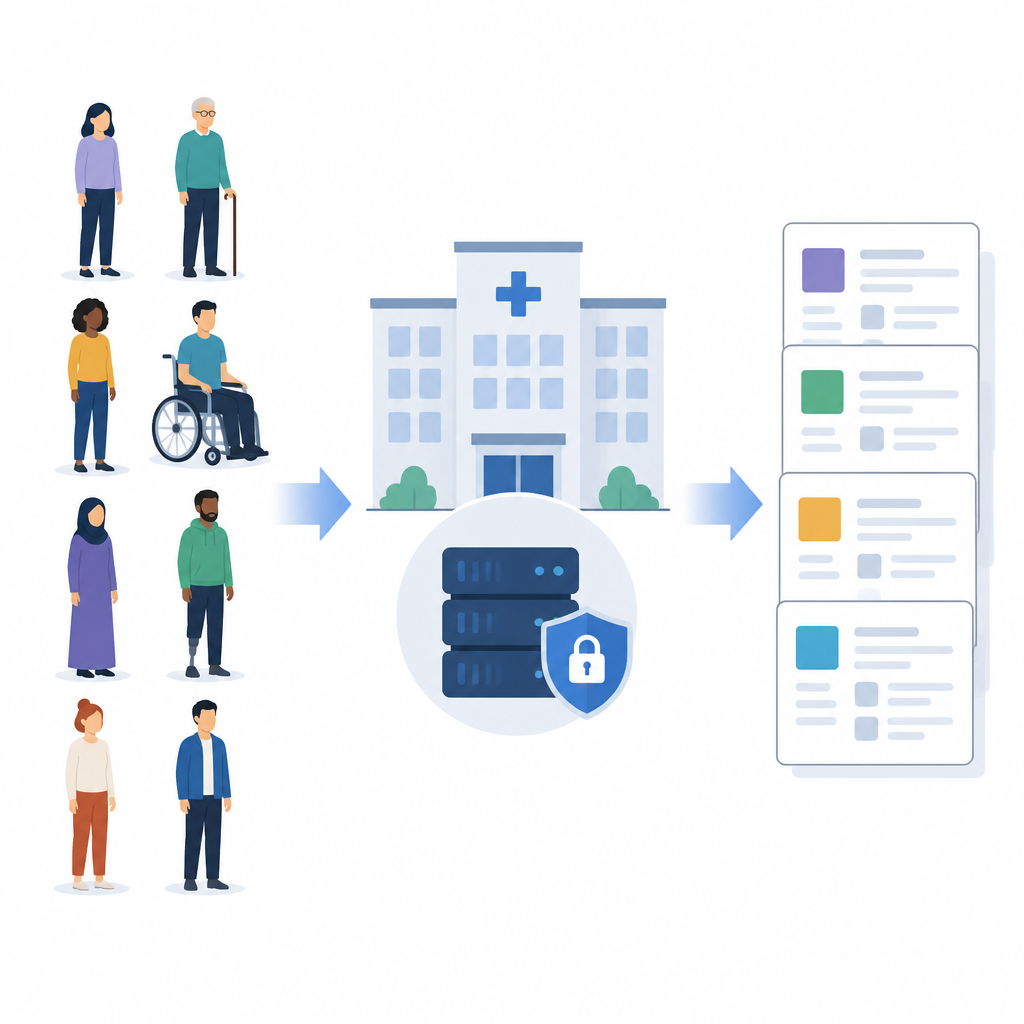
Every clinical trial comes with pages of rules that say who can join and who cannot. At the same time, each patient has a rich medical story spread across lab results, genetic tests, scan reports, and doctors’ notes. Traditionally, staff must read both sides by hand and decide whether there is a match, a process that can take hours per patient and easily miss chances. TrialMatchAI tackles this by reading both the patient records and the trial documents, then producing a short, ranked list of trials that appear suitable for a given person.
How the AI reads medical records and trials
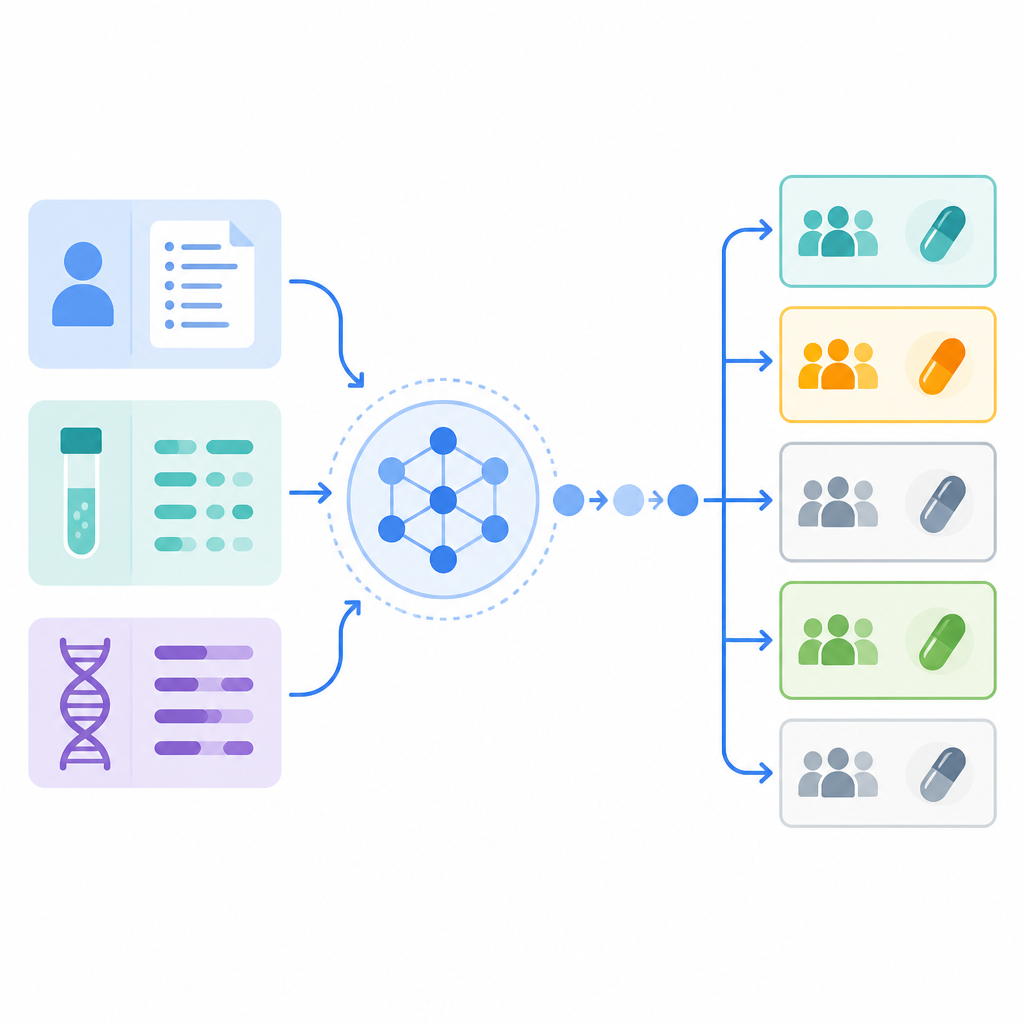
TrialMatchAI works step by step. First, it takes in patient information, including basic details, medical history, lab measurements, and molecular tests, using a standard data format that hospitals can export. It also digests trial descriptions from public registries, breaking long eligibility sections into individual rules. With help from specialized language models trained on medical text, the system identifies key items such as diseases, drugs, genes, and mutations and maps them to shared medical dictionaries. This makes it easier to compare what is written in different ways across hospitals and trial registries.
Finding and ranking promising options
Once the information is structured, TrialMatchAI searches a large pool of trials using two approaches at once: a classic keyword search and a similarity search that looks at overall meaning. This combination pulls out a few hundred potentially relevant trials from tens of thousands. A second language model then re-examines each trial rule by rule, asking how well each condition fits the patient. Finally, a reasoning model goes through the fine print of the rules, marking them as met, not met, unclear, or not relevant, and explains why. These scores are combined into a single number per trial, which is used to sort the final recommendation list.
How well the system performs in tests
The researchers tested TrialMatchAI on several fronts. Using synthetic patient cases from two well known public challenges, the system retrieved more than 90 percent of relevant trials while examining only about 3 percent of the full trial set, and it tended to place the best trials near the top of the list. In a custom set of one hundred “ideal” patients, whose details were crafted to perfectly match specific cancer trials, the correct trial landed in the top two suggestions for 95 percent of patients. In a real-world test with 52 people with metastatic cancer from a Dutch hospital, 92 percent had at least one appropriate biomarker-driven trial among the top 20 recommendations. Experts who checked over a thousand individual trial rules found that the AI’s rule-by-rule decisions were accurate in more than 90 percent of cases.
Why openness, privacy, and limits matter
Unlike many AI tools that rely on closed, commercial language models, TrialMatchAI uses open-source models that can run entirely inside a hospital network. This design helps with privacy laws and lets researchers inspect, update, or replace individual parts of the system as new methods appear. The authors note that the tool is meant to support, not replace, medical judgment, and that it can still make rare mistakes or offer explanations that do not fully match the data. They outline future steps such as better checks for errors, ways to speed up the models, and extensions that could help find patients for specific trials.
What this means for patients and doctors
In plain terms, the study shows that an AI assistant can reliably sift through huge numbers of clinical trials and patient details to highlight the most promising options, especially in cancer care. TrialMatchAI does this while keeping data local, offering clear rule-by-rule justifications, and using models that the research community can openly study and refine. If adopted and validated further in everyday practice, such systems could shorten the path from diagnosis to trial enrollment, giving more patients timely access to studies that fit their medical and molecular profiles.
Citation: Abdallah, M., Nakken, S., Georges, M. et al. TrialMatchAI: an end-to-end AI-powered clinical trial recommendation system to streamline patient-to-trial matching. Nat Commun 17, 4472 (2026). https://doi.org/10.1038/s41467-026-70509-w
Keywords: clinical trial matching, precision oncology, large language models, patient recruitment, medical AI