Clear Sky Science · en
Deadly heat stress conditions are already occurring for submission to Nature Communications
Why dangerous heat matters now
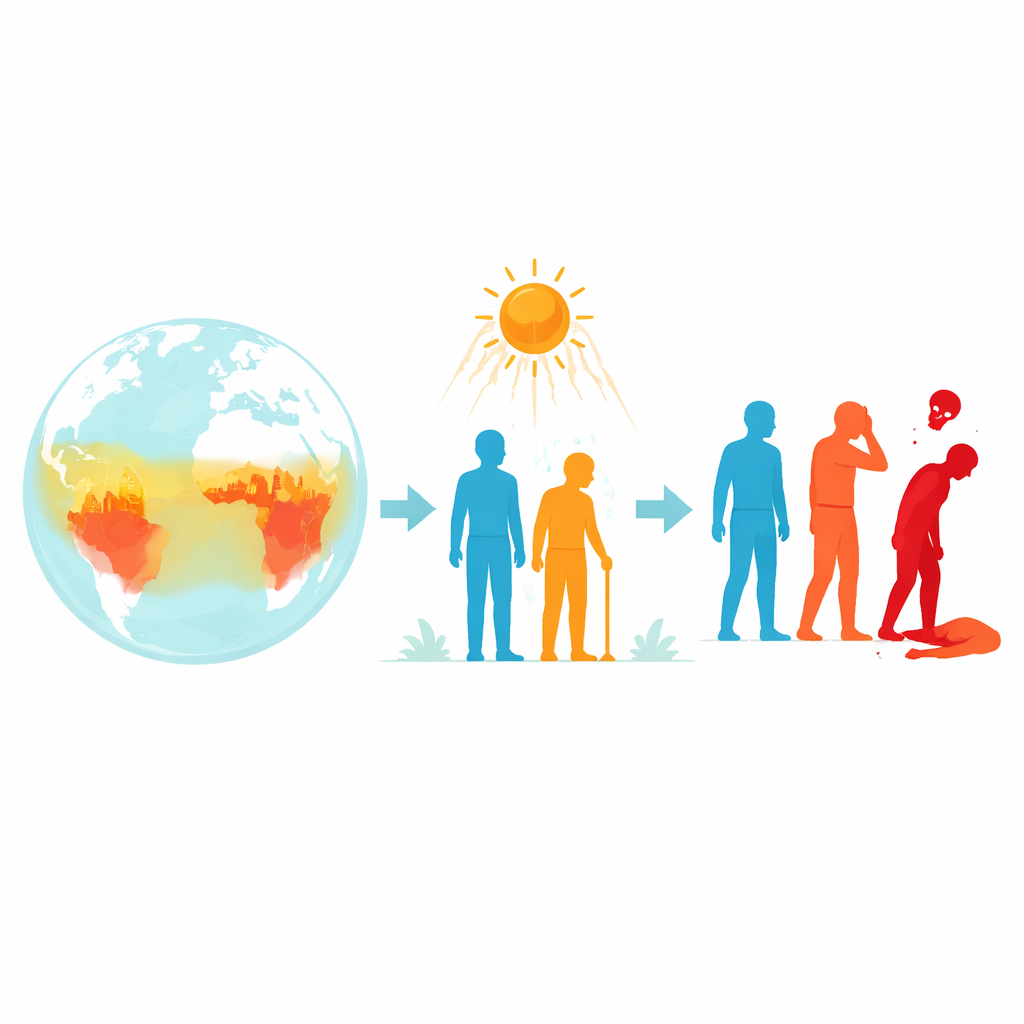
Across the world, heatwaves are no longer just uncomfortable—they can be deadly, even for healthy people with access to shade and fans. This study asks a blunt question: under today’s climate, have outdoor conditions already crossed the line at which a person simply cannot survive several hours of heat? By using a new model that mimics how real human bodies gain and lose heat, the authors show that fatal heat stress is not a distant, futuristic threat. It has already happened during recent heatwaves, often in places with large and vulnerable populations, and at temperatures lower and drier than many previous studies assumed.
Rethinking the limit of human heat tolerance
For years, many climate assessments relied on a simple rule of thumb: if the “wet-bulb” temperature—a measure that combines heat and humidity—reaches 35 °C for six hours, conditions are thought to be unsurvivable without air conditioning. But that rule ignores how sweating actually works in different bodies and environments, and it assumes people are always in the shade. The new HEAT-Lim model used in this study adds realistic physiology: it tracks how much heat a person can store before their core temperature rises to about 43 °C, a level closely linked with fatal heat stroke, and it builds in age-related limits on sweating and the added burden of direct sunlight.
What recent heatwaves reveal
The researchers applied this physiology-based approach to six well-documented heatwaves since 2003, from Europe to South Asia, the Middle East, North and Central America, and Australia. These events were chosen because they were exceptionally intense, long-lasting, and often linked to large spikes in deaths. Crucially, none of them reached the old 35 °C wet-bulb benchmark for hours on end. Yet the HEAT-Lim model shows that, during all six events, outdoor conditions in direct sun crossed into “non-survivable” territory for older adults (65 and over), sometimes over large areas and on many days in a row. In places like Phoenix, Mecca and Larkana, dangerous six‑hour periods recurred through much of the month-long heatwaves, matching the high death tolls reported in those regions.
Dry heat can be as deadly as humid heat
One striking finding is that extremely hot but comparatively dry air can be just as lethal as the muggy, sweat-soaked conditions we usually fear. Earlier work focused on steamy climates, because high humidity blocks sweat from evaporating. HEAT-Lim confirms that risk, but also shows that when air is very dry, the human body eventually runs up against its own maximum sweating capacity. At that point, further temperature rises push core body temperature upward even if the air still feels “drier.” As a result, cities such as Phoenix, with searing temperatures and low humidity, showed many periods where older people in full sun would be unable to survive six hours of exposure—even though the traditional 35 °C wet‑bulb limit was never approached.
Who is most at risk and why shade helps
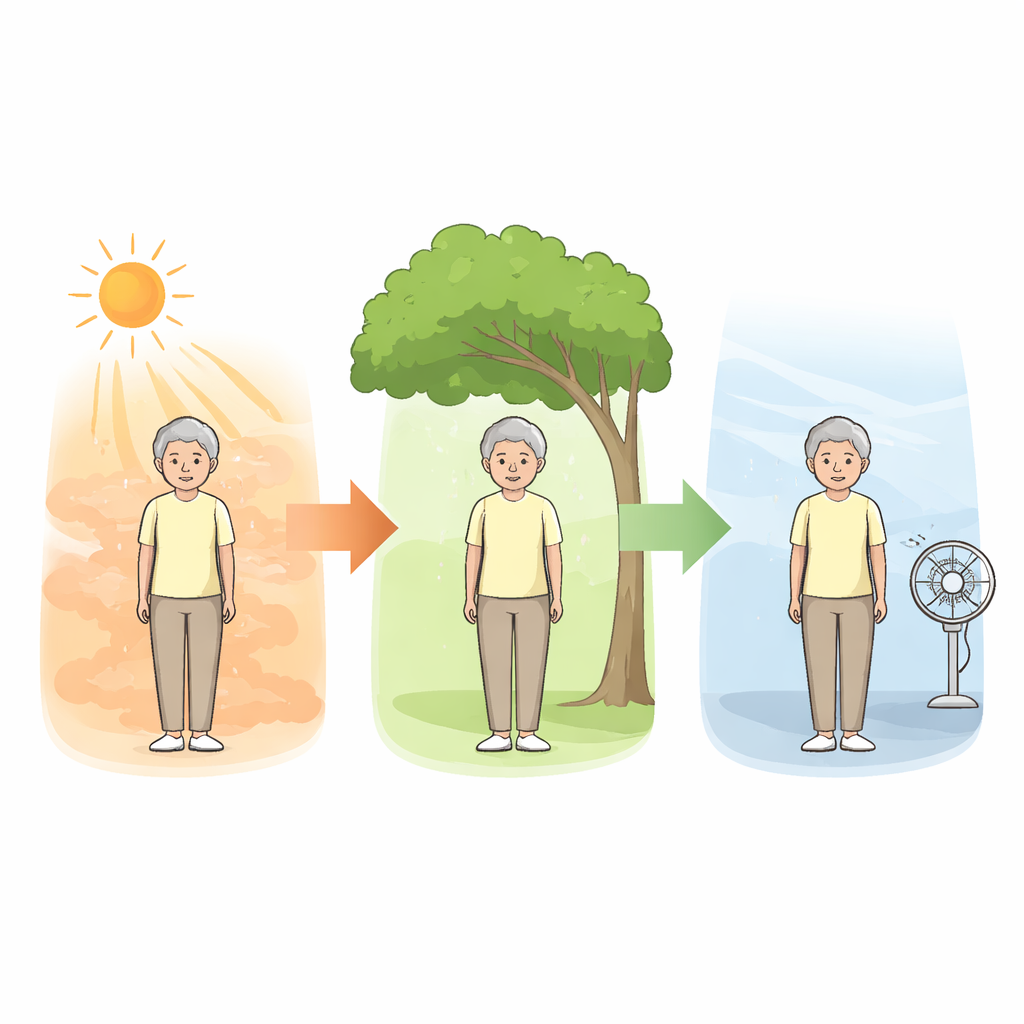
The study highlights how unevenly this invisible line of non-survivable heat falls across society. Older adults are especially vulnerable because their bodies tend to sweat less efficiently and cool down more slowly. Mapping the new thresholds onto population data, the researchers found that in South Asia and parts of the Middle East, dense clusters of older residents were repeatedly exposed to outdoor conditions that the model deems deadly. In contrast, Europe’s infamous 2003 heatwave rarely crossed this strict heat‑stroke threshold in the data, even though tens of thousands died—likely because many victims succumbed to heart or lung problems worsened by heat rather than direct heat stroke, and because the climate data underestimates the true temperatures inside cities. When the model assumes people can move into shade, however, the number of non-survivable periods drops sharply in all regions, underscoring how basic protections like trees, awnings, and cooler indoor spaces can save lives.
What this means for our future summers
To a non-specialist, the main message is sobering but clear: under today’s level of global warming, there are already times and places where simply standing outside in the sun for several hours could be fatal, especially for older people without reliable access to shade or cooling. These dangerous conditions often occur at heat and humidity levels that older rules of thumb would still label as “survivable,” particularly in very dry heat. By grounding their analysis in how real human bodies overheat, the authors show that deadly risk has arrived sooner, and under a wider range of conditions, than once believed. The good news is that many of the worst outcomes are preventable: with better urban design, widespread shade, affordable cooling options like fans, and effective public warning systems, societies can greatly cut the number of lives lost as heatwaves grow more frequent and intense.
Citation: Perkins-Kirkpatrick, S.E., Gregory, C.H., Vanos, J.K. et al. Deadly heat stress conditions are already occurring for submission to Nature Communications. Nat Commun 17, 2590 (2026). https://doi.org/10.1038/s41467-026-70485-1
Keywords: heat stress, heatwaves, climate change, elderly health, heat adaptation