Clear Sky Science · en
Cerebrospinal fluid NPTX1 and NPTXR predict neurodegeneration and clinical progression in Alzheimer’s disease
Why this matters for families and future patients
Alzheimer’s disease slowly robs people of memory and independence, yet doctors still struggle to predict who will worsen quickly and who may remain stable for years. This study reports two promising signals found in the fluid that bathes the brain and spinal cord. These signals, related to the health of nerve connections, can indicate how far the disease has progressed and how fast it is likely to advance, offering hope for earlier, more precise care and better testing of new treatments.
Looking for early warning signs in brain fluid
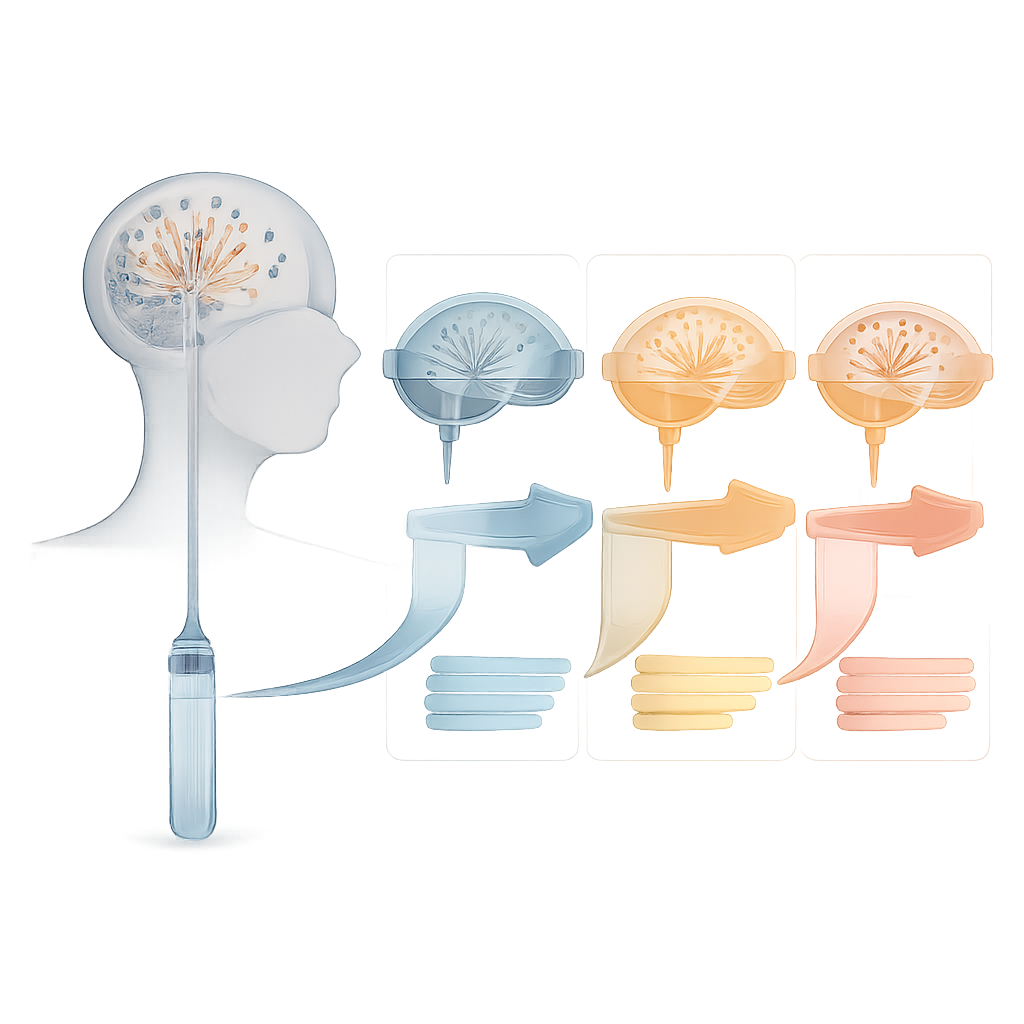
Alzheimer’s disease is marked by two well-known brain changes: sticky amyloid plaques between nerve cells and tangles of an abnormal tau protein inside them. Doctors can now measure these changes using blood and spinal fluid tests, but they do not directly tell us how much actual damage the brain’s wiring has suffered. The authors focused instead on synapses, the tiny junctions where nerve cells communicate and where memory is forged. They studied two synaptic proteins, NPTX1 and NPTXR, that float in the cerebrospinal fluid and may mirror the condition of these fragile connections.
A large, diverse look across the Alzheimer’s spectrum
To test how well these proteins track the disease, researchers combined data from two major projects: a Chinese study called CANDI and a Norwegian study called DDI, totaling 635 adults. Participants ranged from people with normal thinking to those with mild memory problems and those with dementia, and they included individuals with and without the brain amyloid changes that define biological Alzheimer’s. Everyone underwent careful memory testing, brain scans to measure the thickness of brain tissue, and spinal fluid sampling to measure NPTX1, NPTXR, and established markers like amyloid, tau, and neurofilament light chain.
Synapse markers fall as thinking and brain structure decline
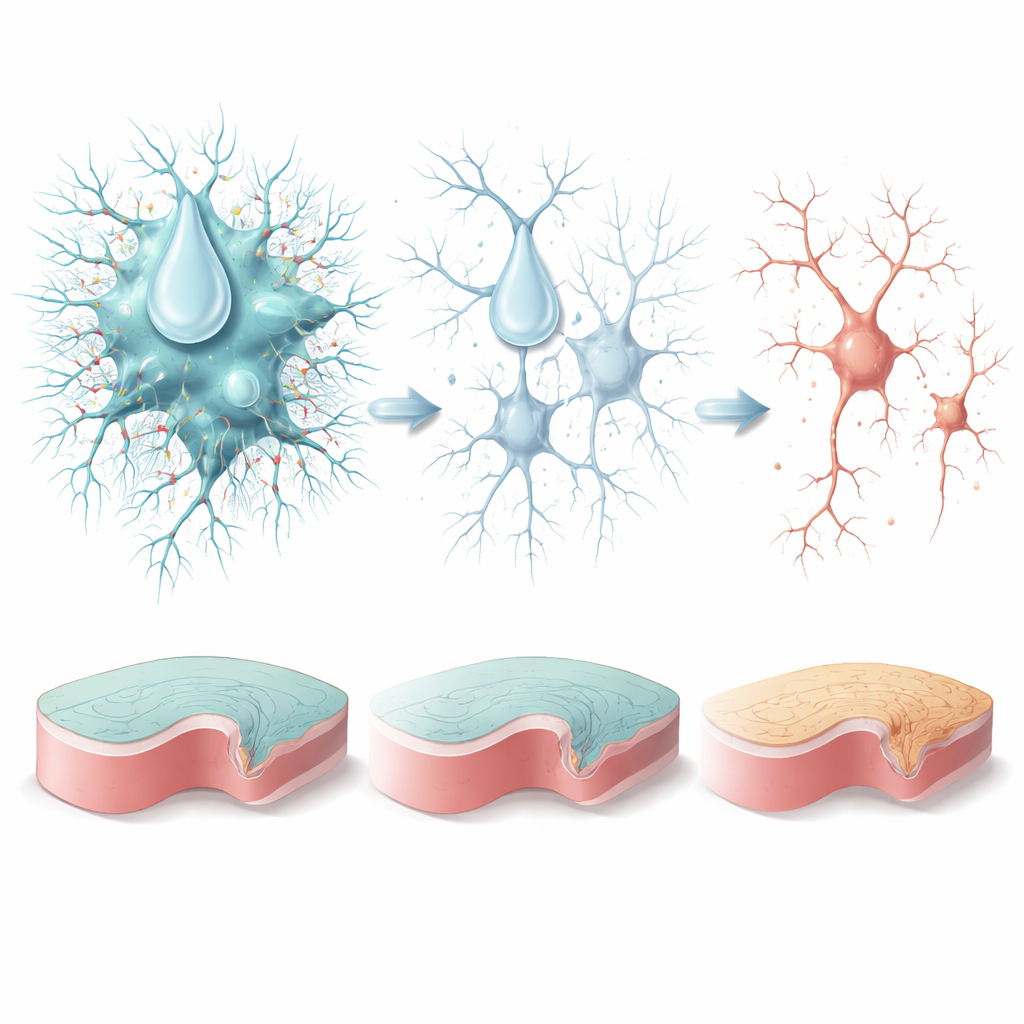
The investigators found a clear pattern: lower levels of NPTX1 and NPTXR in spinal fluid went hand-in-hand with worse memory and thinner brain regions that are especially vulnerable in Alzheimer’s disease. In people with amyloid-positive Alzheimer’s, these proteins steadily decreased from normal aging to mild impairment to full dementia. They also showed strong positive links with overall cortical thickness, often more tightly than traditional markers. People in the “high NPTX” range had the best test scores and the thickest brain cortex, while those in the “low NPTX” range fared worst, even after accounting for amyloid and tau levels.
Forecasting brain shrinkage and memory loss
Beyond taking a snapshot in time, the team asked whether these markers could predict the future. Following participants over several years, they observed that individuals starting with higher NPTX1 and NPTXR levels lost brain tissue more slowly and retained their cognitive abilities better than those with lower levels. Among people with mild cognitive impairment, those who later developed dementia had clearly lower baseline NPTX1 and NPTXR than those who stayed stable. Simple statistical tests showed that these synapse-related markers could distinguish “progressors” from “non-progressors” with high accuracy, often outperforming leading blood and spinal fluid tests based on tau and amyloid.
What this could mean for treatment and trials
Because these proteins appear to capture the “N” in the modern A/T/N framework—the neurodegeneration piece—they may become valuable tools for precision medicine. They could help doctors identify which patients are at greatest risk for rapid decline, decide when to start disease-modifying drugs, and track whether new therapies are truly protecting brain connections. The study has limits, including the need for longer follow-up and larger numbers of volunteers, but its consistent results across two very different populations strongly support NPTX1 and NPTXR as sensitive gauges of synaptic health and brain damage in Alzheimer’s disease.
A clearer window into the brain’s fading connections
In everyday terms, this research suggests that measuring NPTX1 and NPTXR in spinal fluid gives doctors a clearer view of how much the brain’s wiring has already suffered and how quickly it is likely to worsen. Rather than focusing only on the buildup of disease-causing proteins, these markers reflect the actual loss of working connections that underlie memory and thinking. If confirmed in future studies and translated into widely available tests, they could help families and clinicians better plan for the future and give drug developers a sharper tool for judging whether new treatments are truly slowing the damage done by Alzheimer’s disease.
Citation: Dai, L., Kirsebom, BE., Wang, C. et al. Cerebrospinal fluid NPTX1 and NPTXR predict neurodegeneration and clinical progression in Alzheimer’s disease. Nat Commun 17, 3674 (2026). https://doi.org/10.1038/s41467-026-70472-6
Keywords: Alzheimer’s disease, biomarkers, cerebrospinal fluid, synaptic degeneration, dementia progression