Clear Sky Science · en
Graphene-inspired porous polymer network for ethane/ethylene separation and methane purification
Why cleaning fossil gases matters
Natural gas and ethylene are central to how we power our world and make everyday plastics, but they rarely come pure straight from the well or reactor. Removing unwanted companion gases usually takes huge cryogenic plants that guzzle energy. This article reports a new solid material, inspired by graphene, that can sift closely related gases apart in one step, promising cleaner fuels and chemical feedstocks with a smaller energy bill.
A tiny sponge for tricky gas mixtures
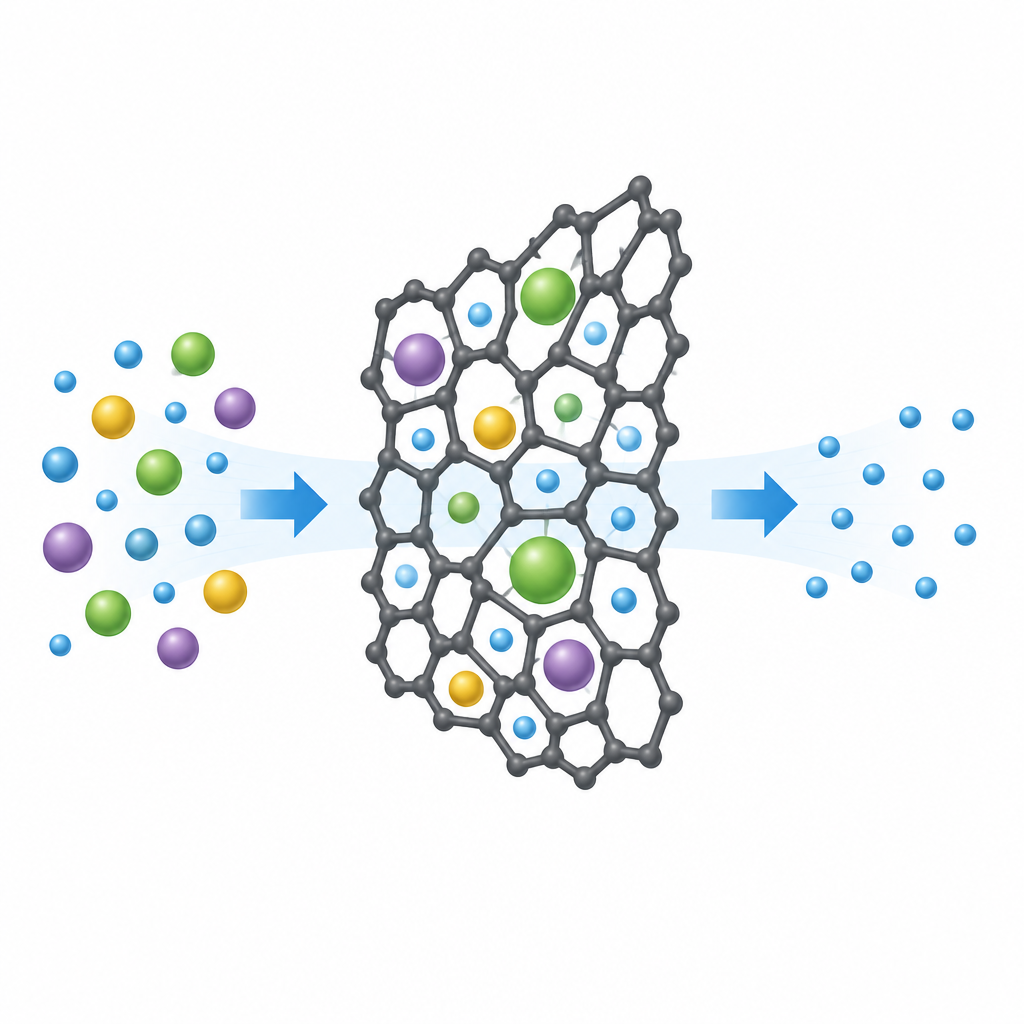
The researchers created a porous polymer network called PPN-20 that behaves like a nanoscale sponge for small hydrocarbons such as methane, ethane, ethylene, and propane. Instead of using chilled distillation columns, the idea is to pass mixed gas through a packed bed of this solid. Some molecules stick more strongly inside its pores and are held back, while others flow through and emerge in purified form. What makes this especially useful is that ethane and propane, which often contaminate methane and ethylene streams, are selectively captured by PPN-20.
Designing pores that fit just right
PPN-20 is built by linking simple organic building blocks into a rigid, graphene-like network. This process creates a forest of permanent pores with sizes mostly around half a nanometer across, close to the size of the gas molecules themselves. Measurements with nitrogen gas show that the material has a high internal surface area and a large fraction of ultra-small pores. These cramped spaces help the material latch onto slightly bulkier, more easily polarizable molecules such as ethane and propane, while allowing the smaller methane and the flat ethylene molecules to slip through more readily.
How the material behaves in real gas streams
To test performance, the team measured how much of each gas PPN-20 could hold at typical industrial temperatures. At room temperature and moderate pressure, the material took up large amounts of ethane and propane compared with methane. Calculations based on these data show extremely high selectivity: PPN-20 ranks among the best reported materials for separating ethane from ethylene and for pulling propane and ethane away from methane. In practical breakthrough experiments, where mixed gases are passed through a column of the material, pure ethylene and high-purity methane emerged first while ethane and propane were trapped, confirming that the material can perform real one-step purification.
Peering into the separation mechanism
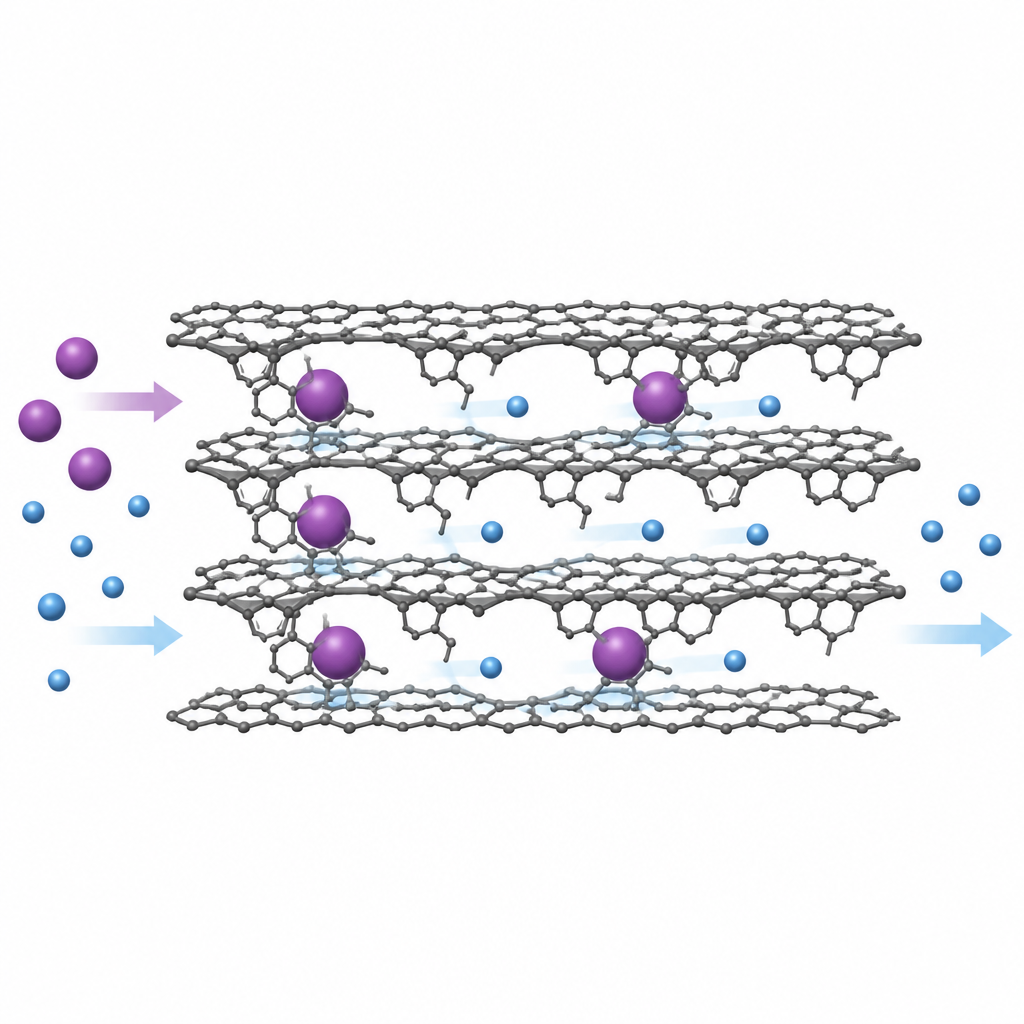
Computer simulations helped explain why PPN-20 works so well. The graphene-like sheets form pores whose edges present many carbon–hydrogen groups that interact favorably with ethane and propane. The calculations revealed preferred binding spots inside the pores where these molecules experience stronger attraction and higher binding energies than methane and ethylene. For propane, the simulations even showed that the material layers flex slightly to accommodate the guest, underlining that both pore size and subtle interactions guide which gases are held and which pass through. These trends mirror the experimental measurements of heat released during adsorption.
What this means for cleaner fuels and plastics
In simple terms, PPN-20 acts as a smart molecular sieve that grabs hold of the unwanted heavier gases and lets the desired lighter ones go free. Because it is chemically and thermally robust, and operates at near-room conditions, this solid could help replace energy-intensive distillation units in natural gas treatment and ethylene production. While further scale-up and engineering are needed, the study shows that carefully tuning pore size and chemical environment in graphene-inspired polymers is a powerful route to cleaner fuels and more efficient plastics manufacturing.
Citation: Festus, K., Guo, F., Ullah, S. et al. Graphene-inspired porous polymer network for ethane/ethylene separation and methane purification. Nat Commun 17, 4500 (2026). https://doi.org/10.1038/s41467-026-70471-7
Keywords: natural gas separation, methane purification, ethylene production, porous polymer network, gas adsorption