Clear Sky Science · en
The conserved human astrovirus-receptor interface reveals a targetable vulnerability for antiviral development
Why a stomach bug matters
Most of us think of a stomach virus as an unpleasant but simple bout of diarrhea. Yet for young children, older adults and people with weakened immune systems, these infections can be dangerous. One common culprit is human astrovirus, a tiny pathogen that has flown under the radar compared with rotavirus and norovirus. This study reveals, in atomic detail, how astrovirus latches onto human cells and shows that medicines already approved for an autoimmune disease may also be able to block this virus.
A hidden player in gut infections
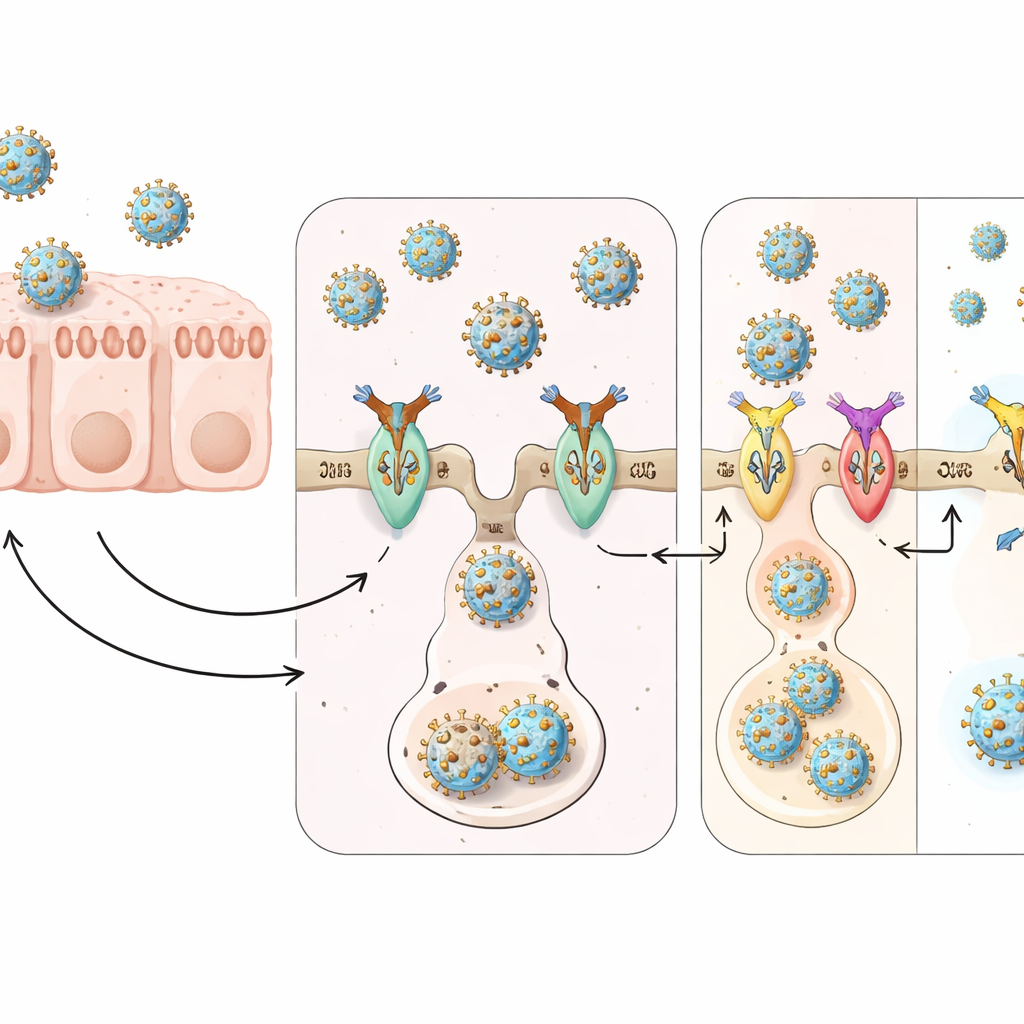
Human astrovirus is responsible for up to a tenth of non-bacterial diarrhea cases worldwide, especially in children and the elderly. The virus carries its genetic material inside a protein shell built from an inner core and outer spikes. These spikes stick out from the virus like small knobs and are the parts that first make contact with our cells. Recently, several groups discovered that astrovirus uses a host protein called the neonatal Fc receptor, or FcRn, as its doorway into cells. FcRn is best known for transporting protective antibodies (IgG) in babies and for recycling antibodies throughout life, and is already a drug target in autoimmune disorders. But how exactly astrovirus hooks onto FcRn was unknown.
Seeing the handshake at atomic detail
To understand this viral handshake, the researchers crystallized and solved the 3D structure of a complex between the spike from one astrovirus type (called HAstV8) and human FcRn. They also determined high-resolution structures of spikes from two other common types, HAstV1 and HAstV8, on their own. The team found that the spike forms a layered, sandwich-like fold and presents a shallow bowl-shaped depression on its surface. FcRn docks into this depression using part of its upper region, called the α2 domain, inserting several short structural elements like fingers into the spike’s concave pocket. The spike’s shape barely changes upon binding, indicating that it is pre-shaped to receive the receptor.
A shared weak spot across virus types
By comparing sequences and structures of spikes from different classical astrovirus types (1 through 8), the authors showed that the key pocket that grips FcRn is structurally conserved, even though the exact amino acid letters vary. Certain residues that make direct contact with FcRn are identical or chemically similar in many types, and all classical spikes carry a comparable depression with matching electric charge patterns. Measurements of binding strength confirmed that spikes from several types cling to FcRn with similar affinity. These findings explain why the same human receptor works for many astrovirus strains and point to a common weak spot that broad treatments could exploit.
Hijacking a receptor already targeted by drugs
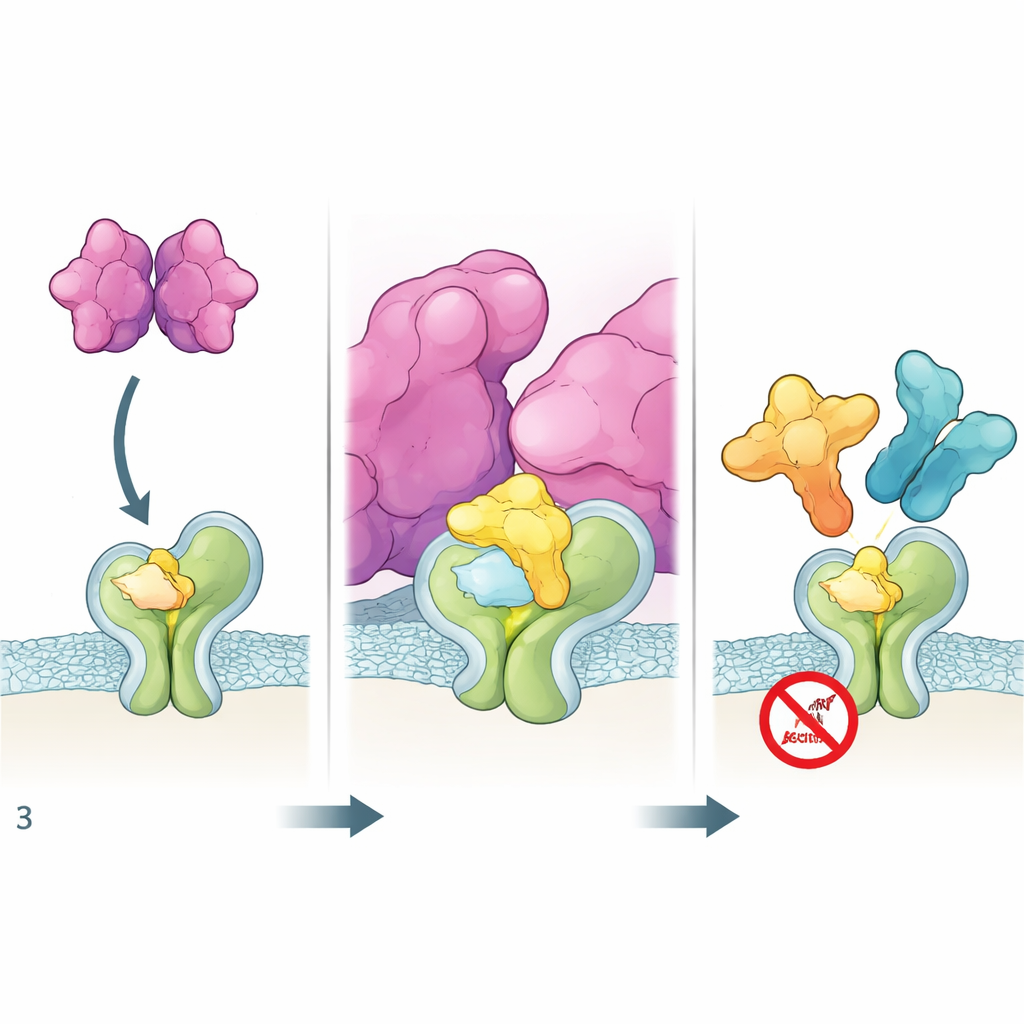
FcRn is already the focus of medicines designed to lower harmful antibodies in autoimmune diseases such as myasthenia gravis. Three such drugs—one engineered antibody fragment and two full antibodies—bind FcRn and block its interaction with IgG. By mapping existing drug–FcRn structures onto their new virus–FcRn structure, the authors discovered that the viral spike and these drugs land on almost the same area of FcRn. In lab tests, two of the antibody drugs strongly prevented astrovirus spikes or whole virus particles from binding FcRn and from infecting human intestinal cells grown in culture, cutting viral RNA levels by up to about 90 percent. A third drug, which binds FcRn more weakly at neutral pH, showed only modest antiviral effects.
What this means for future treatments
To a non-specialist, the key message is that astrovirus depends on a very specific docking site on a human receptor that we already know how to block safely in patients. By exposing the exact shape of this shared interface, the study highlights a targetable vulnerability in the virus and suggests that existing FcRn-blocking drugs could be repurposed to treat severe astrovirus infections. At the same time, the work raises the possibility that viral use of FcRn might interfere with normal antibody transport, especially in the gut and during pregnancy. Overall, the structural insights provided here open a path toward both broad antiviral strategies against multiple astrovirus types and more rational design of new drugs aimed at this conserved viral foothold.
Citation: Wang, W., Xu, Y., Li, Z. et al. The conserved human astrovirus-receptor interface reveals a targetable vulnerability for antiviral development. Nat Commun 17, 3799 (2026). https://doi.org/10.1038/s41467-026-70465-5
Keywords: human astrovirus, neonatal Fc receptor, viral entry, antiviral drug repurposing, gastroenteritis