Clear Sky Science · en
Protection of telomeres 1b safeguards the Arabidopsis genome by regulating ROS homeostasis
How Plants Keep Their DNA Safe from Oxygen Damage
Every breath of oxygen that keeps a plant alive also produces tiny, reactive by‑products that can chip away at its DNA. This study uncovers how a little-known protein, called POT1b, helps the model plant Arabidopsis keep these “oxygen sparks” under control. By acting both at the very ends of chromosomes and inside a key cellular compartment for detoxifying chemicals, POT1b keeps genetic material stable, especially under environmental stress. Understanding this hidden protection system helps explain how plants survive drought, heat, and other challenges that bombard their DNA with damage.
Watchdogs at the Ends of Chromosomes
Chromosomes end in specialized caps known as telomeres, which act like plastic tips on shoelaces, preventing genetic threads from fraying. Many organisms rely on a protein family called POT1 to guard these tips and help maintain their length. Arabidopsis, however, carries two active versions: POT1a and POT1b. POT1a was already known to help build telomeres by supporting the enzyme telomerase. POT1b’s role was mysterious. By selectively removing each protein, and then both together, the authors showed that POT1a and POT1b cooperate to preserve overall genome stability, but POT1b is not essential for the classic job of simply protecting telomere length or preventing chromosome fusions. This hinted that POT1b’s main task lies elsewhere.
When Oxygen Turns from Friend to Foe
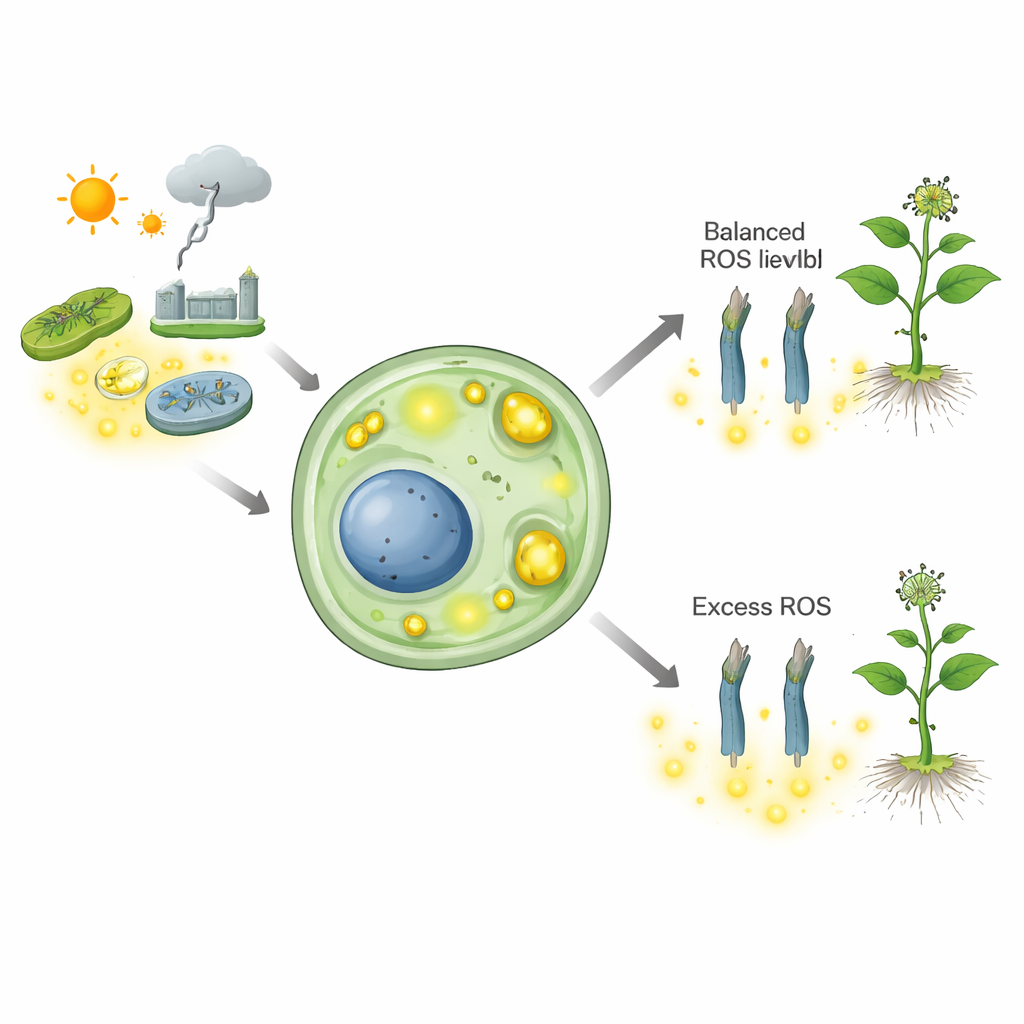
Reactive oxygen species (ROS) are highly reactive molecules formed as by‑products of normal metabolism and sharply increased by drought, high light, pollution, and other stresses. In the right amounts, ROS help control growth and development; in excess, they oxidize DNA, proteins, and lipids, pushing cells toward aging and instability. The team found that POT1b is strongly switched on under many stress conditions that elevate ROS, especially during germination, root growth, and flower and seed development. Plants lacking POT1b accumulated more ROS in seeds, roots, leaves, and flowers, while plants engineered to overproduce POT1b had lower ROS than normal in the same tissues. Even where the POT1b gene is usually quiet, such as in leaves, knocking it out still raised ROS levels, suggesting it helps set a plant‑wide balance rather than acting only in one organ.
A Double Life in the Nucleus and Detox Compartments
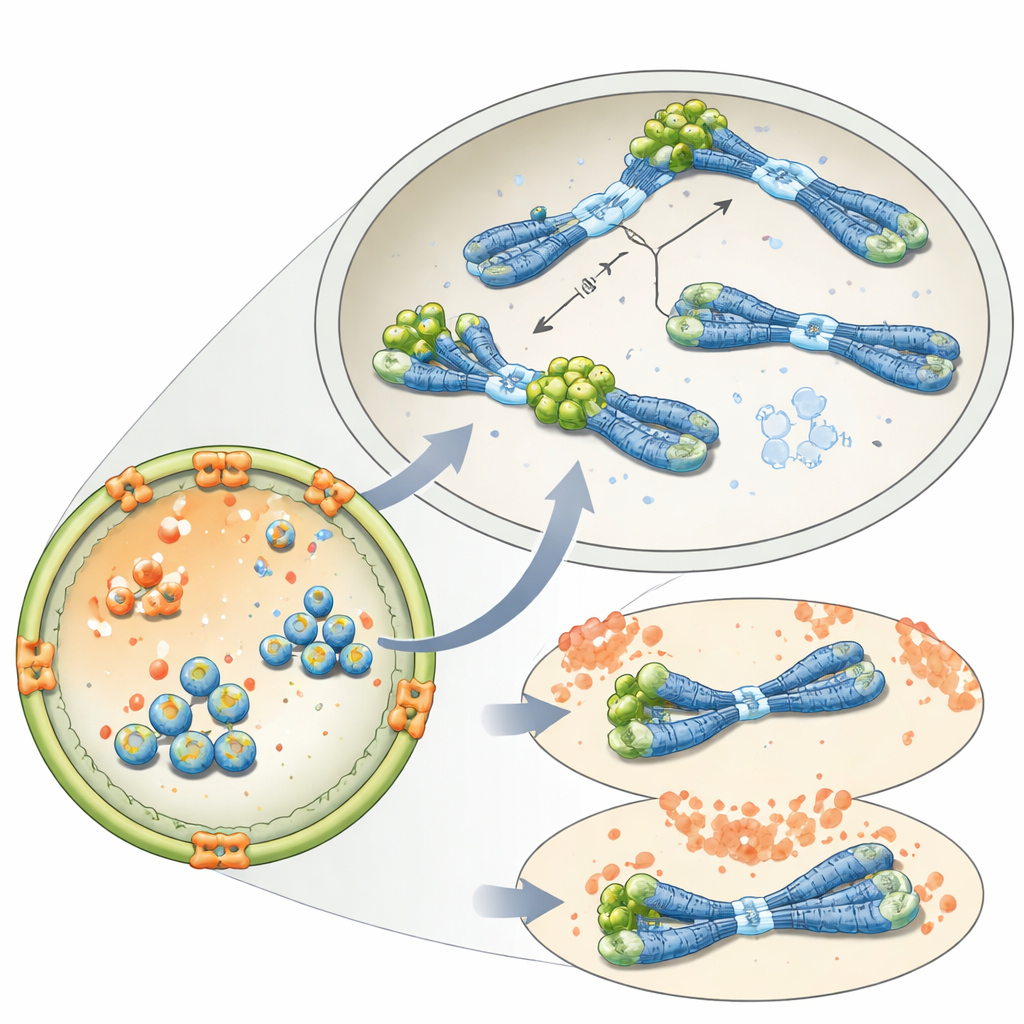
To understand how POT1b controls ROS, the researchers tracked where it sits inside cells. POT1b appeared both in the nucleus, where chromosomes reside, and in peroxisomes, small compartments that are major hubs for breaking down toxic molecules. Under conditions that increase oxidative stress, more POT1b moved into the nucleus and became enriched at telomeres. Plants lacking POT1b showed increased nuclear ROS and higher levels of a hallmark DNA lesion, 8‑oxoG, across the genome and especially at telomeres. Their telomeres also changed length in a more erratic way when exposed to stress such as herbicide treatment, drought, or high temperature. These findings suggest POT1b acts as a kind of “antioxidant recruiter” that helps shield the most vulnerable chromosome ends when ROS levels rise.
Teaming Up with Cellular Clean‑Up Crews
POT1b’s impact on ROS led the authors to search for its protein partners. They discovered that POT1b physically associates with catalases and peroxidases—enzymes that convert harmful ROS into harmless molecules. One catalase, CAT2, stood out. POT1b and CAT2 meet in both peroxisomes and nuclei, and boosting CAT2 levels in POT1b‑deficient plants restored normal ROS and DNA oxidation. When the team subtly altered a single amino acid in POT1b to weaken its grip on CAT2, plants accumulated excess ROS, suffered more telomere oxidation, and grew poorly, even though POT1b itself was still present. This shows that the partnership between POT1b and catalase is central to protecting DNA from oxidative damage, especially at chromosome ends.
An Ancient Strategy for Genome Protection
Finally, the authors asked whether this ROS‑control role of POT1 is unique to Arabidopsis. They introduced POT1 genes from moss and humans into POT1b‑deficient plants. Remarkably, both foreign proteins reduced ROS and genome oxidation, but could not fix defective telomere length in plants missing both POT1 copies. This means that the ability of POT1‑type proteins to cooperate with antioxidant systems and stabilize the genome is deeply conserved across evolution, while their precise telomere‑building functions have diversified. In simple terms, the study reveals that telomere proteins do more than just protect chromosome tips: they also help manage the cell’s oxidative “weather,” ensuring that plants can keep their DNA intact in the face of environmental storms.
Citation: Min, JH., Castillo-González, C., Barcenilla, B.B. et al. Protection of telomeres 1b safeguards the Arabidopsis genome by regulating ROS homeostasis. Nat Commun 17, 3728 (2026). https://doi.org/10.1038/s41467-026-70441-z
Keywords: telomeres, reactive oxygen species, genome stability, Arabidopsis, POT1 protein