Clear Sky Science · en
Structural and mechanistic insights into the dual-nuclease defense protein Upx as an anti-phage system
How bacteria fight off their tiny viruses
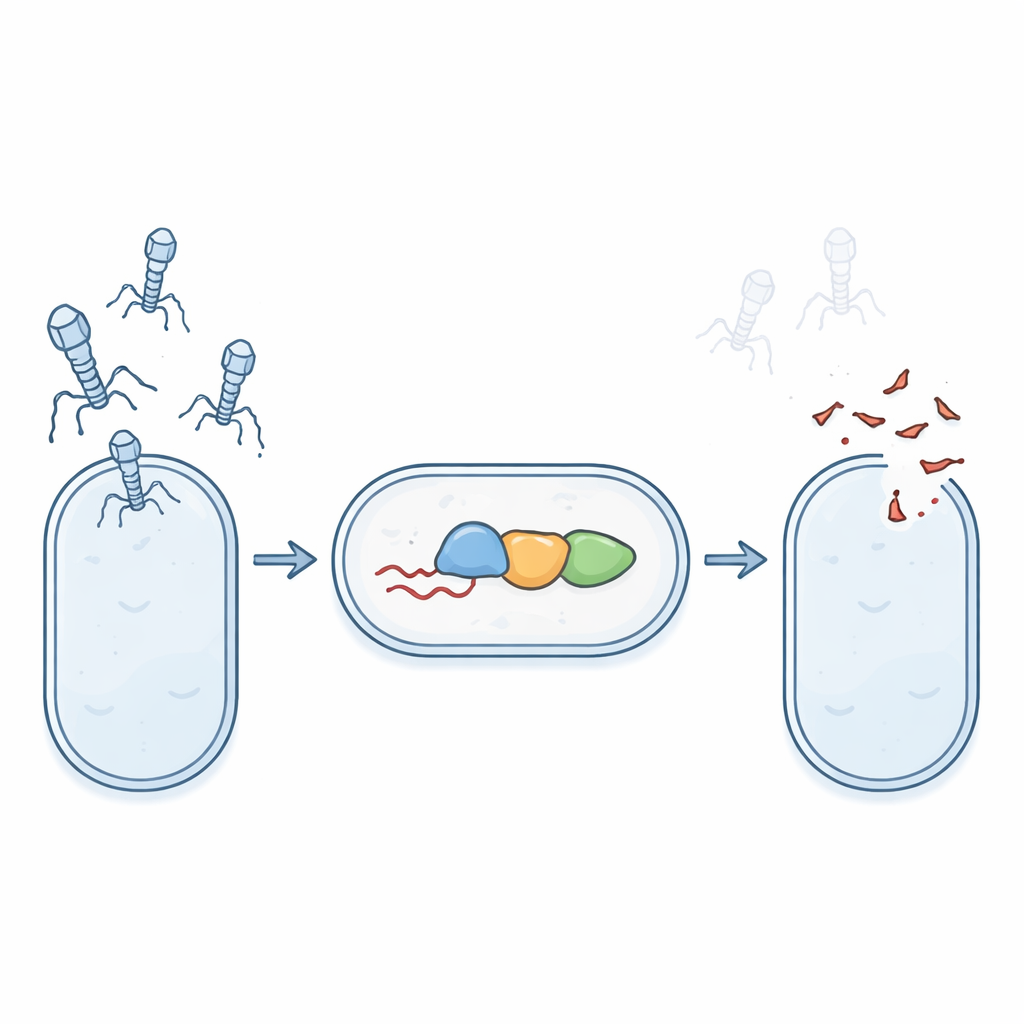
Bacteria are constantly under siege from viruses called bacteriophages, which can hijack them and turn them into virus factories. This study uncovers a previously unknown bacterial defense weapon, a single protein named Upx, that can slice viral genetic material in two different ways. Understanding how this compact molecular guardian works not only reveals new tricks in the microscopic arms race between bacteria and viruses, but could also inspire fresh antiviral strategies and biotechnology tools.
A new kind of bacterial bodyguard
Bacteria deploy many defenses against invading phages, from classic restriction enzymes to the now-famous CRISPR systems. Many of these guardians are enzymes that cut nucleic acids, the DNA or RNA that carries genetic information. Upx belongs to a large family of such cutting enzymes, but stands out because it combines two cutting modules in a single protein chain. The researchers show that bacteria equipped with Upx become highly resistant to one particular phage, PhiV-1, while remaining vulnerable to several other phages. This suggests that Upx is a highly specialized bodyguard, tuned to recognize and disable a narrow set of viral attackers rather than all comers.
A three-part machine built for control
Using high-resolution cryo-electron microscopy, the team visualized the overall shape of Upx. The protein resembles a spindle made of three connected sections: an N-terminal domain at one end, a middle domain in the center, and a C-terminal domain at the other end. The structure reveals that these parts are not loosely attached; instead, they are tightly integrated into a single machine. The middle section physically touches both ends, forming an internal control hub. While the C-terminal domain clearly fits a well-known class of DNA-cutting enzymes, the N-terminal domain initially looked puzzling because it seemed to lack the usual sequence features of such catalysts.
Two cutting edges, one regulator
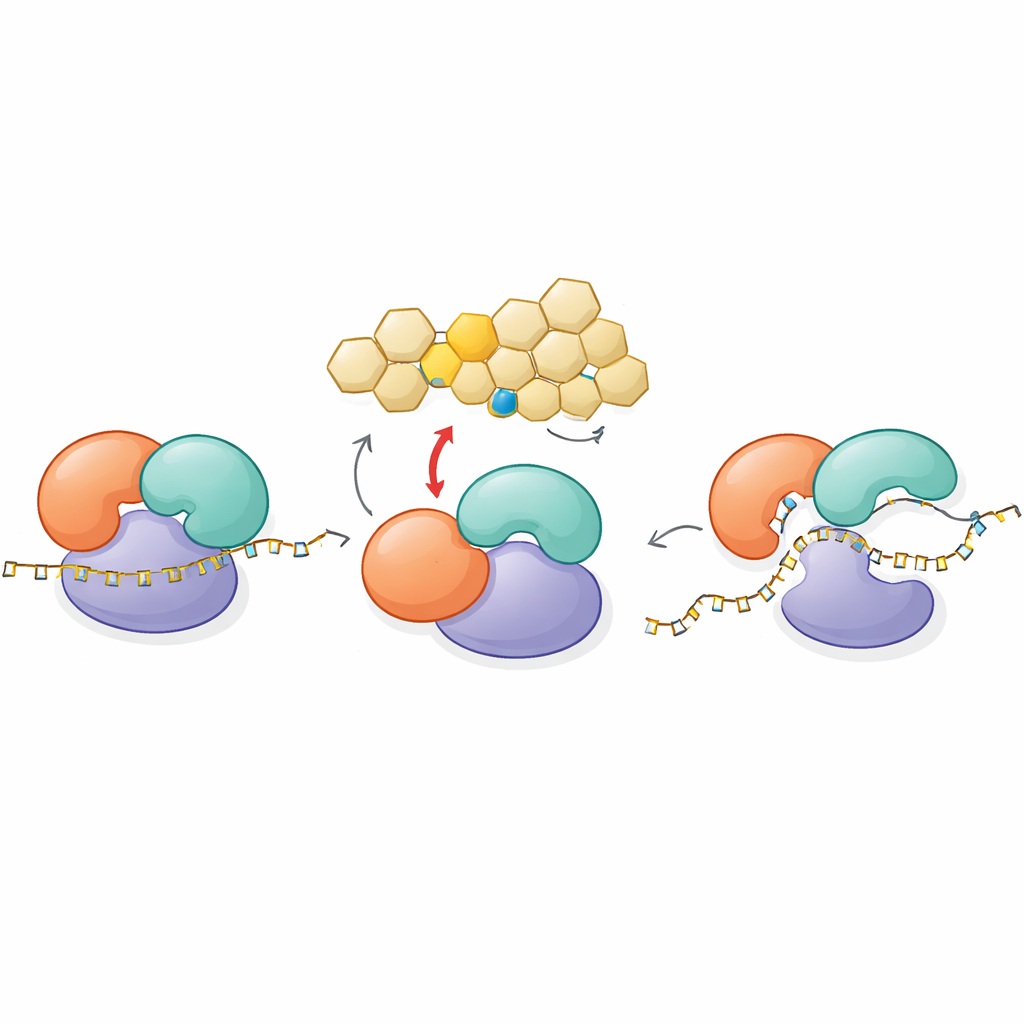
Biochemical experiments showed that Upx acts mainly on single-stranded nucleic acids, not the double-stranded DNA form that phages use to package their genomes. The C-terminal domain works as a metal-dependent enzyme that chews nucleic acids from one end, moving in a 3'-to-5' direction along the strand, and can attack both single-stranded DNA and RNA. The N-terminal domain, surprisingly, also turned out to be a cutting module, but one that prefers single-stranded DNA and has a stripped-down version of the usual catalytic architecture. The middle domain exerts opposite effects on the two ends: it boosts the binding and activity of the C-terminal cutter while at the same time physically blocking and silencing the N-terminal one, keeping its more unusual activity in check under normal conditions.
How a viral part accidentally pulls the trigger
To understand how this system is switched on during infection, the researchers looked for viral proteins that physically interact with Upx inside infected cells. They identified a structural protein from the PhiV-1 phage, called gp16, which forms part of the virus’s DNA injection machinery. This viral component binds directly to Upx and lifts the middle-domain brake on the N-terminal cutter, restoring its activity in both isolated fragments and the full protein. Because gp16 appears only in PhiV-1 and a few related phages, Upx is naturally tuned to respond specifically to these viruses. Once activated, Upx preferentially attacks single-stranded stretches that arise during DNA copying and recombination, such as 3' overhangs and looped replication intermediates, effectively shredding essential viral intermediates rather than the stable, double-stranded genome.
Shutting down viral growth from the inside
Genome sequencing and gene expression measurements in infected bacteria revealed the broader impact of Upx. In cells expressing active Upx, viral DNA levels rise much more slowly, and the phage genome fails to accumulate as it does in unprotected cells or in cells carrying inactive Upx mutants. At the same time, every detectable viral gene shows strongly reduced activity, and typical virus-driven changes in host cell pathways—such as those affecting movement structures and viral assembly sites—are blunted. When either cutting end of Upx is removed or disabled by precise mutations, this protection collapses, and the phage once again replicates freely. Notably, bacteria carrying Upx can survive even heavy doses of phage, indicating that Upx provides true immunity rather than sacrificing infected cells.
What this means for the microscopic arms race
In accessible terms, Upx is a compact molecular machine with two blades and one safety lock. In the absence of infection, one blade is partially active while the other is kept sheathed, limiting damage to the host’s own DNA. When a specific phage arrives, a component of the virus itself inadvertently unlocks the second blade, turning Upx into a more powerful dual-cutter that targets fragile single-stranded stretches of viral DNA right where the phage is trying to copy its genome. This work shows that bacteria can pack complex sensing, regulation, and attack functions into a single protein, expanding our understanding of how simple organisms wage highly selective and efficient war against their viral enemies.
Citation: Zhou, R., Liu, Y., Zhang, Q. et al. Structural and mechanistic insights into the dual-nuclease defense protein Upx as an anti-phage system. Nat Commun 17, 3692 (2026). https://doi.org/10.1038/s41467-026-70435-x
Keywords: bacteriophage defense, bacterial immunity, nuclease enzymes, Upx protein, virus–bacteria interactions