Clear Sky Science · en
Increased spread of global flash droughts threatens vegetation productivity resilience
Why sudden droughts matter to everyday life
Across the world, farmers, forests, and grasslands are increasingly hit not just by long dry spells, but by droughts that seem to appear out of nowhere. These “flash droughts” can parch soils and wilt plants in a matter of weeks, threatening harvests, food prices, and the ability of natural landscapes to absorb carbon dioxide. This study investigates how these suddenly developing droughts are spreading around the globe and how they are undermining the ability of vegetation to bounce back once the rains return.
Fast droughts on a warming planet
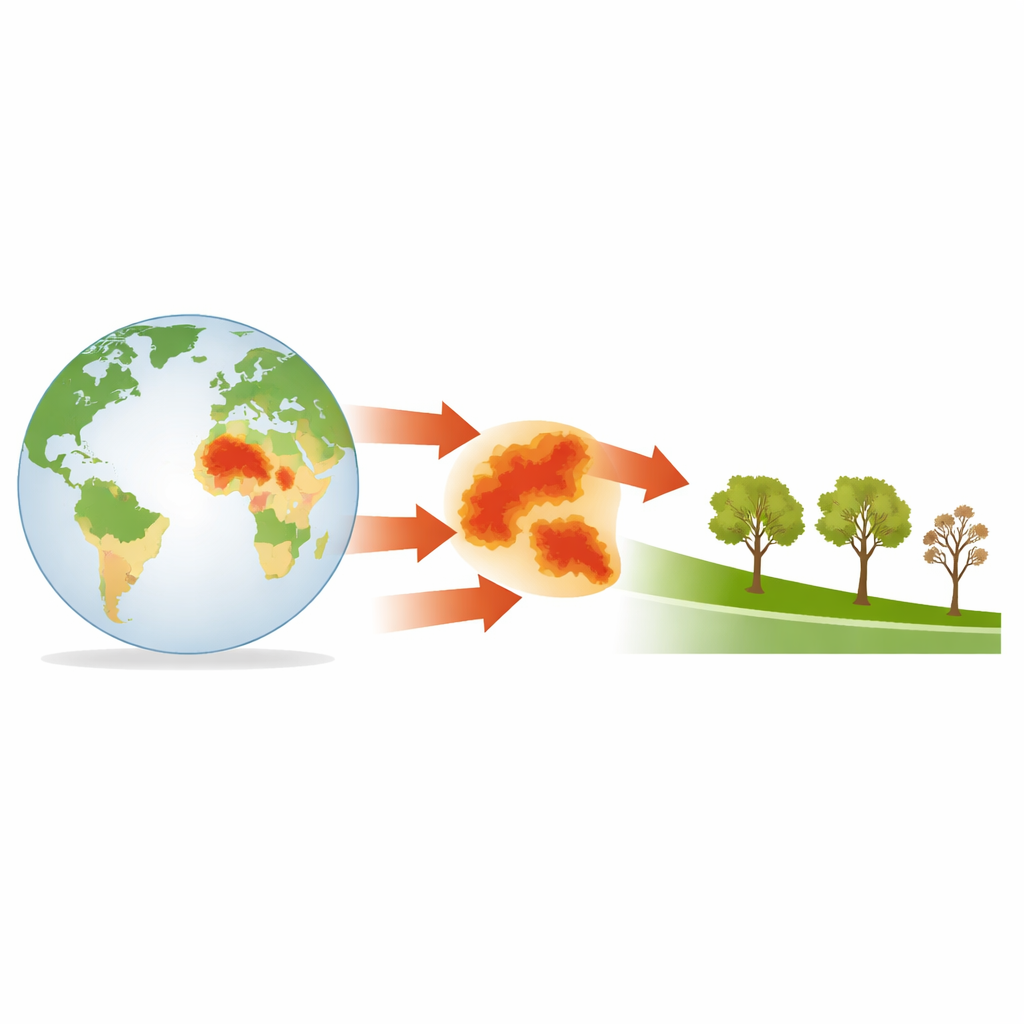
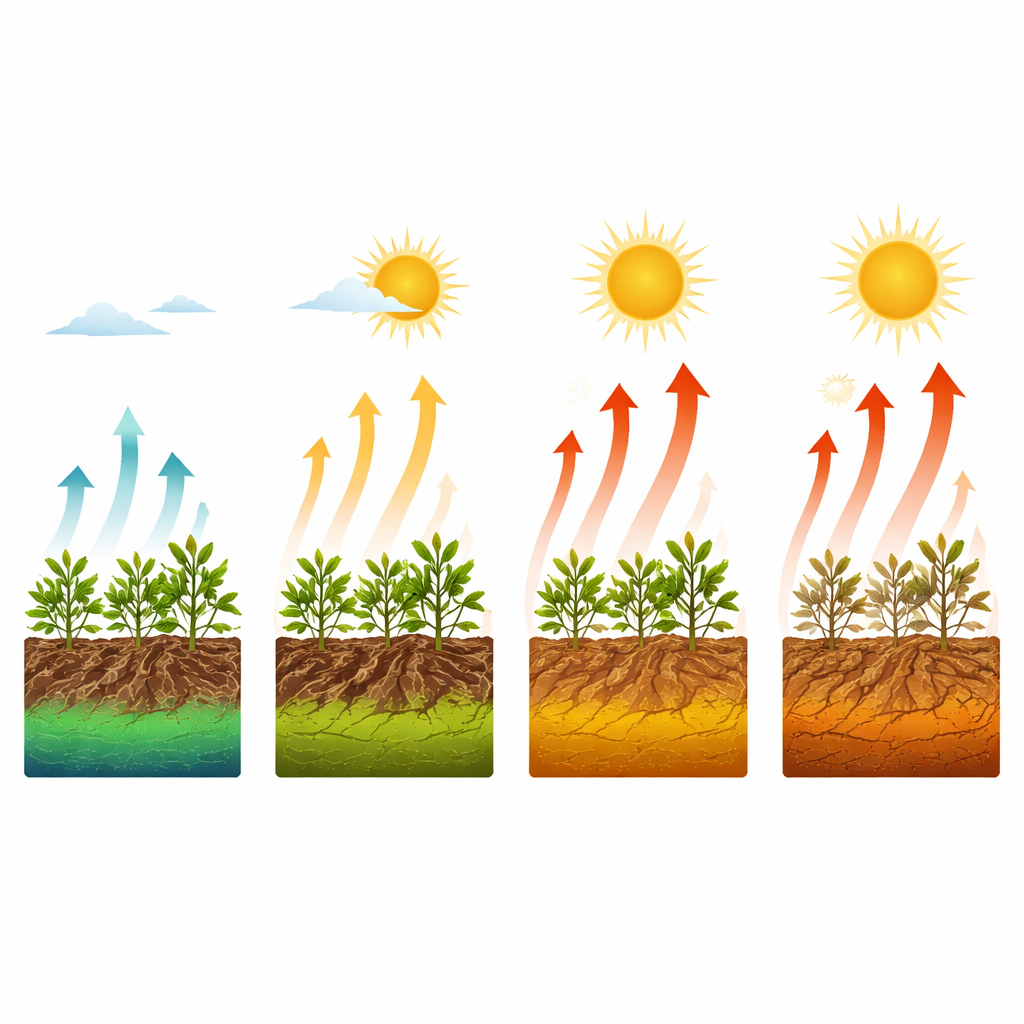
The authors distinguish between two kinds of dry periods. Slow droughts develop over many weeks or months as soils gradually dry out. Flash droughts, in contrast, are marked by a rapid drop in soil moisture over just a few five-day periods, driven by a combination of high heat, strong sunshine, dry air, and lack of rain. Using global climate records from 1950 to 2023, the team mapped where and how often each type of drought occurred, how quickly they intensified, and how severe they became. They found that flash droughts have become more frequent, more intense, and faster to unfold, especially since the early 21st century.
Hotspots and new danger zones
By combining measures of how many flash droughts occurred, how strong they were, and how quickly they formed, the researchers identified “hotspots” where flash droughts are especially common and aggressive. Surprisingly, most of these hotspots are humid regions, such as parts of the Amazon, the Sahel, and tropical Southeast Asia, where vegetation is lush and water is usually plentiful. When rainfall suddenly dips in these areas, dense vegetation and strong sunlight can quickly drain soil moisture, setting the stage for flash drought. At the same time, the study shows that flash droughts are spreading from these traditional hotspots into drier, non-humid regions, where soils are already prone to rapid drying and plants have less water in reserve.
How plants struggle to recover
To understand what this means for the living world, the scientists examined how plant productivity changed during and after droughts. They used satellite-based estimates of gross primary productivity, a measure of how much carbon plants take up during photosynthesis, and a related light signal called solar-induced fluorescence. They tracked how productivity dipped during drought events and how it recovered over the following two years. Overall, vegetation showed weaker recovery after flash droughts than after slow droughts, especially in North America, central Asia, eastern Europe, and central Australia. At established flash drought hotspots, plants were less resilient than in non-hotspot regions for both drought types, meaning these ecosystems are already operating close to their tolerance limits.
Hidden helpers and harsher stresses
The study also explores what controls this resilience. One key influence is the ongoing rise in atmospheric carbon dioxide, which can boost plant growth and water-use efficiency, a phenomenon often called the fertilization effect. Using machine-learning models, the authors show that this effect is currently the strongest positive driver helping vegetation recover from both flash and slow droughts. However, its benefit is smaller during flash droughts. Rapid heat and drying appear to limit how much extra carbon plants can absorb, and may even damage their internal machinery. Climate stresses such as high temperature, strong sun, dry air, and low water availability push resilience down more sharply during flash droughts than during slow, milder ones, particularly in humid hotspot regions with shallow-rooted plants.
What this means for our future
Putting these strands together, the study concludes that global ecosystems are becoming less capable of withstanding and recovering from sudden, intense drought. Climate model projections suggest that flash droughts will continue to increase in frequency, speed, and severity over the coming decades. As they expand from humid hotspots into drier regions, plants will have less time and fewer resources to adapt, raising the risk of falling crop yields, weakening forest health, and reduced carbon uptake. For a layperson, the message is clear: as the climate warms, drought is not just becoming more common, but more abrupt and damaging, and the natural buffers we rely on to keep our food systems and climate stable are under growing strain.
Citation: Guo, R., Wu, X., Wang, P. et al. Increased spread of global flash droughts threatens vegetation productivity resilience. Nat Commun 17, 4050 (2026). https://doi.org/10.1038/s41467-026-70417-z
Keywords: flash drought, ecosystem resilience, vegetation productivity, climate change, carbon cycle