Clear Sky Science · en
Catalytic Proximal Protein Oligomerization as an Anti-Tumor Strategy Targeting WDR5
Turning Protein Clumping into a Cancer-Fighting Tool
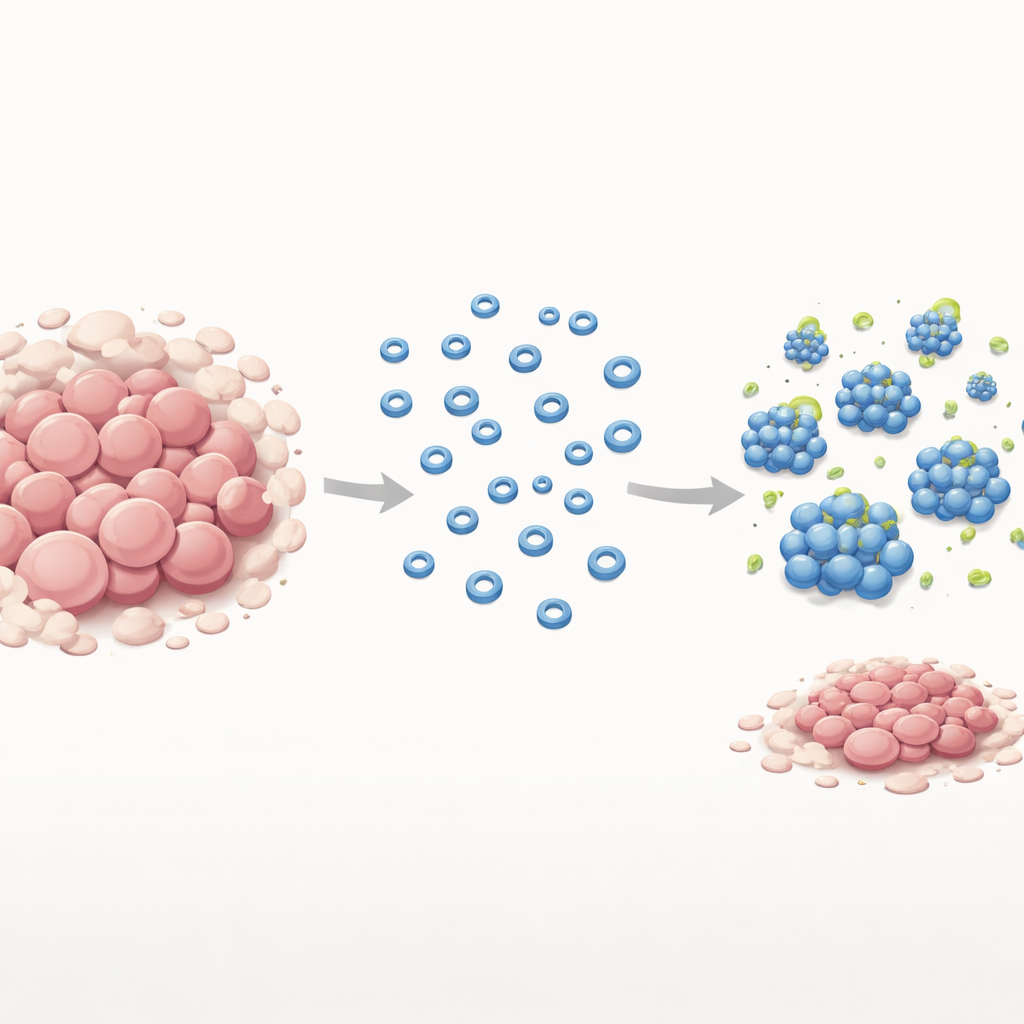
Many diseases, especially brain disorders, are linked to proteins that clump together in harmful ways. But what if, instead of always being dangerous, carefully guided protein clumping could be turned into a weapon against cancer? This study explores that possibility by forcing a cancer‑related protein called WDR5 to bunch up in a controlled fashion, shutting down its tumor‑promoting activity.
Why a Scaffolding Protein Matters for Tumors
WDR5 is a kind of molecular “connector” that helps assemble large teams of proteins on DNA to switch genes on. In many cancers, WDR5 helps recruit powerful drivers like the Myc family of proteins and the MLL1 complex to genes that fuel uncontrolled growth. Because WDR5 touches so many partners, blocking it with ordinary drugs is tricky: you must interfere without wrecking normal cell functions. The authors wondered if there was another way—rather than just blocking one docking site, could they coax WDR5 molecules to stick to each other, forming clumps that pull it away from its cancer‑promoting jobs?
Using Tiny Pores as Single-Molecule Detectors
To hunt for chemicals that make WDR5 cluster, the team turned to nanopores—narrow, quartz-based holes only a few billionths of a meter wide. When a protein passes through such a pore under an electric field, it briefly changes the flow of ions, producing a characteristic spike in electrical current. Larger protein assemblies cause bigger, longer spikes than single proteins. By first measuring the signature of lone WDR5 molecules, and then adding mixtures of candidate compounds, the researchers could spot when WDR5 began to travel through the pore as larger clumps, all without adding any fluorescent tags or labels. Screening 436 in‑house molecules in only three rounds, they identified one standout compound, dubbed WZ‑1, that markedly increased the apparent size of WDR5 passing through the pore.
How a Smart Small Molecule Harnesses a Chemical Switch
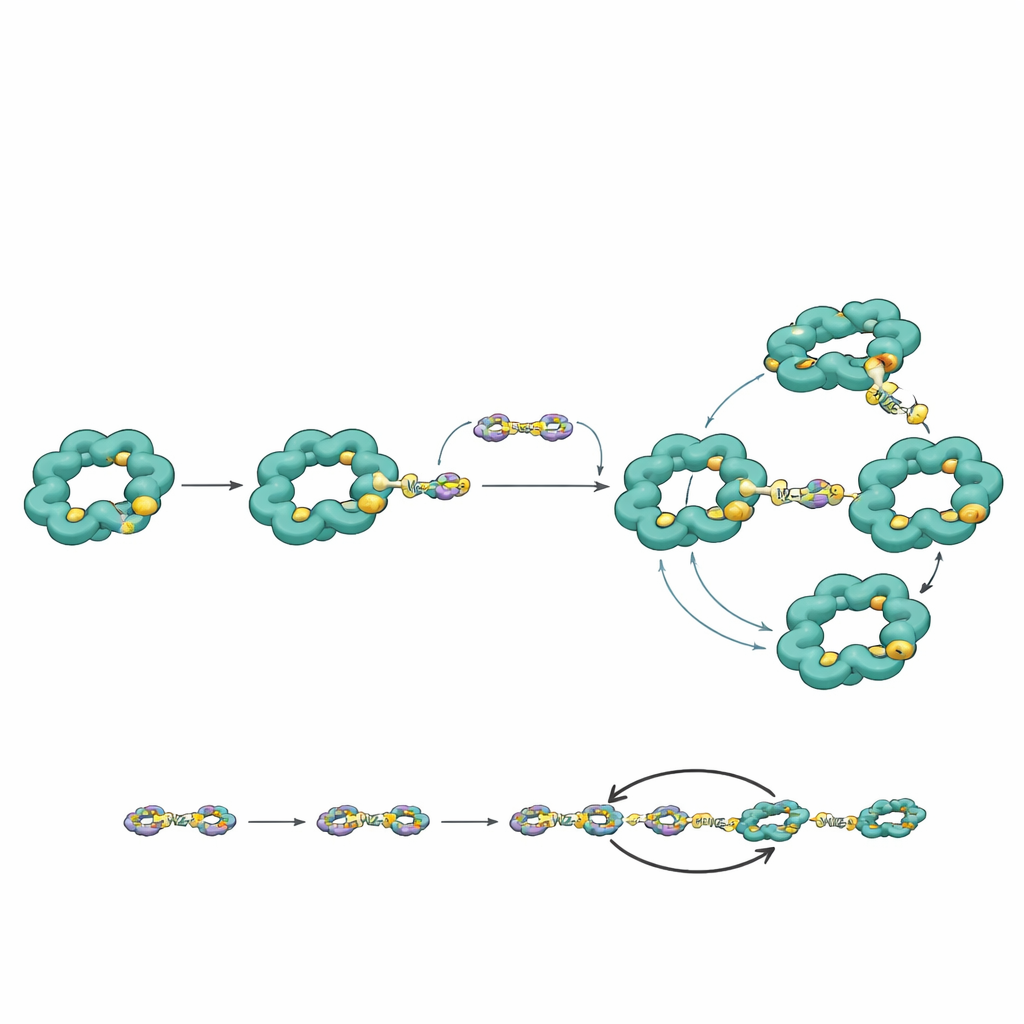
Follow‑up biochemical tests showed that WZ‑1 makes WDR5 form dimers and higher‑order clusters, and that this behavior depends on sulfur–sulfur (disulfide) links between specific amino acids called cysteines. When the researchers added standard reducing agents—chemicals that break disulfide bonds—the WDR5 clusters disappeared. By systematically replacing each of WDR5’s cysteines, they pinpointed one, Cys248, as crucial for WZ‑1–driven assembly. Structural modeling and cryo‑electron microscopy suggested that WZ‑1 first wedges into a known pocket on WDR5, positioning its built‑in disulfide bond next to Cys248. This allows a rapid exchange of sulfur–sulfur links that temporarily tethers WZ‑1 to WDR5, then relays the bond from one protein to another, drawing multiple WDR5 molecules into close proximity. Because WZ‑1 can be released and reused in this exchange, the authors describe the process as “catalytic proximal protein oligomerization,” or CaPPO—a chemical nudge that repeatedly seeds new clusters.
Shutting Down Cancer Signals Inside Cells
The team next tested what WZ‑1 does in living cells. In several colon cancer cell lines, WZ‑1 slowed cell growth at low micromolar doses, while having much weaker effects on non‑cancerous colon cells. In engineered cells overproducing WDR5, treatment with WZ‑1 led to visible WDR5 dimers, confirming that clustering also occurs inside cells. Gene‑expression analyses showed that WZ‑1 dampens pathways controlling cell‑cycle progression and lowers the activity of Myc‑dependent genes—patterns similar to, but broader than, those seen with classic WDR5 pocket blockers. Biochemical pull‑down experiments revealed that WZ‑1‑induced WDR5 assemblies lose their ability to bind both the MLL1 complex and Myc, effectively disconnecting WDR5 from two central growth‑promoting circuits.
What This Means for Future Cancer Medicines
Altogether, the work introduces CaPPO as a fresh design strategy: instead of just inhibiting a single binding site, a small molecule like WZ‑1 can catalytically drive a disease‑related protein into well‑defined clusters that disable multiple functions at once. The study also showcases nanopore sensing as a fast, low‑sample method to discover such protein‑clustering inducers in vitro. While WZ‑1 itself still faces challenges—notably the sensitivity of disulfide bonds to the cell’s chemical environment and the risk of unwanted aggregation elsewhere—the concept opens the door to a new class of anti‑tumor agents that work by selectively “over‑organizing” key proteins until they can no longer support cancer growth.
Citation: Fang, Y., Jiang, L., Wang, F. et al. Catalytic Proximal Protein Oligomerization as an Anti-Tumor Strategy Targeting WDR5. Nat Commun 17, 3879 (2026). https://doi.org/10.1038/s41467-026-70409-z
Keywords: protein oligomerization, WDR5, nanopore sensing, disulfide chemistry, cancer therapeutics