Clear Sky Science · en
Multi-omic identification of key transcriptional regulatory programs during endurance exercise training in rats
Why training changes your body from the inside
Most people know that regular exercise strengthens muscles, protects the heart, and sharpens the mind. This study asks a deeper question: how does long term endurance training rewire the body at the level of genes and their switches across many organs, and why might those hidden changes help explain the wide ranging health benefits of staying active?
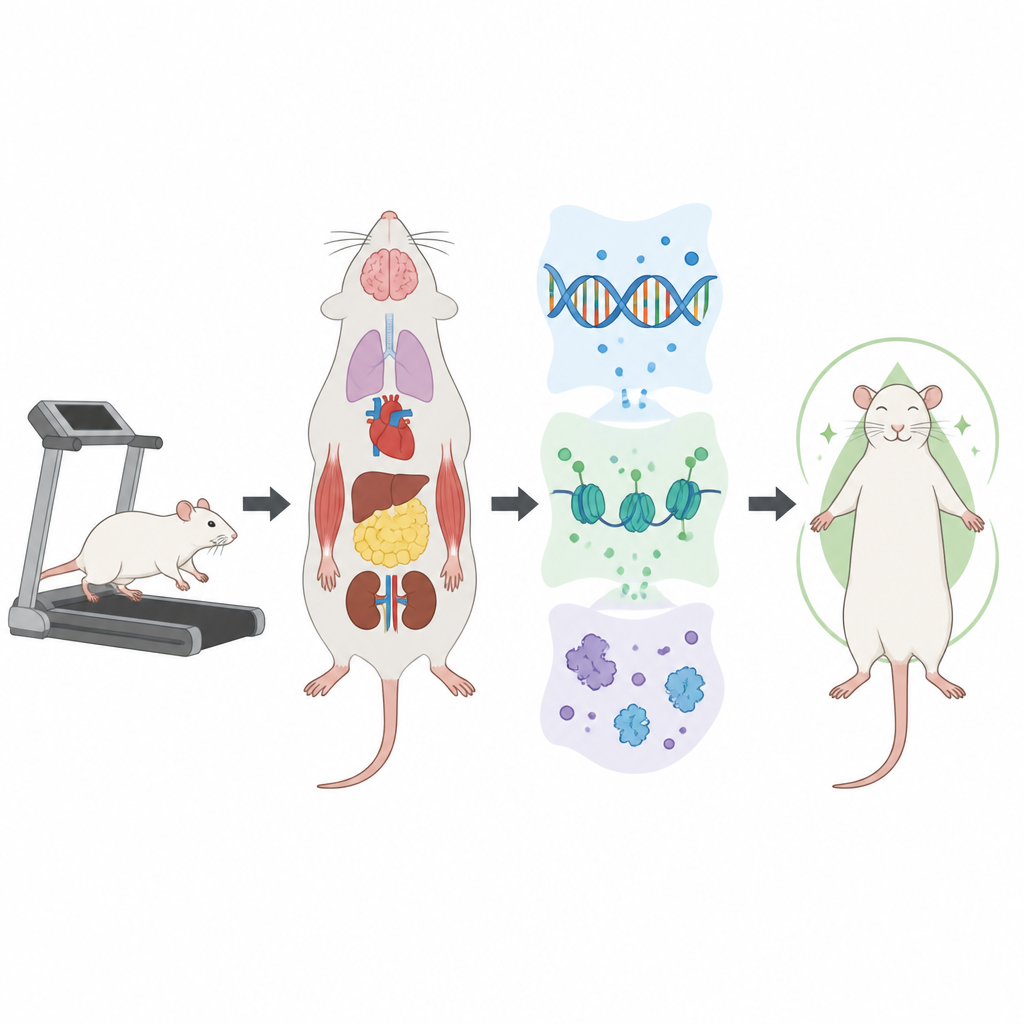
How scientists followed exercise through the body
Researchers trained male and female rats on a structured treadmill program for up to eight weeks, similar to a human starting a regular jogging routine. At different time points they collected eight types of tissue, including leg muscle, heart, liver, lung, kidney, brain, and two kinds of body fat. Instead of looking at just one kind of molecule, they combined several layers of information: which genes were turned up or down, how open or closed the DNA packaging was, how much chemical tagging sat on the DNA, and how abundant and chemically modified certain proteins were. This multi layer approach, often called “multi omic,” let them see both the switches and the responses across the body at once.
Each organ rewires itself in its own way
The team found that most exercise related changes were unique to each tissue. Many genes and DNA regions were present in several organs, but when rats trained, the parts that actually changed were usually specific to one tissue. For example, muscle and heart shared boosts in pathways that support energy production and contraction, whereas fat tissue showed strong links to immune and inflammation pathways. The patterns of change also differed between early and later weeks of training, and between females and males, especially in fat and brain areas, underlining that timing and sex both shape how bodies adapt to regular exercise.
The hidden switches behind training adaptations
At the core of these changes are transcription factors, proteins that bind DNA and act like dimmer switches for genes. The study showed that endurance training influences genes through at least two main routes. In some cases, the structure around DNA becomes more or less open, making it easier or harder for these switches to reach their targets. In other cases, the switches themselves change in amount or activity without big shifts in local DNA structure. By matching patterns in DNA openness, DNA chemical tags, and gene activity, the researchers highlighted several key switches in different organs, such as SP2 in the lung, BMYB in skeletal muscle, and BMAL1, a clock related factor, in the liver.
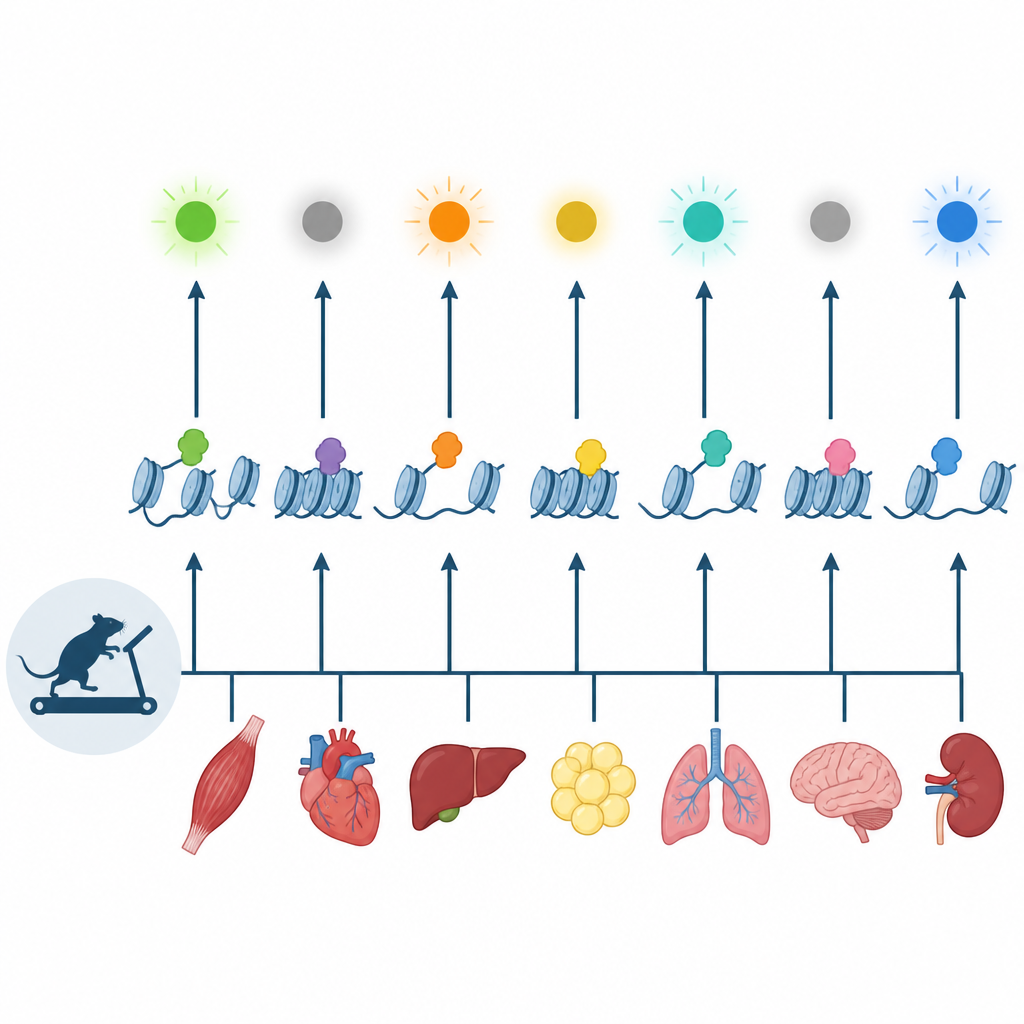
Exercise, immunity, and body wide communication
Endurance training also altered immune cell makeup, especially in fat and lung tissue, and many of the gene changes tracked with shifts in these cell types. In the lung, the study uncovered a chain of transcription factors that appears to control the production of certain immune cells called monocytes, which decreased in females after training. Other switches tied gene activity to whole body traits such as improved aerobic capacity and lower body fat. For instance, some muscle genes turned on in step with gains in oxygen uptake, while others in fat tissue tracked with changes in body fat levels, linking deep molecular events to familiar fitness outcomes.
What this means for everyday exercise
Together, these findings show that regular endurance training does far more than build muscle or burn calories. It reshapes networks of gene switches across multiple organs, in ways that depend on tissue type, sex, and training duration. By mapping how exercise taps into the body’s genetic control systems, this work helps explain why physical activity can influence heart health, metabolism, immunity, and even brain function all at once, and offers a blueprint for designing exercise or drug strategies that target these powerful internal programs.
Citation: Smith, G.R., Zhao, B., Lindholm, M.E. et al. Multi-omic identification of key transcriptional regulatory programs during endurance exercise training in rats. Nat Commun 17, 4286 (2026). https://doi.org/10.1038/s41467-026-70397-0
Keywords: endurance exercise, gene regulation, transcription factors, multi omics, skeletal muscle