Clear Sky Science · en
Residential green space, air pollution, and related metabolites in association with depression among cancer survivors
Why the Places We Live Matter After Cancer
Cancer survivors often hear advice about diet, exercise, and follow-up care, but far less attention is paid to something they cannot easily control: their surroundings. This study asks a deceptively simple question with big real-world implications: can living near trees, parks, and water—and away from heavy traffic and dirty air—actually lower the chances of developing depression after cancer? Using detailed health and environmental data from tens of thousands of people in the UK, the researchers begin to untangle how nature, pollution, and even tiny molecules in the blood might work together to shape mental health in this vulnerable group.
Following Cancer Survivors Over Time
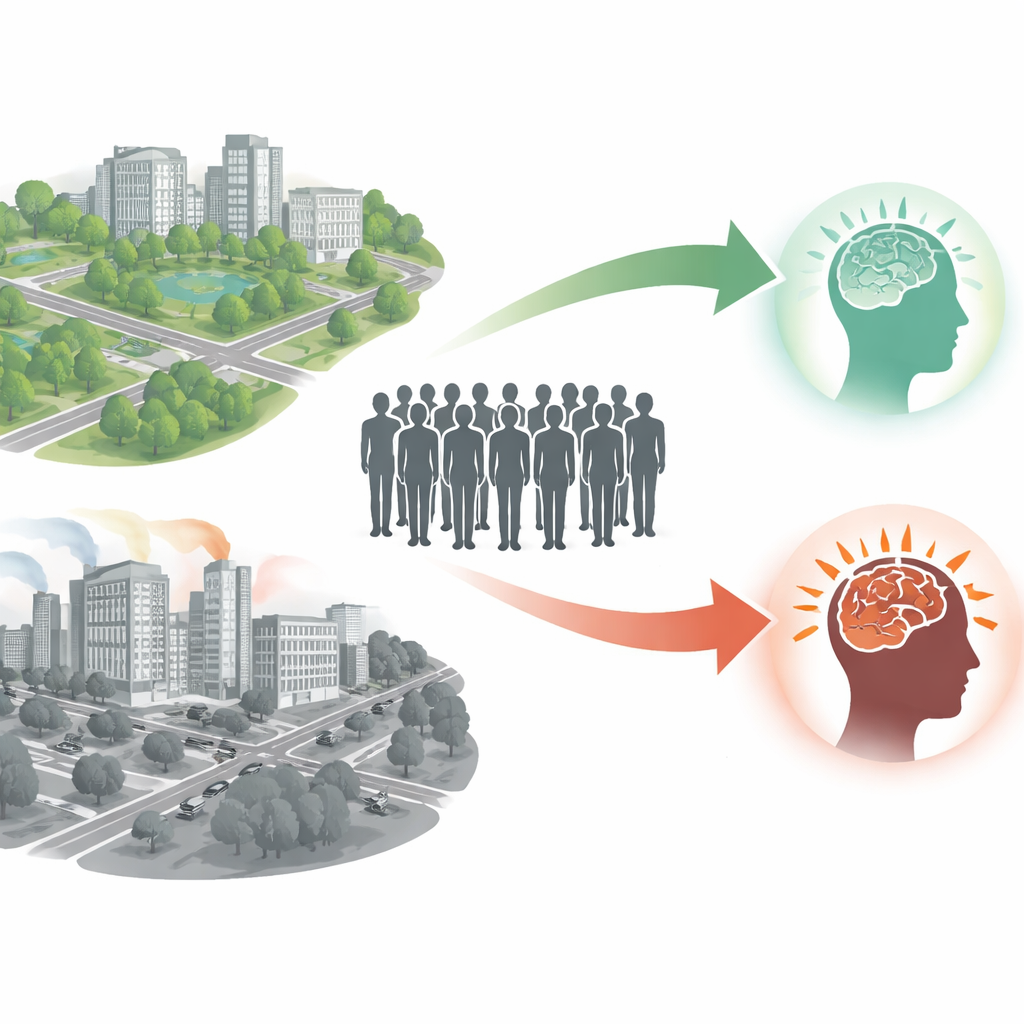
The researchers drew on the UK Biobank, a long-running project that tracks the health of hundreds of thousands of adults. They focused on 21,507 people who had already survived cancer for at least five years at the start of the study, then followed them for about 12 years on average to see who later developed depression serious enough to appear in hospital records. For each participant, they estimated how much greenery, surface water, and broader “natural environment” (such as forests, fields, and other non-built areas) surrounded their home within short walking distances. They also linked each home address to levels of common air pollutants, including nitrogen dioxide and fine particles from traffic and other sources.
Greener Neighborhoods and Lower Depression Risk
When the team compared people living in the greenest areas with those in the least green, a clear pattern emerged. Cancer survivors whose homes were surrounded by more green space or natural environment within about a kilometer had a noticeably lower risk of developing depression over time. The reductions were on the order of 15–18 percent for those in the highest versus lowest exposure groups, and the relationship strengthened as greenery increased. Nearby water, or “blue space,” also seemed helpful at shorter distances, though the evidence there was more mixed. These benefits appeared especially strong for breast cancer survivors, who are known to face heavy psychological burdens after treatment, and for some other cancer types where specific patterns with green or blue space emerged.
Dirty Air Pushes Risk in the Opposite Direction
The picture reversed when the researchers looked at air pollution. Higher levels of nitrogen dioxide and nitrogen oxides—gases closely tied to vehicle exhaust and urban traffic—were linked to higher chances of depression among cancer survivors, even after accounting for social and lifestyle differences such as income, smoking, and physical activity. Fine particle pollution showed similar trends. When the team combined several pollutants into a single “air pollution score,” those exposed to the highest levels had about a 15 percent higher risk of depression than those in the lowest group. Importantly, people who both lived amid abundant greenery and breathed cleaner air enjoyed the lowest risks of depression, suggesting that nature and clean air together offer the greatest mental health protection.
Tiny Blood Molecules as Messengers
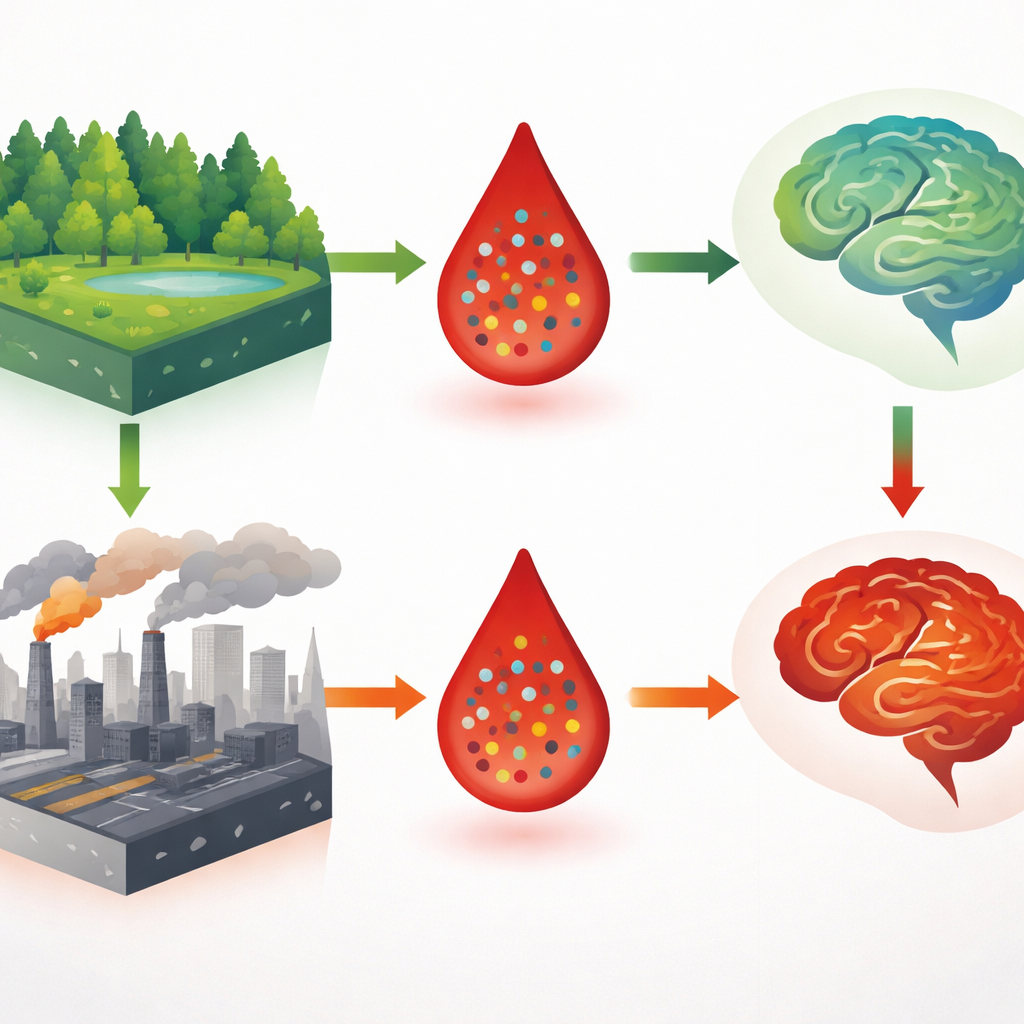
To explore how the outside world might get “under the skin,” the researchers examined a detailed profile of 249 small molecules in the blood—metabolites—measured at baseline in a large subset of participants. They looked for patterns of metabolites that tended to rise or fall with greener surroundings, with overall natural environment, and with combined air pollution. Each of these environmental patterns corresponded to its own “metabolic signature,” a weighted mix of many molecules. Cancer survivors whose metabolic patterns matched those linked to natural environments tended to have lower risks of future depression, while those whose profiles resembled the pollution-related pattern tended to have higher risks. Statistical analyses suggested that the metabolite mix associated with green surroundings explained a small but meaningful portion of the protective effect of green space on depression.
What This Means for Life After Cancer
Put simply, this work supports the idea that where cancer survivors live—how green it is, and how dirty the air is—can nudge their risk of depression up or down over many years. Greener, more natural neighborhoods and cleaner air appear to make depression less likely, while polluted environments push risk in the opposite direction. The study also hints that part of this influence may run through subtle shifts in blood chemistry that affect how the brain and body respond to stress. While individuals cannot instantly redesign their cities, the findings strengthen the case for urban planning, environmental rules, and clinical guidance that treat access to nature and clean air as part of comprehensive, long-term care for people living beyond cancer.
Citation: Zhao, J., Ye, J., Xue, E. et al. Residential green space, air pollution, and related metabolites in association with depression among cancer survivors. Nat Commun 17, 3690 (2026). https://doi.org/10.1038/s41467-026-70393-4
Keywords: cancer survivors, green space, air pollution, depression, metabolomics