Clear Sky Science · en
Self-polymerized polyphenol-based platform for the management of dry eye pathogenesis
Why Dry, Irritated Eyes Matter
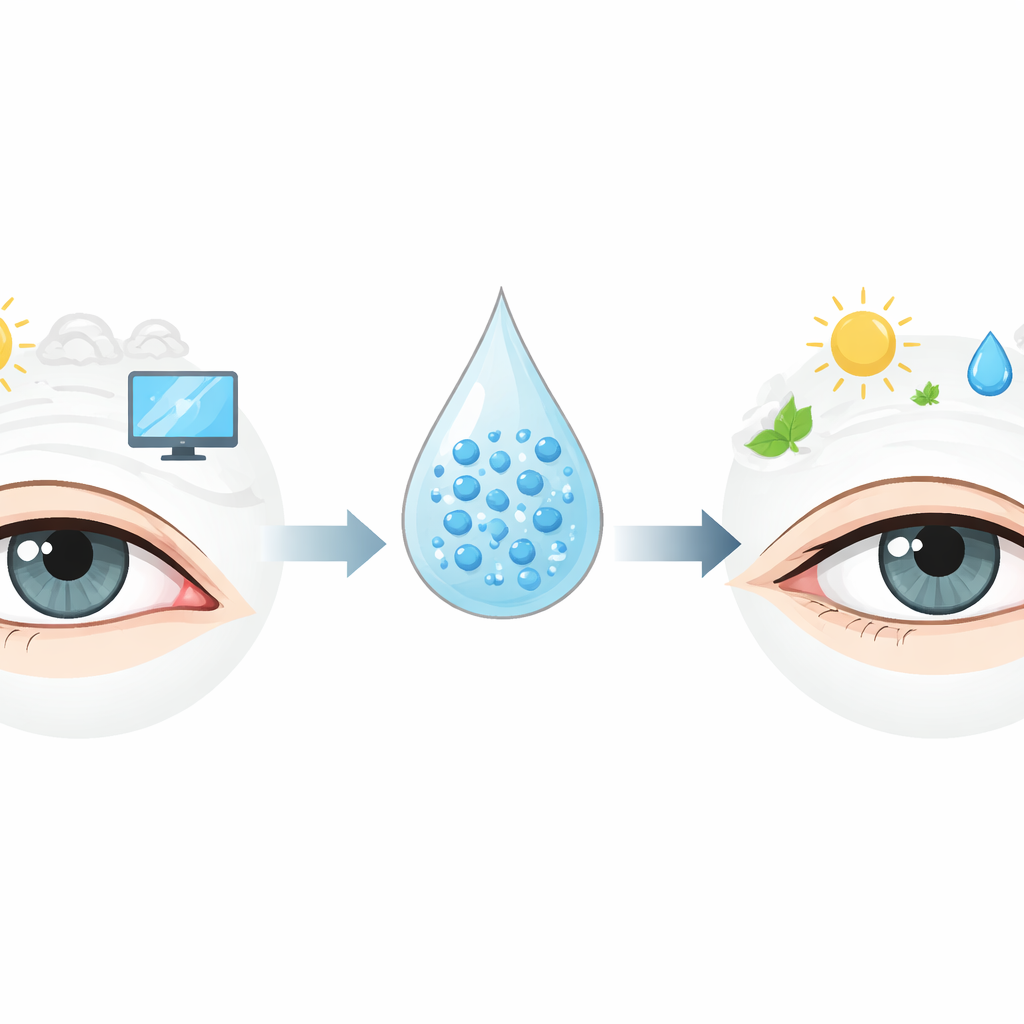
Many people live with dry, burning, or gritty eyes, whether from long hours staring at screens, aging, or medical conditions. These symptoms are more than a nuisance: they reflect a stressed eye surface locked in a self‑worsening cycle of dryness, irritation, and inflammation. This study describes a new kind of eye drop built from plant‑derived ingredients and rare‑earth ions, designed to stick to the eye longer, mop up harmful molecules, calm inflammation, and help the surface of the eye repair itself.
The Vicious Circle Behind Dry Eyes
Dry eye disease arises when tears are either too few or of poor quality, leaving the eye surface exposed. This triggers a chain reaction: the tear film becomes overly salty, cells experience oxidative damage from reactive oxygen species, and inflammatory cells flood in. Together, these changes kill more cells, thin the protective surface, and further reduce tear production, locking the eye into a vicious circle of dryness and inflammation. Conventional artificial tears mainly act as short‑lived lubricants, and anti‑inflammatory drugs are quickly washed away or struggle to cross natural mucus and cell barriers, so their relief is often incomplete and temporary.
Building a Smarter Eye Drop from Plant Molecules
The researchers set out to design an eye drop that could both stay on the eye longer and actively counter the damaging chemistry of dry eye. They started with rosmarinic acid, a natural compound found in many herbs that is known for its antioxidant and anti‑inflammatory effects. By allowing this small molecule to link to itself, they created long chains rich in protective chemical groups. These chains were combined with hyaluronic acid, a sugar polymer already used in eye care, and cerium ions, which can switch between two electrical states. Together they formed tiny, uniform spheres known as nanoparticles. Finally, the team added sulfur‑containing “hooks” to the surface of the particles so they could grab onto mucus on the eye, producing the final s‑RHC nanoparticles.
How the Tiny Particles Work on the Eye
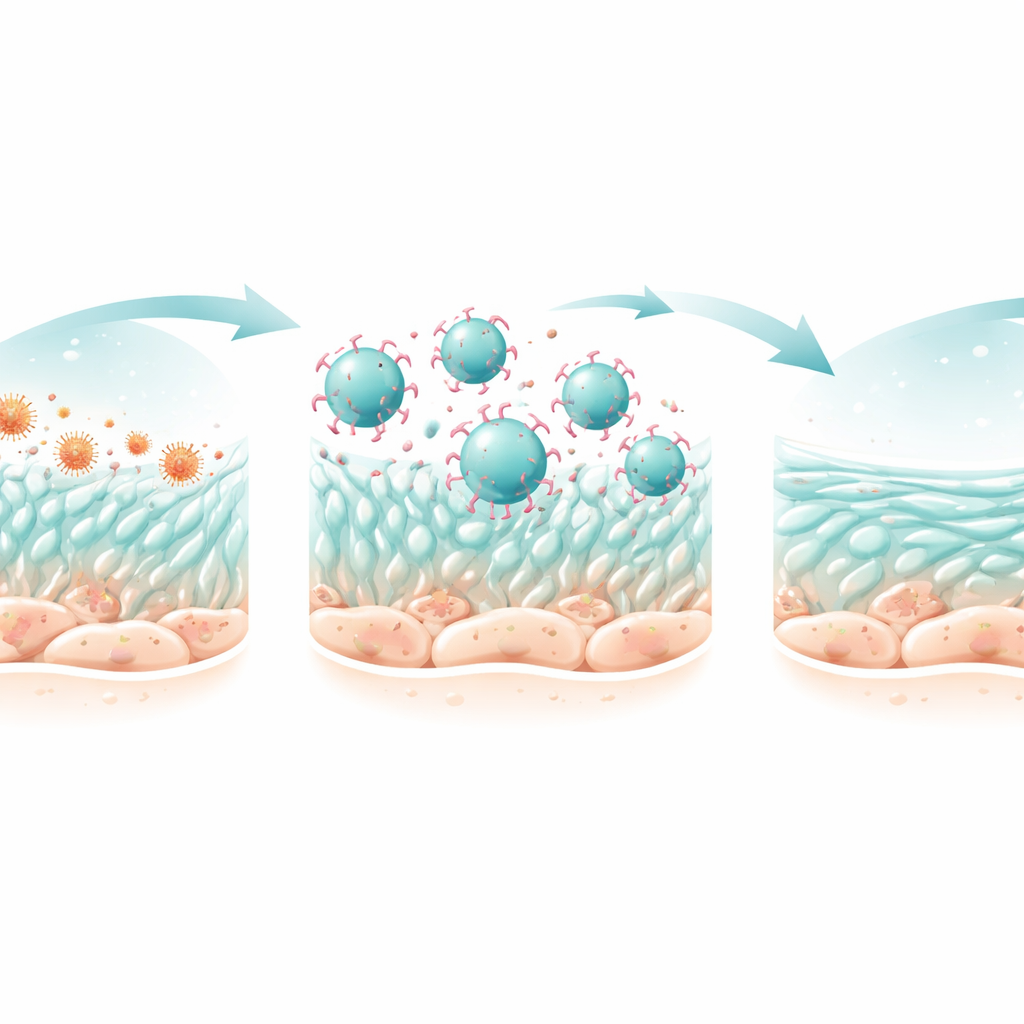
The design gives these particles several jobs at once. The sulfur “claws” form reversible links with cysteine‑rich regions in mucus, helping the particles cling to the tear film instead of being washed away. Inside, the polyphenol chains from rosmarinic acid and the cerium ions work together to neutralize reactive oxygen species, reducing oxidative stress. The cerium ions also cycle between two oxidation states, behaving like tiny catalysts that repeatedly mop up harmful radicals. Laboratory tests showed that the particles stick strongly to mucus yet can still be taken up by corneal cells, where they protect against chemical stress, reduce markers of DNA damage, and restore antioxidant enzyme activity without harming the cells.
Calming Inflammation and Helping Tissues Heal
Beyond protecting surface cells, the nanoparticles influence immune cells that drive inflammation. In cultured macrophages pushed toward an aggressive, tissue‑damaging state, exposure to the particles shifted them toward a more healing‑oriented profile, lowering production of inflammatory messengers and nitric oxide while increasing signals associated with repair. When the eye drops were tested in two different mouse models of dry eye—one driven by a toxic preservative and another by blocked tear production—the treated animals showed faster corneal healing, thicker and healthier surface layers, restoration of tear volume and tear film stability, and recovery of mucus‑secreting goblet cells. Levels of oxidative stress, cell death, and key inflammatory proteins in the cornea all fell markedly.
Safety and How This Could Change Treatment
Because anything placed on the eye must be very safe, the team carefully checked for unwanted effects. The nanoparticles showed low toxicity in cell cultures, did not damage red blood cells, and remained stable in solution. In mice and rabbits, repeated dosing over several weeks did not alter corneal thickness, body weight, or the appearance of major organs and eye structures. Overall, the study suggests that a self‑assembled, plant‑based nanoparticle eye drop that sticks to the eye, scavenges harmful molecules, and gently redirects inflammation could offer faster and more durable relief than current treatments. While human trials are still needed, this approach points toward a new generation of multi‑tasking, long‑lasting therapies for dry eye and other disorders where oxidative stress and inflammation damage delicate tissues.
Citation: Wang, Z., Lv, Z., Ge, Y. et al. Self-polymerized polyphenol-based platform for the management of dry eye pathogenesis. Nat Commun 17, 4132 (2026). https://doi.org/10.1038/s41467-026-70388-1
Keywords: dry eye disease, nanoparticle eye drops, antioxidant therapy, ocular inflammation, mucus-adhesive drug delivery