Clear Sky Science · en
Rejoining fragmented ancient bamboo slips with physics-driven deep learning
Piecing Together a Broken Past
Across East Asia, many of the earliest books were not bound paper volumes but long, thin strips of bamboo covered in ink. Buried for more than two thousand years, many of these fragile records now reach archaeologists as jumbled heaps of tiny pieces. Manually working out which fragment connects to which can take experts weeks for a single match. This study introduces WisePanda, a new physics-guided artificial intelligence system that helps scholars rejoin these ancient bamboo slips far more quickly and accurately, opening a faster path to the words and ideas they contain. 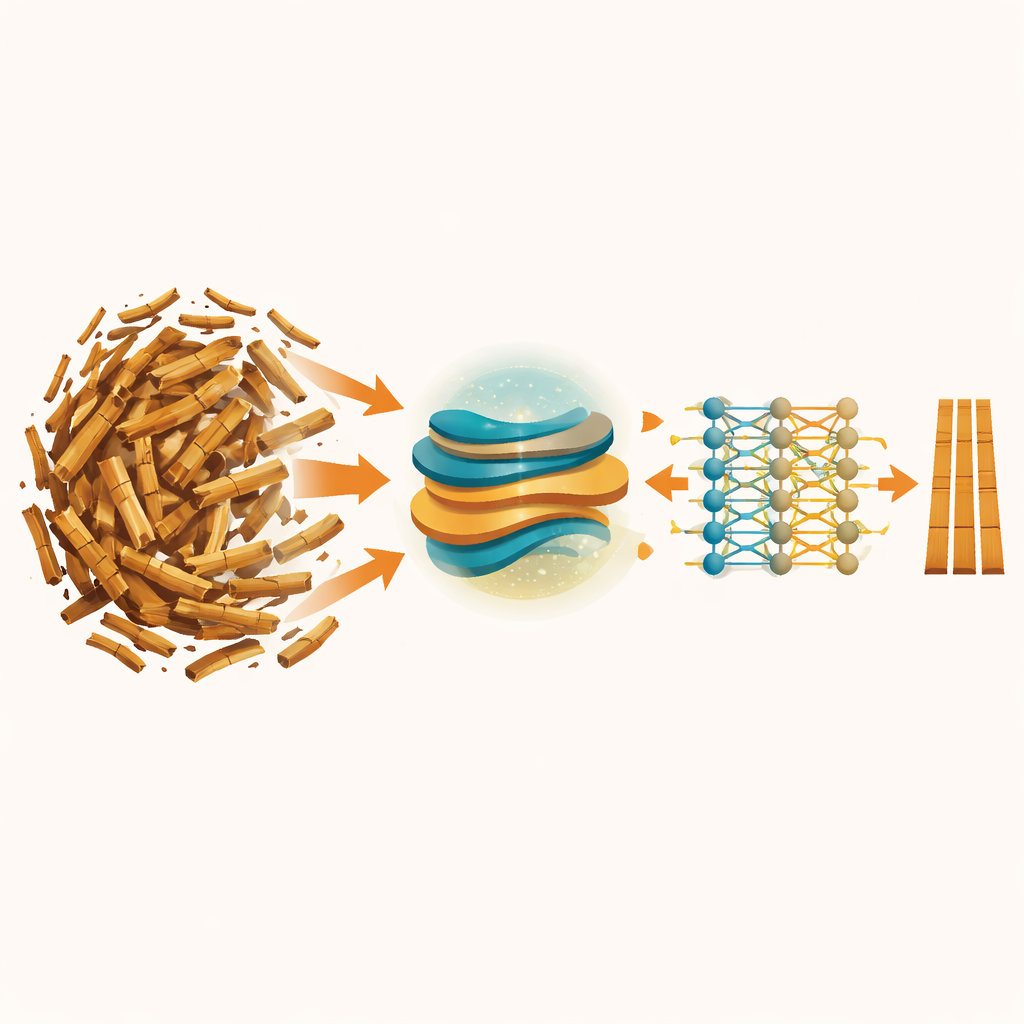
Why Ancient Bamboo Matters Today
Bamboo slips preserve everything from legal codes and official reports to philosophy and daily calendars from early Chinese history. Because bamboo is tough, many slips survived underground with writing still visible. Yet earthquakes, soil pressure, moisture, and microbes have shattered numerous slips into thousands of irregular pieces. The edges are warped and eroded, and the characters often do not reach the broken margins. As a result, matching fragments by eye is like solving a gigantic jigsaw puzzle where most of the guiding picture is missing. Traditional computer tools that compare curve shapes struggle because the break patterns are extremely complex and heavily worn.
Teaching a Machine to Follow the Cracks
Instead of asking a computer to learn solely from the few fragment pairs that archaeologists have already matched by hand, the WisePanda approach starts from the physics of how bamboo breaks and decays. The authors model bamboo as tightly packed vertical fibers. They simulate how sideways forces cause cracks to snake across these fibers, bundle by bundle, following known rules of fracture mechanics. Then they mimic centuries of burial by selectively “eroding” exposed bumps and sharp points along the broken edge, imitating how moisture and microbes eat away at protruding regions. By tuning this virtual fracture-and-decay machine so that its synthetic edges statistically resemble real excavated ones, they can generate huge numbers of realistic matched fragment pairs without any human labeling. 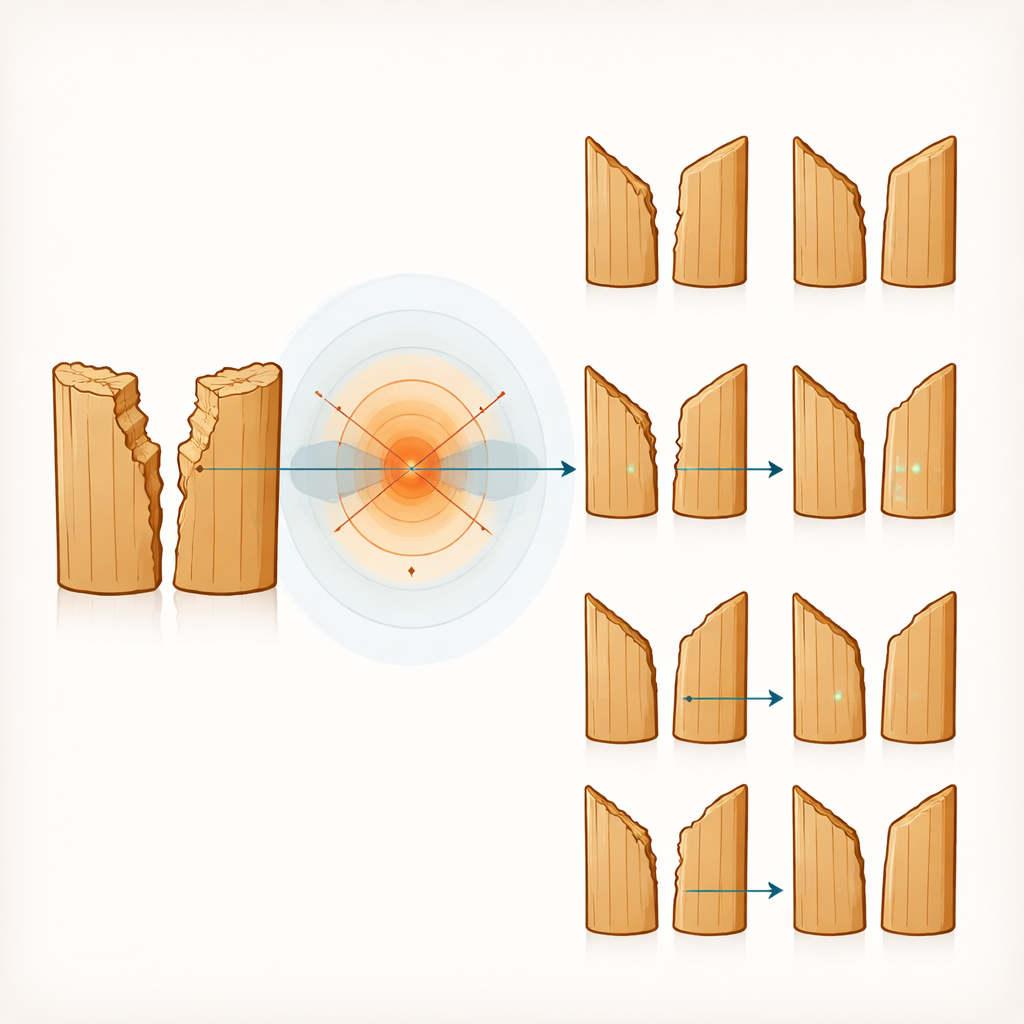
How the Smart Ranking Engine Works
These simulated pairs feed a neural network designed to tell whether two fragment edges belong together. Each edge is reduced to a simple curve profile sampled at dozens of points, stripping away distracting details like color or surface texture. The network learns from triplets of examples: a true pair that should be rated similar and a third, unrelated curve that should be rated very different. Over time it builds an internal sense of what genuine matching break lines look like. When given a real fragment, WisePanda compares its edge against all others in a collection and produces a ranked list of the most promising partners, turning a search among thousands of candidates into a short, manageable checklist for human experts.
Putting the Method to the Test
The team evaluated WisePanda on digitized fragments from a Western Han dynasty tomb in China, where 118 pairs of slips had already been painstakingly rejoined by archaeologists. In tests where the correct partner was hidden among hundreds or more than a thousand candidates, WisePanda consistently found the true match near the top of its suggestions, outperforming a range of classic curve-matching algorithms and modern generative models. Even when applied to wooden slips, whose fibers and decay patterns differ from bamboo, the system still provided useful guidance, indicating that the physics-based strategy can adapt to other materials with further tuning.
New Tools for Saving Cultural Heritage
WisePanda shows how combining physical insight with deep learning can break through a key bottleneck in cultural heritage work: the lack of large, hand-labeled training sets. By first simulating how artifacts break and weather, then teaching a network on this synthetic yet realistic data, the authors offer a practical tool that archaeologists are already using to narrow their search for matches. In plain terms, the system does not replace experts; it acts as an intelligent assistant that sorts the haystack so people can more quickly find the needles. As similar physics-driven methods are developed for ceramics, wood, metal, and other materials, they could transform how museums and researchers around the world reconstruct the fragile remains of our shared past.
Citation: Zhu, J., Zhao, Z., Lei, H. et al. Rejoining fragmented ancient bamboo slips with physics-driven deep learning. Nat Commun 17, 3550 (2026). https://doi.org/10.1038/s41467-026-70361-y
Keywords: bamboo slips, cultural heritage, deep learning, fragment reconstruction, physics-informed AI