Clear Sky Science · en
Ultrastrong and tough paper structure from densified hybrids of multiscale cellulose fibers
Stronger Paper for a Plastic-Weary World
From grocery bags to bubble mailers, we rely on plastics because they are strong, tough, and resistant to tearing—yet they linger in the environment for centuries. This study explores a new kind of high-performance paper made entirely from plant-based building blocks that could replace many plastic packaging materials. By cleverly rearranging and reinforcing ordinary wood pulp with tiny cellulose components, the researchers create a paper that is not only far stronger than normal sheets but also tough, energy-efficient to make, and fully biodegradable.
Making the Most of Nature’s Building Blocks
Conventional paper is surprisingly weak compared with the wood fibers it comes from. Individual pulp fibers can withstand stresses up to tens of times higher than a typical sheet of office paper. The missing ingredient is strong bonding where fibers touch: in regular paper, there are large gaps between fibers and only modest contact areas, so loads are not shared efficiently. Earlier attempts to boost strength added chemical glues or mixed in very fine cellulose fibrils, which helped but still left a big gap between the performance of single fibers and that of the finished paper.
Filling the Gaps from Micro to Nano
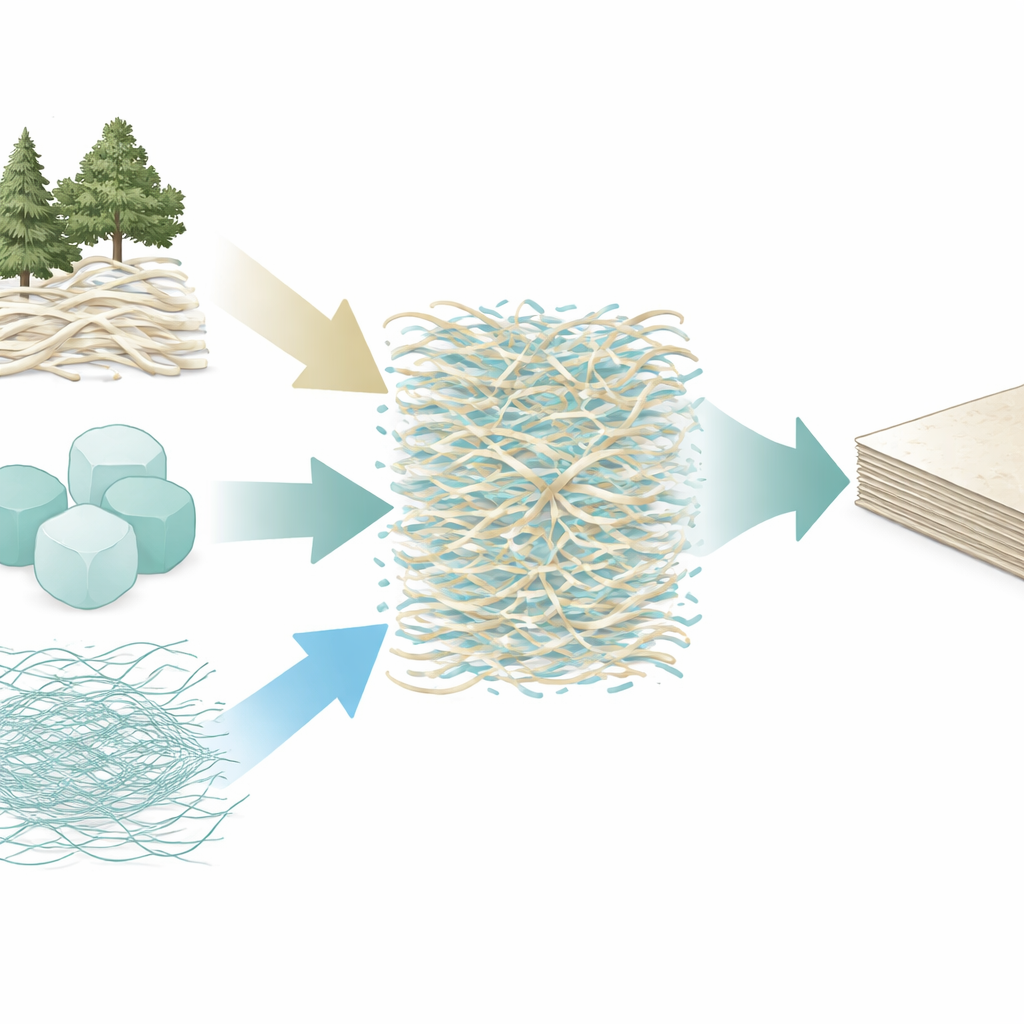
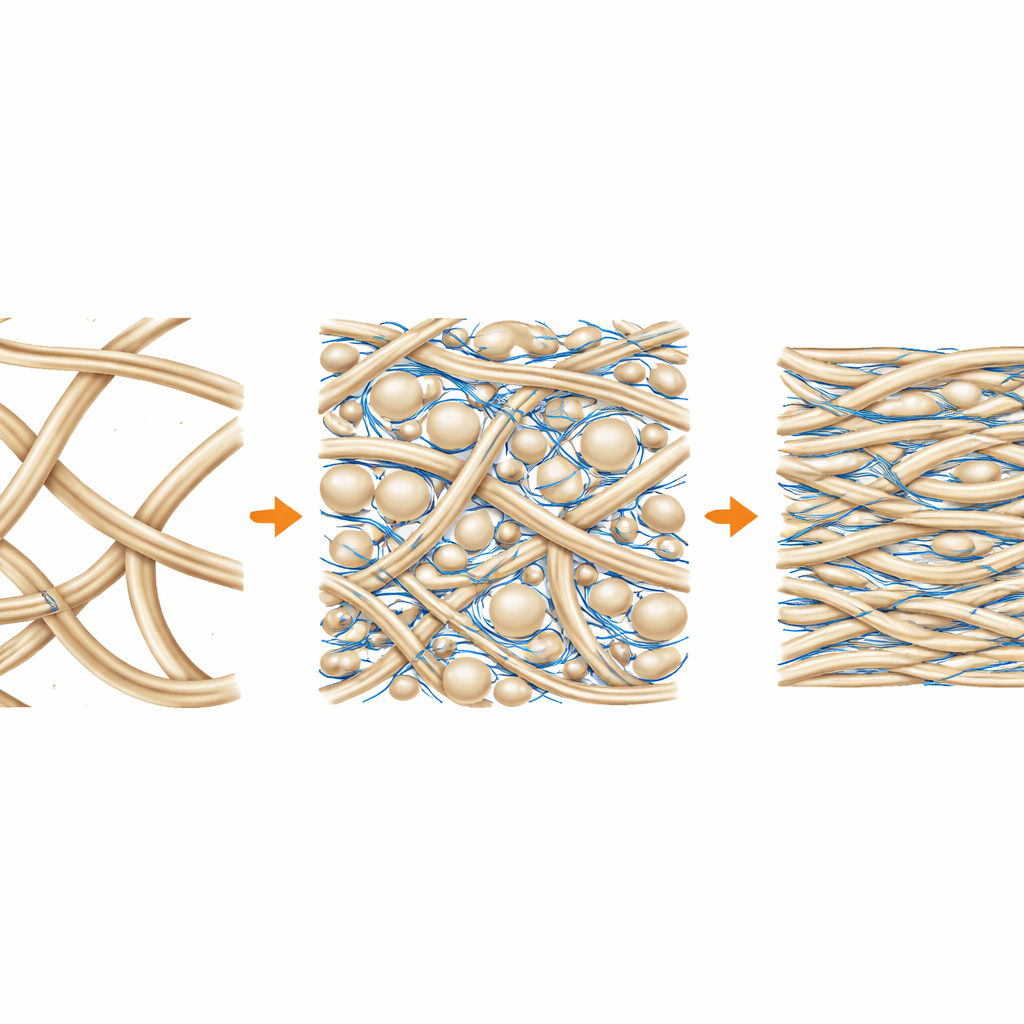
The team tackled this problem by combining cellulose at three different size scales: millimeter-long wood pulp fibers, microscopic gel-like cellulose blocks, and nanoscale cellulose threads. In water, these components form a soft, three-dimensional network. As the water is removed during a standard papermaking process, capillary forces pull everything closer together. The microgels wedge into the larger spaces between pulp fibers, while the nanofibers slip into the remaining tiny gaps, stitching the structure into a nearly continuous solid. This multiscale filling greatly increases the contact area between cellulose surfaces and allows many more hydrogen bonds—weak individually but powerful in large numbers—to form.
A Paper Sheet with Steel-Like Strength
By carefully tuning the recipe, the researchers found that a 1:1:1 weight ratio of pulp fibers, microgels, and nanofibers produced a standout material. This hybrid cellulose paper reached an impressive tensile strength of about 811 megapascals, several times higher than ordinary paper and rivaling or surpassing many other advanced cellulose films. It also stretched more before breaking and showed a form of strain hardening, where the material becomes tougher as it is pulled. Microscopy images confirmed that, unlike the layered, porous structure of regular paper, the new sheets are densely packed, with gaps largely filled in by the smaller cellulose components. When the team adjusted the mixing ratios, fiber treatment, or particle size, the strength and toughness consistently dropped, underscoring how critical the three-scale design is.
Hidden Role of Water and Strong Natural Glue
A key insight from the work is that a small amount of water tightly bound to cellulose acts as an essential part of the internal glue. When the paper was overheated to drive off this bound water, its strength fell dramatically, and its mechanical behavior changed. Under everyday humidity, however, the material kept its high strength and toughness, and changes caused by humid air were largely reversible. The same multiscale mixture also proved to be an excellent adhesive for glass and paper surfaces, delivering higher shear strength than several other bio-based glues. Importantly, the hybrid paper could be filtered and dried much faster than films made only from nanocellulose, meaning it requires less energy to manufacture.
From Lab Sheet to Sustainable Structures
Overall, this work shows that by filling the empty spaces in paper with gel-like and nanoscale cellulose, we can unlock much more of the inherent strength of wood fibers without adding synthetic plastics or complex chemistry. The resulting sheets are ultrastrong, tough, and capable of bonding well to other hydrophilic materials, while remaining biodegradable and relatively easy to produce. For a layperson, the takeaway is that smarter use of plant-based fibers—not entirely new materials—may provide paper-like products that can handle demanding structural and packaging roles currently dominated by plastics, offering a cleaner path forward for everyday materials.
Citation: Liao, L., Li, B., Shi, Z. et al. Ultrastrong and tough paper structure from densified hybrids of multiscale cellulose fibers. Nat Commun 17, 3889 (2026). https://doi.org/10.1038/s41467-026-70357-8
Keywords: cellulose paper, plastic alternatives, sustainable packaging, fiber reinforcement, biodegradable materials