Clear Sky Science · en
CAMPER: mechanistic artificial intelligence for designing peptides that target MRSA persisters
Why this matters for stubborn infections
Many bacterial infections seem to clear with antibiotics, only to flare up again weeks or months later. A key culprit is methicillin‑resistant Staphylococcus aureus (MRSA), which can hide in slow‑growing “persister” cells and protective biofilms that shrug off standard drugs. This study introduces CAMPER, a new artificial intelligence–driven design system that creates short antimicrobial peptides—drug‑like mini‑proteins—specifically engineered to punch holes in MRSA membranes and wipe out these hard‑to‑kill cells in lab tests and in mice.
A new way to design infection‑fighting molecules
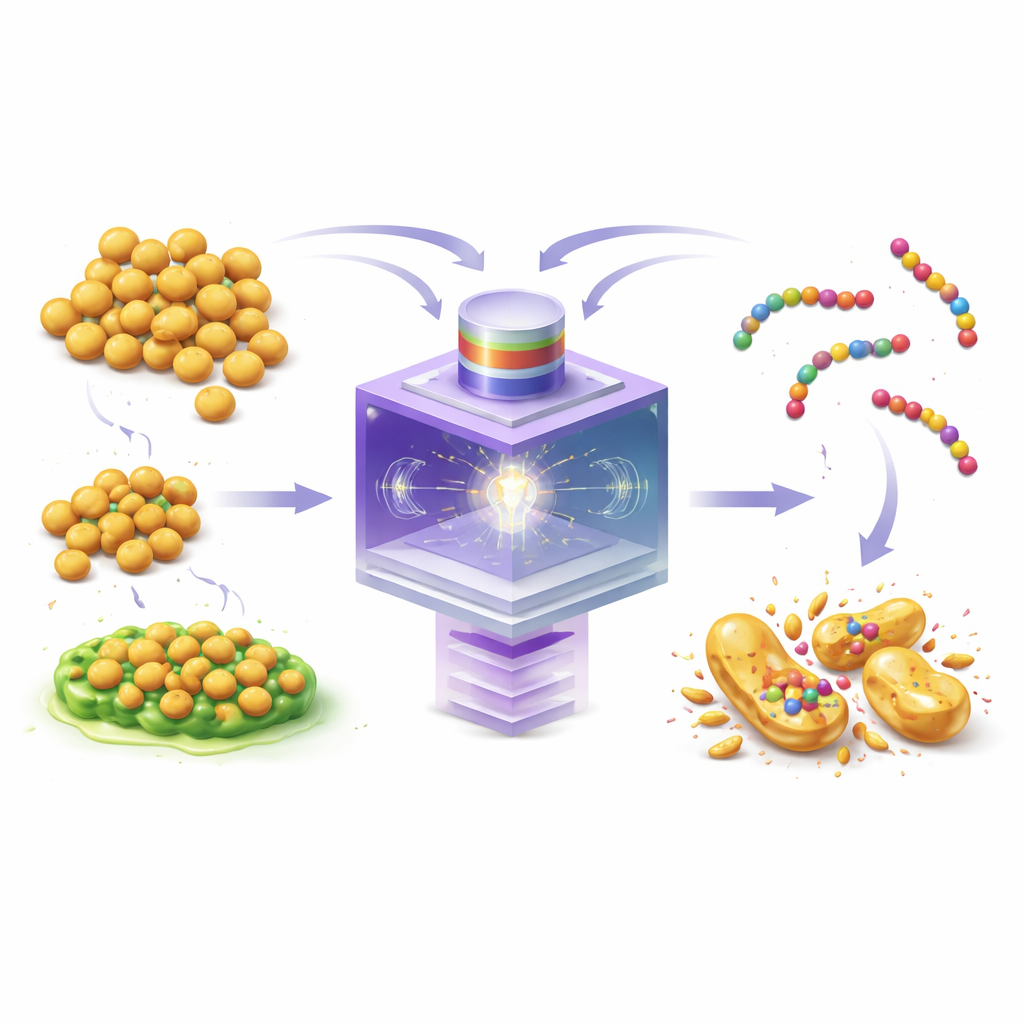
CAMPER (Constraint‑driven AMP Engineering with Ranking) combines two powerful ideas: pattern‑finding machine learning and hard‑won biophysical knowledge about how membrane‑attacking peptides work. The authors first trained a computer model on thousands of known peptides with measured activity against S. aureus, teaching it to recognize feature patterns linked to killing power. They then added a second layer that scores each candidate on four physical traits crucial for safely disrupting bacterial membranes: positive charge, water‑repelling character, ability to form a helix, and separation of oily and watery faces along that helix. Only peptides that look good to both the statistical model and the biophysics filter rise to the top of the priority list for synthesis and testing.
From virtual library to a potent real‑world peptide
To test CAMPER, the team started from a natural toxin family called mastoparans—short helical peptides from wasp venom—and computationally generated a library of 160,000 variants. CAMPER screened this huge space and highlighted a 12‑amino‑acid peptide dubbed WP‑CAMPER1. In standard lab tests, WP‑CAMPER1 halted the growth of MRSA at very low concentrations, and it retained activity under realistic conditions, including body‑like salt levels, modest pH changes, and the presence of blood serum. Variants that pushed charge or hydrophobicity higher did not perform better, suggesting CAMPER had already placed WP‑CAMPER1 near an optimal balance for attacking bacterial membranes without simply turning into a broadly toxic detergent.
How the peptide attacks biofilms and persisters
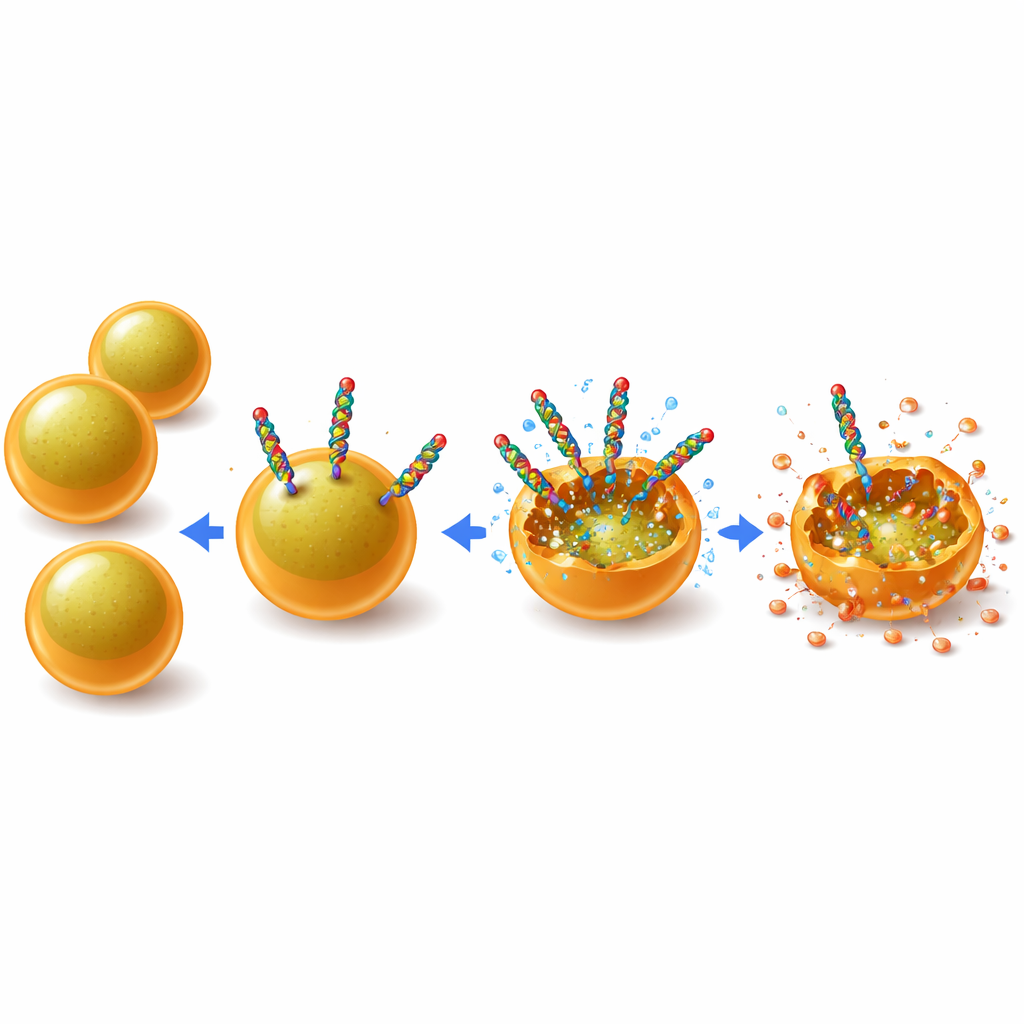
The authors then pushed WP‑CAMPER1 into the most challenging settings: dense biofilms and metabolically sluggish persister cells. In time‑kill experiments, the peptide rapidly wiped out both actively dividing MRSA and stationary‑phase persisters, far outperforming standard antibiotics that barely touched the dormant cells. It strongly inhibited biofilm formation and was also able to break down already‑established biofilms from multiple clinical MRSA isolates. Imaging and biophysical assays showed what happens at the cellular level: the peptide folds into an alpha helix, buries its oily side into the bacterial membrane, causes electrical depolarization, leaks dyes and ATP out of cells, triggers oxidative damage to lipids, and leaves membranes visibly blistered and ruptured under electron microscopes.
Proving effectiveness in animals and improving stability
Because natural peptides are often chewed up quickly by enzymes in the body, the team created a mirror‑image version called WP‑CAMPER1‑d that keeps the same physical profile but resists degradation. This D‑form matched the original’s potency against a panel of drug‑resistant S. aureus strains and remained intact in the presence of a digestive enzyme that destroyed the original. In a mouse skin infection model, a simple ointment containing WP‑CAMPER1 substantially lowered MRSA counts and reduced local inflammation. WP‑CAMPER1‑d performed similarly on the skin and showed even greater impact in a deep thigh infection packed with persister cells, cutting bacterial numbers where vancomycin failed. A high‑throughput microfluidic “Mother Machine” experiment confirmed that WP‑CAMPER1‑d could eliminate rare persister‑like cells that survived repeated antibiotic bombardment.
What this means for future antibiotics
Taken together, the work demonstrates that a mechanistic AI design pipeline can do more than guess which sequences look promising: it can produce short, stable peptides that reliably hit a chosen weak spot—in this case the MRSA membrane, including in its most stubborn persister and biofilm states. WP‑CAMPER1 and especially its D‑enantiomer emerge as early‑stage therapeutic candidates, but the larger impact is the CAMPER strategy itself. Because it is built around general physical principles, the same framework could be retuned to target other bacteria or to fine‑tune selectivity for human safety, offering a path toward a new generation of rationally designed peptide antibiotics.
Citation: Shehadeh, F., Mishra, B., Ferrer-Espada, R. et al. CAMPER: mechanistic artificial intelligence for designing peptides that target MRSA persisters. Nat Commun 17, 3689 (2026). https://doi.org/10.1038/s41467-026-70348-9
Keywords: antimicrobial peptides, MRSA persisters, biofilm infections, machine learning drug design, bacterial membranes