Clear Sky Science · en
Enzymatic colorimetric encoding-based digital medicine for pancreatic cancer diagnosis
Turning Color into a Medical Warning Light
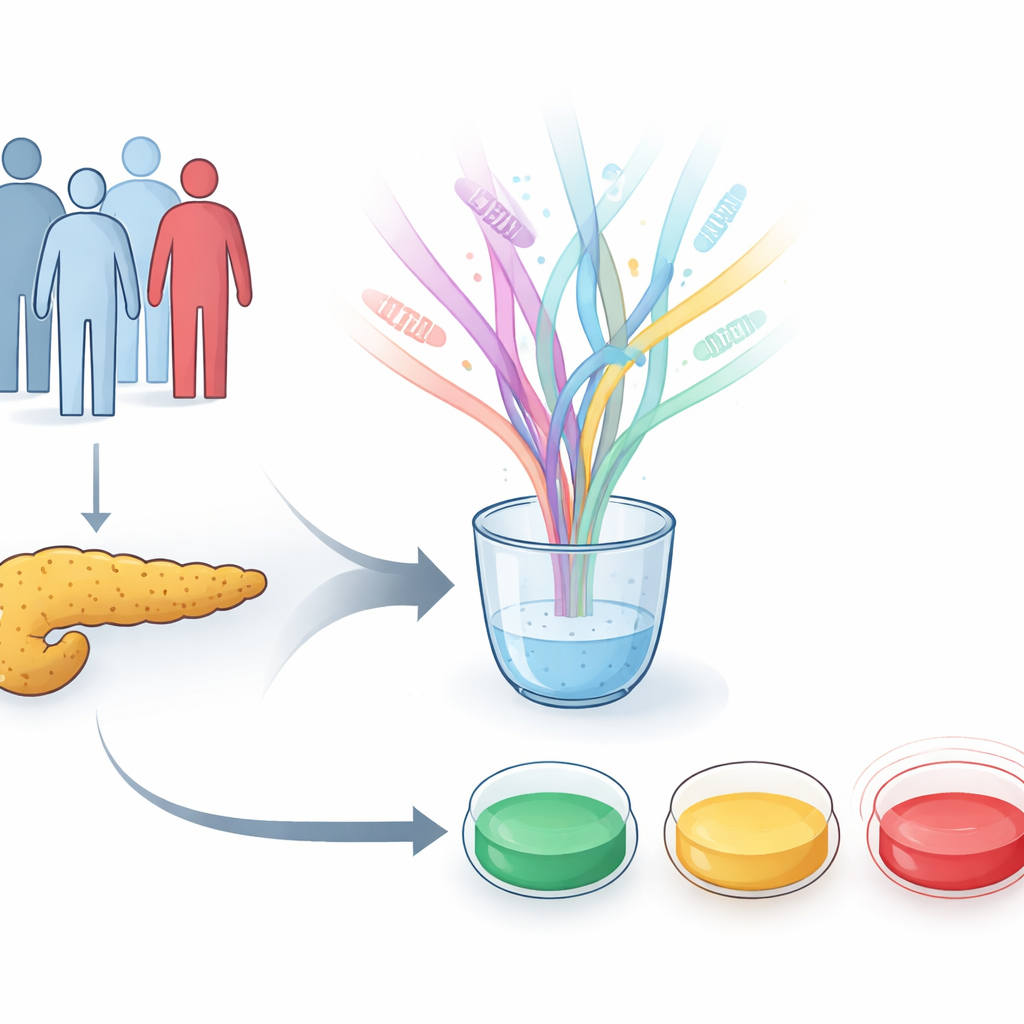
Pancreatic cancer is one of the deadliest cancers because it often hides in plain sight until it is too late to treat. Today’s blood tests usually look at one or a few molecular markers at a time and require specialized machines. This study introduces a new kind of “digital medicine” test that turns a complex pattern of many tiny RNA molecules in the blood into a simple color signal. The idea is that a single drop in a plate could one day help flag high‑risk patients through an easy, color‑based readout.
Why Many Small Signals Beat One Big One
Doctors know that no single biomarker is enough to reliably detect cancers like pancreatic cancer early. Instead, groups of microRNAs—short pieces of genetic material circulating in the blood—change together as a tumor develops. The problem is that measuring many microRNAs usually means running separate tests and then doing heavy number‑crunching on a computer. The authors build on the concept of digital medicine, which treats these patterns as “digital scores,” but they aim to compress all of that complexity into a visual color change that can be read quickly and cheaply.
How Chemistry Turns RNA Patterns into Color
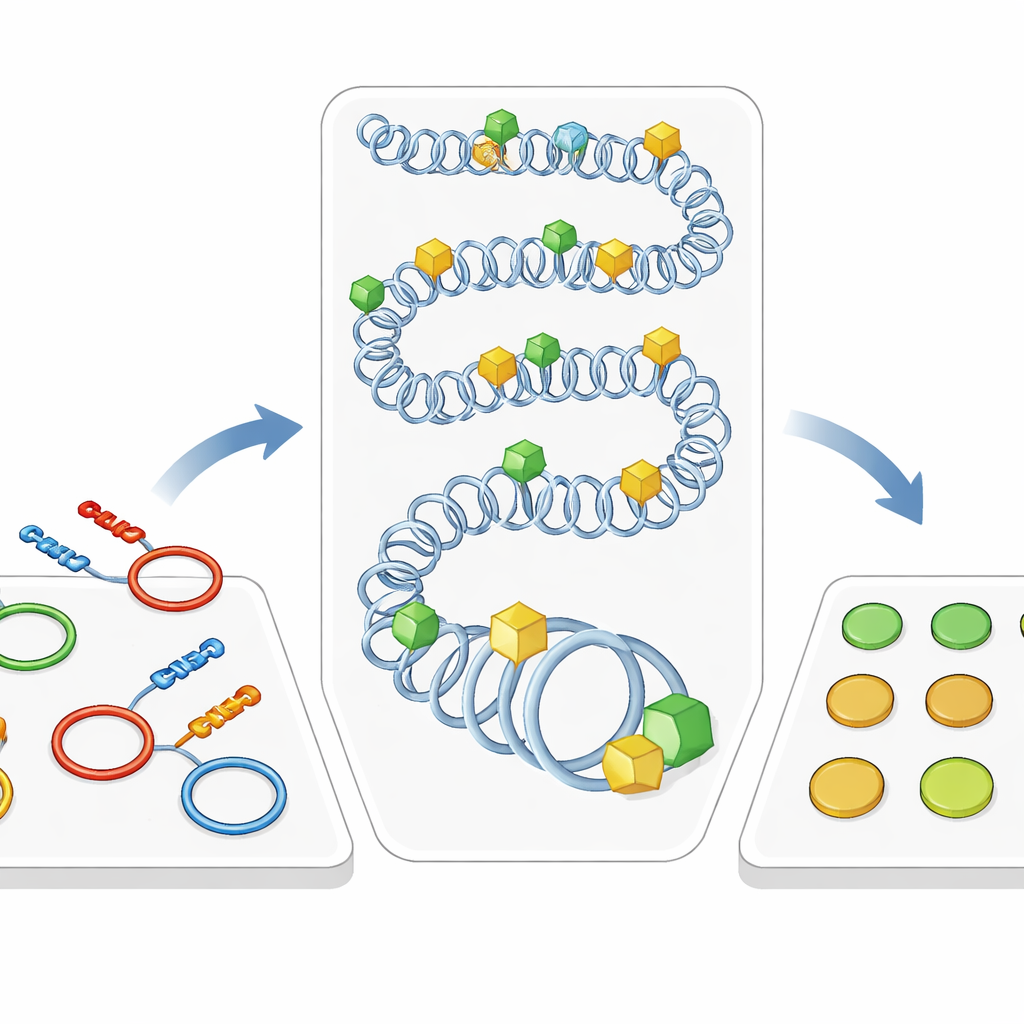
The team created a platform they call EnCODE (Enzymatic Colorimetric Encoding‑based Digital Medicine). First, they link each target microRNA in the blood to a matching DNA circle, which then serves as a template for a replication process that generates long DNA strands. Attached to these strands are enzyme “tags” of two types. When the enzymes meet their color‑forming chemicals, one type produces a green tint, the other produces yellow. By controlling how much of each enzyme is present, the mixture in a single test well blends into a specific shade between green and yellow. That single color encodes both which microRNAs are present and how abundant they are.
From Color Blending to Reliable Numbers
To make sure this color mixing could be trusted, the researchers carefully measured how color and light absorption changed as they varied the amounts of the two enzymes. They showed that the colors follow simple, predictable math: the combined spectrum is essentially the sum of its parts, and the red‑green‑blue (RGB) values from digital images change linearly with enzyme levels. This means they can “decode” a color back into the original enzyme amounts—and therefore microRNA levels—either by looking at the spectrum or by analyzing a photograph. They extended this idea beyond simple addition and subtraction by building in “weights,” so that more important microRNAs count more strongly toward the final disease score, just as in statistical risk models used in modern diagnostics.
Putting the System to the Test in Real Patients
The authors then asked whether this color‑based scoring system could separate pancreatic cancer patients from people with pancreatitis or healthy volunteers. Using public microRNA datasets, they selected three microRNAs that tend to rise and two that tend to fall in pancreatic cancer and built a weighted formula that outputs a single risk score. EnCODE converts that mathematical formula into enzyme ratios in one reaction tube. In blood samples from 163 individuals, the resulting colors—quantified by their light absorption or hue—distinguished pancreatic cancer with a sensitivity of about 96% and an overall accuracy around 90%, very similar to conventional PCR‑based tests. An independent set of samples from other hospitals produced comparable results, suggesting the method is robust.
Adding More Colors and More Practical Uses
To show that the concept can scale, the researchers added a third enzyme system that produces a red tint, creating a three‑color encoding scheme. Now, combinations of red, green, and yellow can represent even richer microRNA patterns, opening the door to tests that classify several diseases or subtypes in one go. They also paired the system with hyperspectral imaging—cameras that record detailed color information across many wavelengths in just a few minutes. This could allow rapid, high‑throughput decoding of complex color patterns and, in the future, could even be integrated with smartphones for point‑of‑care testing in clinics with limited equipment.
What This Could Mean for Future Checkups
In essence, this work shows that a carefully designed color reaction can stand in for a complex mathematical model of disease risk. By encoding multiple weighted microRNA signals into one stable color and then reading that color back with simple optics or even the human eye, EnCODE brings digital medicine closer to everyday practice. While more validation and simplification are needed before it becomes a routine screening tool, the approach points toward low‑cost blood tests that could flag early pancreatic cancer and, eventually, many other diseases using nothing more than a palette of colors.
Citation: Mao, D., Liu, C., Zhang, R. et al. Enzymatic colorimetric encoding-based digital medicine for pancreatic cancer diagnosis. Nat Commun 17, 3905 (2026). https://doi.org/10.1038/s41467-026-70343-0
Keywords: pancreatic cancer, microRNA biomarkers, colorimetric diagnostics, digital medicine, liquid biopsy