Clear Sky Science · en
Modulation of Pt electron transfer via engineered ultra-thin TiO2-Al2O3 interfaces for coke-resistant methane dry reforming
Turning Greenhouse Gases into Useful Fuel
The world is grappling with rising levels of methane and carbon dioxide, two powerful greenhouse gases. What if we could turn both of them, at the same time, into a valuable fuel ingredient while avoiding the usual problems that plague industrial catalysts? This paper reports a smart way to redesign the tiny metal particles that drive this reaction, making them last far longer and resist being choked by carbon deposits.
A Tough Reaction with Big Promise
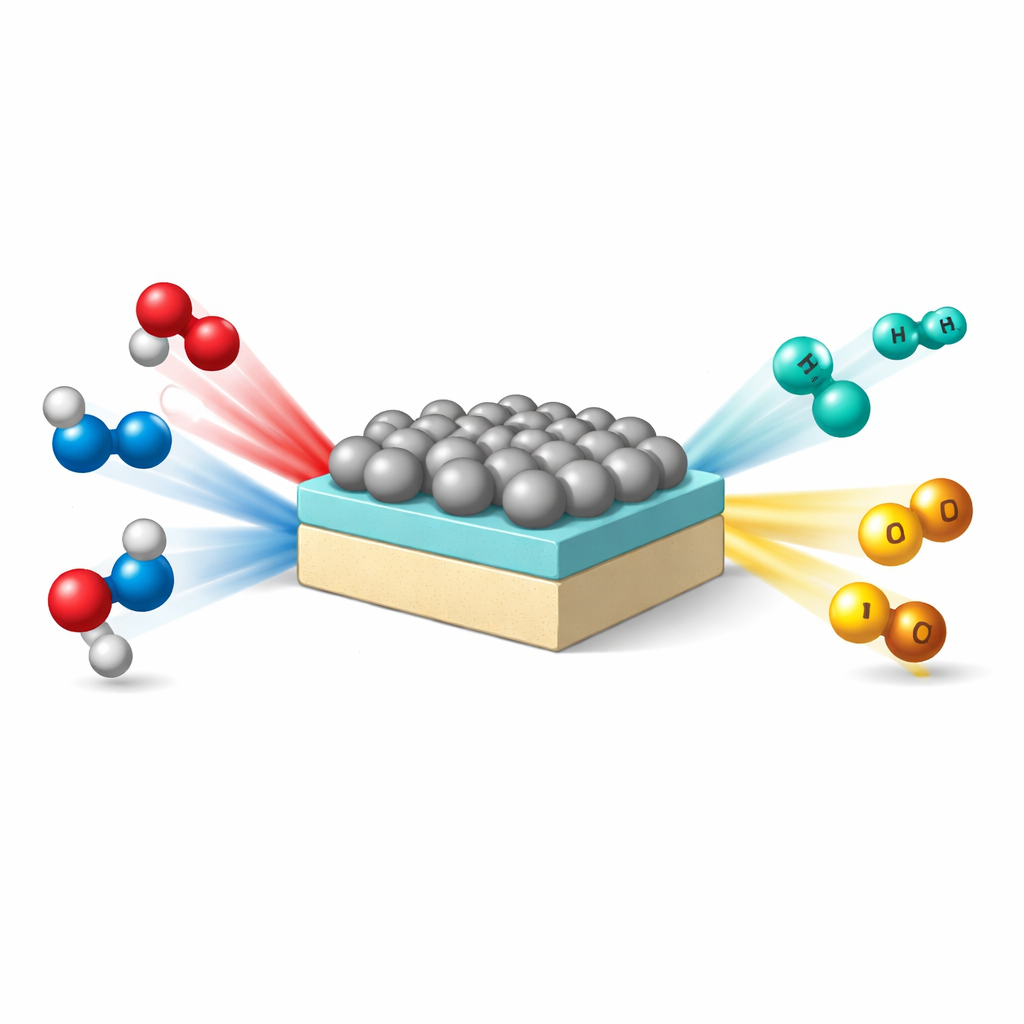
The study focuses on “dry reforming of methane,” a high‑temperature reaction that combines methane and carbon dioxide to make synthesis gas, a mix of carbon monoxide and hydrogen. Syngas is a building block for fuels, plastics, and many chemicals, so turning waste gases into syngas offers a double benefit: cutting emissions and creating useful products. Unfortunately, the metal catalysts that make this reaction go tend to quickly foul with hard carbon, or “coke,” which covers their surface and shuts the reaction down. Nickel, a common choice, is cheap and active but especially prone to forming coke and clumping into larger, less useful particles.
Why Platinum Needs the Right Support
Platinum is much more resistant to carbon buildup than nickel, but it is expensive and its behavior is highly sensitive to the material it sits on. Two widely used supports, titanium dioxide (TiO2) and alumina (Al2O3), each bring strengths and weaknesses. TiO2 can create oxygen‑rich sites that help burn off carbon, but it is less stable at very high temperatures. Al2O3 is thermally robust and helps activate methane, yet it offers little oxygen for cleaning carbon and tends to encourage coke formation. Simply mixing these two oxides does not guarantee that platinum will see the “best of both worlds.” The key, the authors argue, is to carefully engineer the interface—the ultra‑thin region where platinum, TiO2, and Al2O3 meet.
Building an Ultra-Thin Protective Layer
The researchers grew an extremely thin film of TiO2 directly on Al2O3, and then deposited tiny platinum particles on top. In this layered structure, Al2O3 is completely covered, eliminating its bare, coke‑forming patches, while still influencing the TiO2 and platinum electronically. Microscopy and surface measurements show that the TiO2 overlayer is only a few nanometers thick and that the platinum particles are very small and evenly dispersed. Advanced techniques reveal that stress at the TiO2–Al2O3 boundary slightly squeezes the TiO2 lattice and rearranges how electrons are shared between Ti, O, Al, and Pt. This subtle reshaping of the atomic landscape both activates oxygen in the TiO2 and tunes the electron density on the platinum surface.
Keeping Carbon at Bay While Staying Active
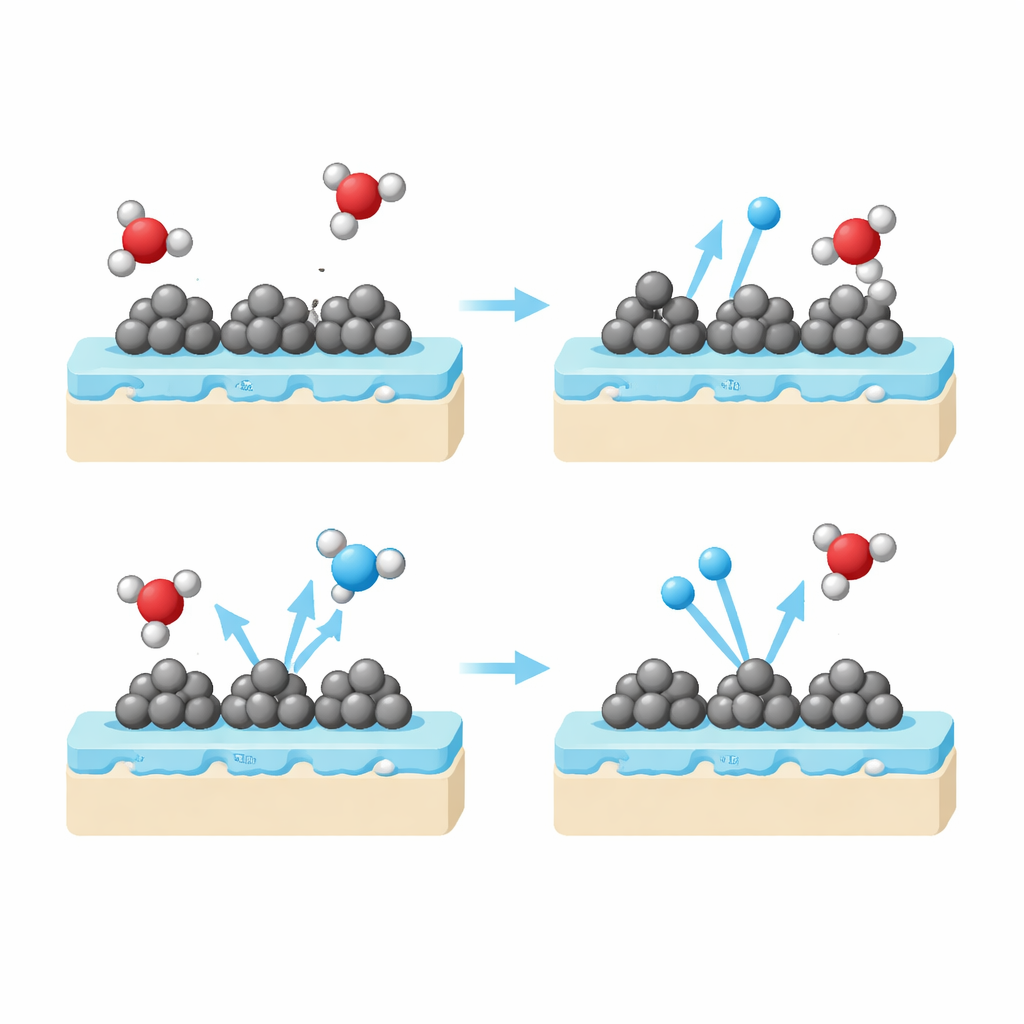
By balancing the charge around platinum, the new design encourages methane molecules to start reacting without letting them strip off all their hydrogen and leave behind stubborn carbon. Computer simulations show that on this tailored interface, the first bond in methane is still easy to break, but the later steps that would turn CH fragments into solid carbon face higher energy barriers. At the same time, oxygen from carbon dioxide is more easily stored in and released from the TiO2 layer, cycling through tiny vacancies to oxidize any surface carbon back into carbon monoxide. In long tests at temperatures up to 800 °C, the optimized platinum/TiO2–Al2O3 catalyst maintained around 91% methane conversion for 100 hours with almost no carbon buildup, beating both platinum on pure TiO2 and platinum on pure Al2O3, as well as many reported nickel‑based systems.
A Blueprint for Longer-Lasting Clean Catalysts
For non‑specialists, the main message is that how atoms are arranged at the boundary between a metal and its support can matter as much as which elements are present. By wrapping a thermally stable oxide with a carefully controlled ultra‑thin layer and then placing platinum on top, the authors create a catalyst that stays active and clean instead of quickly clogging. Their work not only offers a promising route to turn methane and carbon dioxide into useful syngas with fewer interruptions, but also points to a general strategy: use precisely engineered, ultra‑thin interfaces to steer electron flow, control reaction pathways, and design more durable, coke‑resistant catalysts for demanding clean‑energy processes.
Citation: Zhao, S., Wang, L., Lyu, S. et al. Modulation of Pt electron transfer via engineered ultra-thin TiO2-Al2O3 interfaces for coke-resistant methane dry reforming. Nat Commun 17, 3682 (2026). https://doi.org/10.1038/s41467-026-70338-x
Keywords: methane dry reforming, coke-resistant catalysts, platinum TiO2 Al2O3 interface, greenhouse gas conversion, syngas production