Clear Sky Science · en
An international multi-centre study to develop and validate federated learning-based prognostic models for anal cancer
Why this matters for people with rare cancers
As cancer care becomes more tailored to each person, doctors increasingly face a problem: many cancers are now so finely divided into subtypes that each group is small and scattered across the globe. That makes it hard to learn which treatments work best, especially for rare cancers like anal cancer. This study shows how hospitals in different countries can safely work together, without sharing raw patient data, to better predict how patients will do and to guide more personalised treatment.
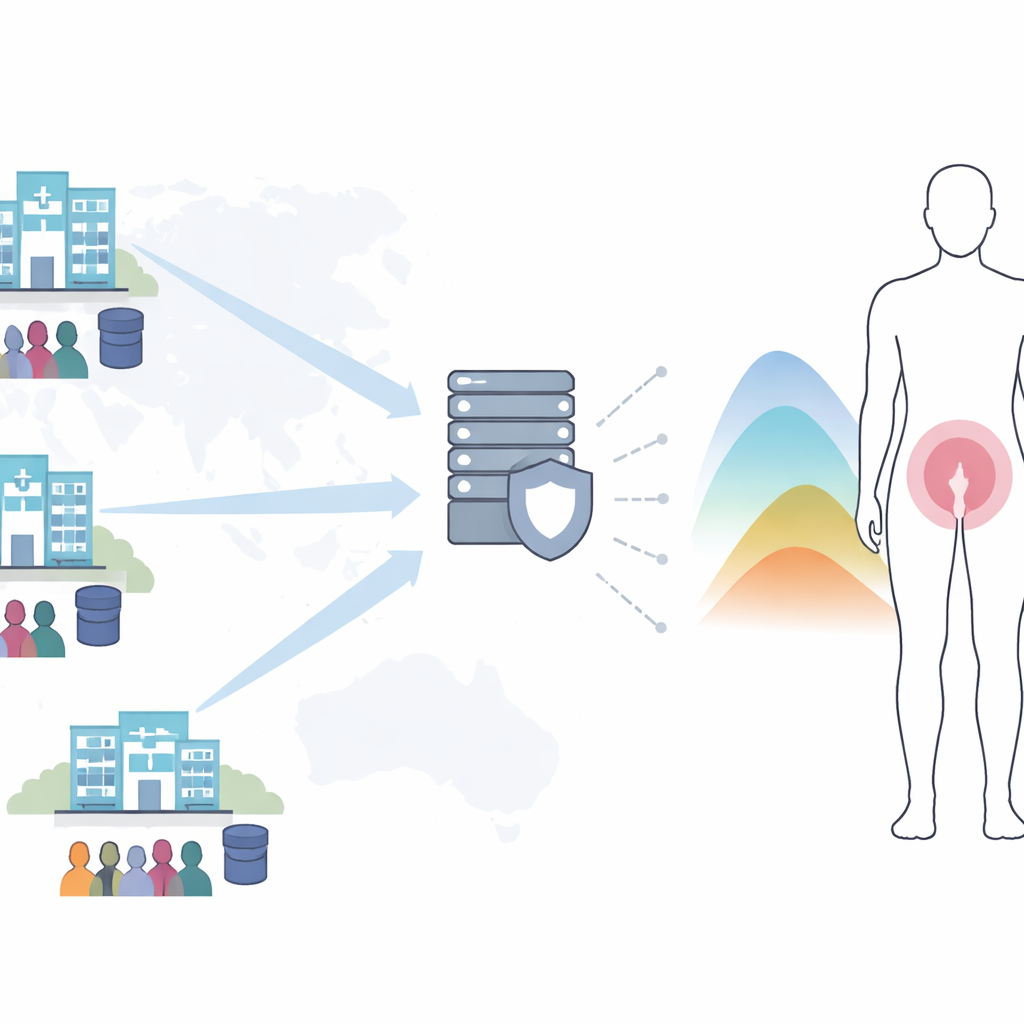
Bringing many hospitals together without sharing data
The researchers formed the international atomCAT consortium, linking 16 cancer centres across Europe and Australia. Instead of sending patient records to a single central database, each hospital kept its information on site. A special approach called “federated learning” allowed computer models to be trained across all sites at once: only anonymous mathematical summaries of the data were exchanged, never individual records. This protected patient privacy while still drawing on the power of a large combined group of people treated for anal cancer.
Who was studied and what outcomes were tracked
The team analysed information from 1,428 people with anal cancer treated with modern radiotherapy and, usually, chemotherapy at 14 centres, and then tested their findings in 277 additional patients from two other centres. Most patients were in their early sixties, and about seven in ten were women. Nearly all received advanced forms of radiotherapy, and the great majority also received chemotherapy based on drugs such as mitomycin or cisplatin. The study focused on three key outcomes that matter to patients and clinicians: overall survival (how many people are alive after treatment), control of the tumour in and around the pelvis, and protection against the cancer spreading to distant organs.
What factors shaped patients’ chances
Using the federated models, the researchers identified a set of features that consistently influenced outcomes. People whose tumours were smaller, less advanced, and had not spread to nearby lymph nodes tended to live longer and had better control of their disease. Women generally had better survival and pelvic control than men, and younger patients did better than older ones. Chemotherapy that combined two drugs (mitomycin or cisplatin with fluorouracil or capecitabine) was linked to better overall survival compared with radiotherapy alone. The size of the primary tumour stood out as an especially important predictor for all three outcomes, underlining the value of good imaging and detailed tumour measurements in routine care.
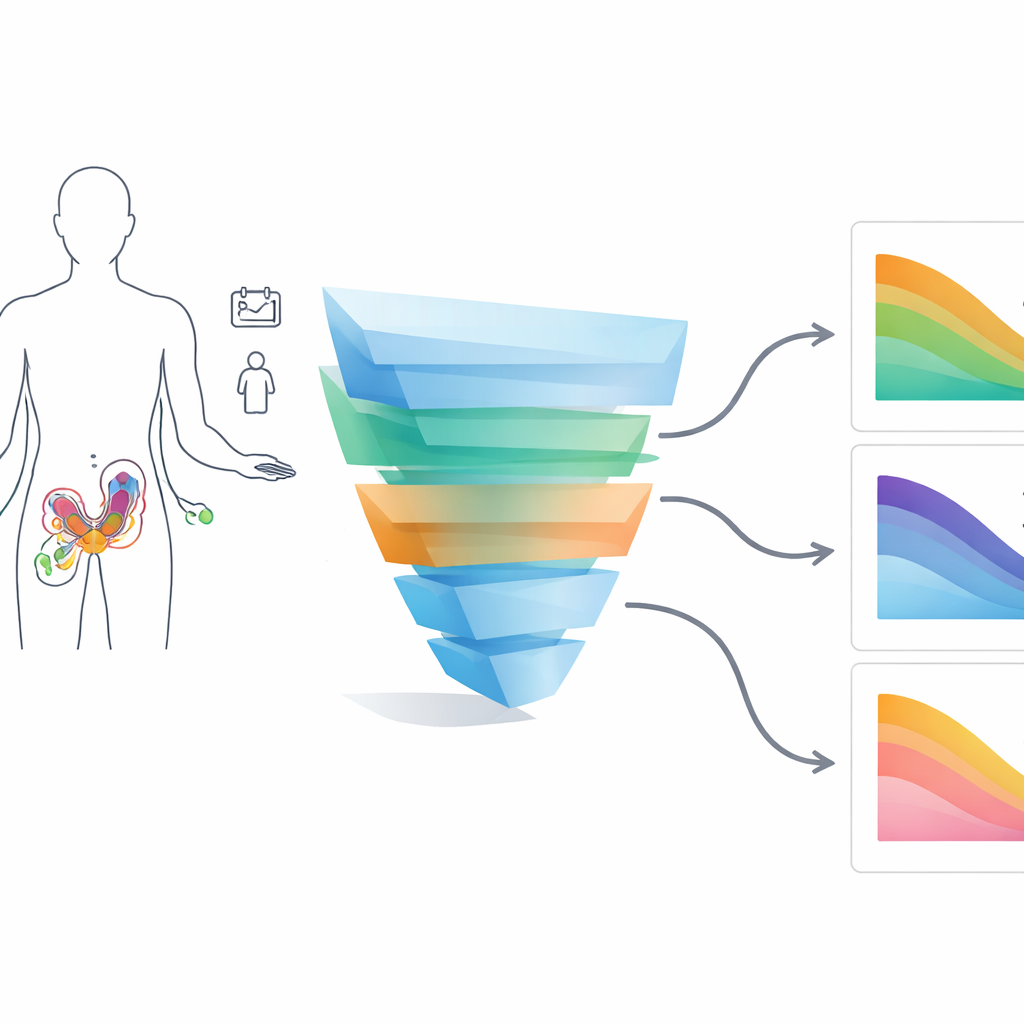
How well did the privacy-preserving models work?
The prognostic models showed moderate but clinically useful ability to distinguish between higher- and lower-risk patients. When patients were grouped by predicted risk, the differences in real-world results were striking: for example, three years after treatment, overall survival averaged about 90% in the lower-risk group versus about 73% in the higher-risk group. The models performed similarly when each centre was left out in turn and when tested in the two external hospitals, suggesting that the approach was not overfitted to any single site. When the team built models using data from just one centre, prediction accuracy dropped, underscoring the value of drawing on many hospitals’ experience—even when their data cannot be pooled.
What this means for future cancer care
For people with anal cancer and other rare or highly subdivided cancers, this work demonstrates that it is possible to learn from large, international patient groups without compromising privacy. The study shows that federated learning can reliably reproduce and confirm known risk factors, clarify which patients are more likely to relapse or develop spread of disease, and do so using data collected during everyday care. In the long run, such models could help doctors discuss prognosis more accurately with individual patients, tailor treatment intensity up or down, and design smarter clinical trials that focus on those at greatest need—all while keeping sensitive health data safely within the walls of each hospital.
Citation: Theophanous, S., Lønne, PI., Choudhury, A. et al. An international multi-centre study to develop and validate federated learning-based prognostic models for anal cancer. Nat Commun 17, 3956 (2026). https://doi.org/10.1038/s41467-026-70297-3
Keywords: anal cancer, federated learning, prognostic models, real-world data, precision oncology