Clear Sky Science · en
Integrated small and long RNA sequencing reveals piRNA mediated transposon repression during human oogenesis
Guardians Inside Human Egg Cells
Every child begins with a single egg cell, and the genetic material inside that egg must be kept remarkably stable. Yet our DNA is filled with "jumping genes"—mobile pieces of genetic code that can copy and paste themselves into new locations, sometimes causing damage. This study explores how human egg cells use tiny RNA molecules to keep these restless genetic elements under control, ensuring that the next generation starts with a secure genome.
Why Jumping Genes Matter
Jumping genes, or transposable elements, make up a large fraction of our DNA. They have helped shape evolution but can also break chromosomes, disrupt important genes, and contribute to disease. In most body cells, chemical marks on DNA keep these elements quiet. But during the early formation of egg cells, many of those marks are wiped clean, briefly opening a dangerous window when jumping genes could spring back to life. If that happens, the egg may fail to develop properly, leading to infertility or early embryonic loss.
Tiny RNA Guards in Developing Eggs
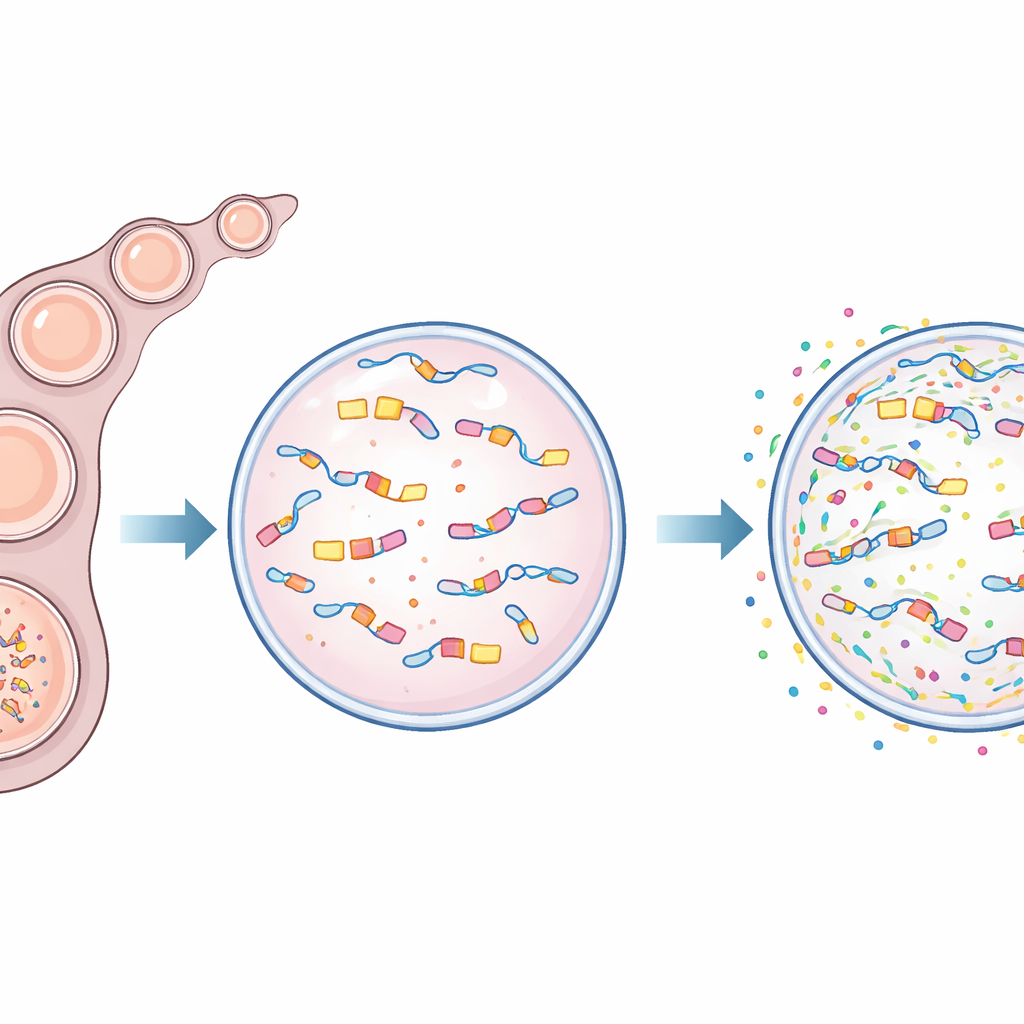
To understand how human egg cells avoid this threat, the researchers examined both small and long RNA molecules in individual human oocytes at four key stages of development, from resting follicles to fully mature eggs. They focused on a special class of small RNAs called piRNAs, which partner with PIWI proteins to silence jumping genes. Across all stages, piRNAs turned out to be by far the most abundant small RNAs in human oocytes, and a short form of piRNA associated with the protein PIWIL3 became especially dominant as the eggs matured. At the same time, the overall activity of many transposable elements, especially the LINE-1 and endogenous retrovirus families, dropped sharply.
Different Teams for Different Threats
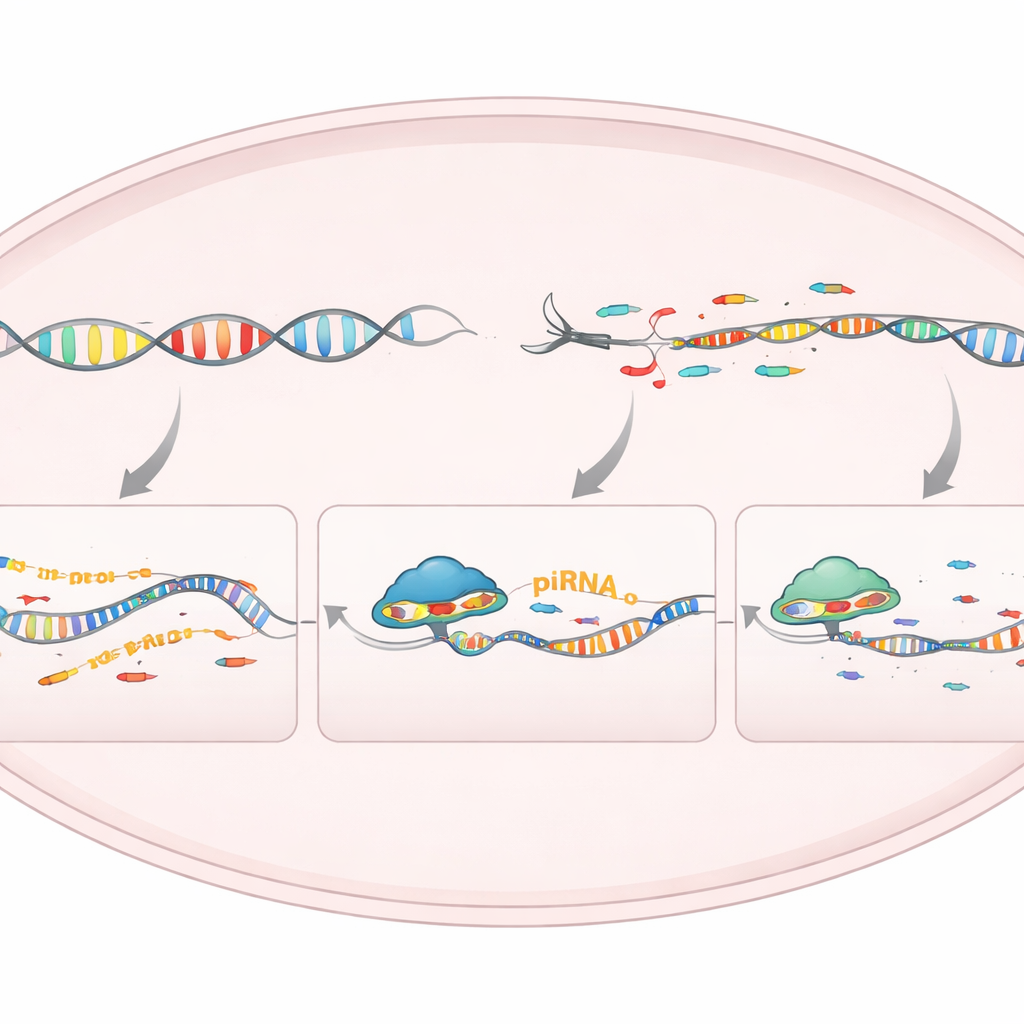
The study revealed that not all piRNAs work the same way. Short piRNAs, mostly linked to PIWIL3, targeted a broad range of jumping gene families and increased in number before the strongest drop in transposon activity. Their patterns suggested that they participate in an amplification cycle where cutting a transposon RNA helps generate more piRNAs tuned to that sequence, creating a self-reinforcing defense. Long piRNAs, more likely paired with other PIWI proteins, were less abundant overall but showed a strong preference for certain endogenous retroviruses. These long piRNAs often arose from genomic regions densely packed with antisense copies of retroviral fragments, which serve as templates for making piRNAs that recognize and silence active relatives elsewhere in the genome.
Hidden Maps in the Genome
By scanning the genome, the researchers identified over fourteen thousand piRNA-producing regions, but a surprisingly small number of them generated the vast majority of piRNAs in human egg cells. The most productive clusters were long stretches of DNA enriched in antisense fragments of LINE-1 and retroviral elements. This asymmetric arrangement means that most of the piRNAs produced are oriented to recognize and cut the active copies of these elements. Some newer human-specific transposons, however, were scarcely represented in these clusters and produced few piRNAs, remaining relatively active even in mature eggs. This pattern suggests an evolutionary arms race: as new jumping genes appear, the genome slowly evolves new piRNA clusters to keep them in check.
Balancing Protection and Possibility
Taken together, the work shows that human egg cells rely heavily on piRNAs to maintain genetic stability. Short piRNAs act as wide-coverage guards that strongly suppress major jumping gene families like LINE-1, while long piRNAs add a focused layer of protection against particular retroviruses. A few young elements escape this net, either because piRNA defenses have not yet fully adapted to them or because they may play useful roles in early development. For a lay reader, the key message is that human eggs are not passive vessels of DNA: they are active guardians, continuously policing their own genomes so that the story of life can begin on a stable, reliable script.
Citation: Zhang, F., Zhang, H., xiao, Y. et al. Integrated small and long RNA sequencing reveals piRNA mediated transposon repression during human oogenesis. Nat Commun 17, 3804 (2026). https://doi.org/10.1038/s41467-026-70296-4
Keywords: piRNA, transposable elements, human oocyte, genome stability, female fertility