Clear Sky Science · en
An ultraconserved pseudo 5’ splice site fine-tunes development by regulating alternative splicing within TOR-related pathways
A Tiny Switch with Big Effects
Inside our cells, much of life’s complexity comes from how genes are edited rather than from the genes themselves. This study uncovers how a tiny, nine-letter stretch of RNA buried inside a gene acts like a molecular dimmer switch, tuning reproductive development in fruit flies and responding to metabolic signals that are also important in humans. By tracing this miniature element across hundreds of animal species, the authors show that evolution has fiercely protected it, hinting at a deeply important role in how bodies sense nutrients and regulate growth.
Why Extra Genetic “Padding” Matters
Genes in animals are broken into useful segments (exons) separated by long stretches of seemingly disposable sequence (introns). When a gene is read, the introns are normally cut out and the exons stitched together. But the cell can mix and match exons in different ways, a process called alternative splicing that lets one gene produce multiple versions of a protein. This editing is guided by short signals along the RNA. Among these signals are decoys known as pseudo splice sites: they look like real cutting points but are never actually used. The biological purpose of these look‑alike sites has remained largely mysterious.
Finding Ultra-Stable RNA Decoys
To search for important decoy signals, the researchers scanned the genomes of humans, flies, and many other animals for pseudo 5′ splice sites that look like real cutting sites yet show no evidence of ever being used. They then asked which of these decoys had remained almost perfectly unchanged across distant species and were placed near exons that are alternatively spliced in a similar way in many animals. This systematic hunt turned up eight “ultraconserved” pseudo sites, meaning evolution had left their short sequences virtually untouched for hundreds of millions of years. The most striking example sat inside the ENOX1/Enox gene family, which helps control electron flow across the cell membrane and is linked to cell enlargement.
A Hidden Control Knob for Ovarian Growth
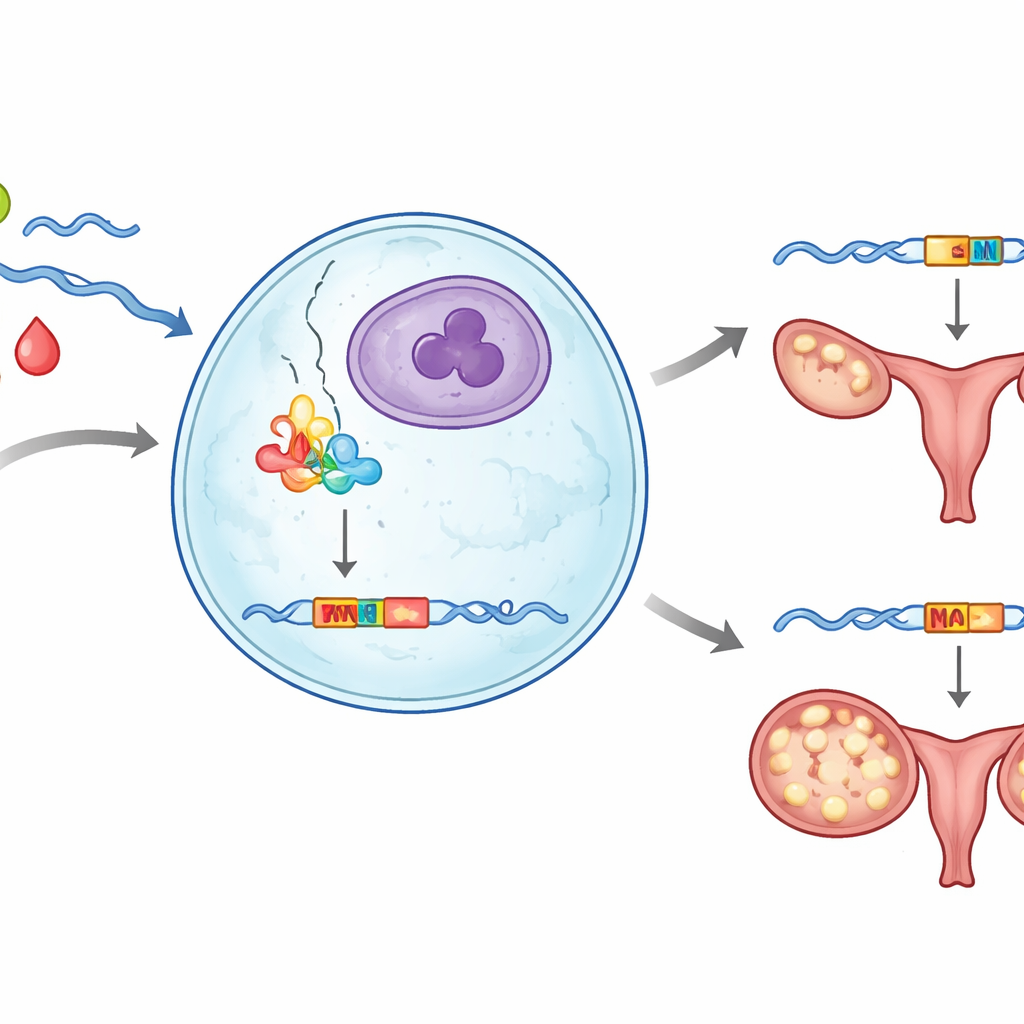
In the Enox gene of fruit flies, the ultraconserved decoy lies just downstream of a short, essential exon. Including this exon produces full-length Enox protein, while skipping it yields a truncated, likely nonfunctional version. Using precise genome editing, the team deleted only the nine RNA letters that form the decoy in flies. Females lacking this tiny segment developed notably enlarged ovaries and produced more eggs, whereas a full loss of the Enox gene made the gonads smaller. Molecular analyses showed that without the decoy, the essential exon was included more often, and Enox protein levels rose—especially in the ovary. The deletion also changed the activity of dozens of genes that build the eggshell, supporting a link between Enox levels, ovarian physiology, and fertility.
How Metabolic Signals Talk to the RNA Switch
The study next connected this intronic decoy to two central nutrient-sensing networks: the TOR and Insulin-like pathways, long known to influence growth and reproduction. In flies, genetic tweaks that turned these pathways up or down also shifted how often the essential Enox exon was included, and thus how much Enox protein was made. Crucially, when the ultraconserved decoy was removed, these splicing changes—and even the shortened lifespan caused by knocking down the TOR pathway—were substantially blunted. This showed that the tiny RNA element behaves as a sensor: it is required for the pathways’ signals to be transmitted into changes in RNA editing of Enox.
The Molecular Handshake Behind the Sensor
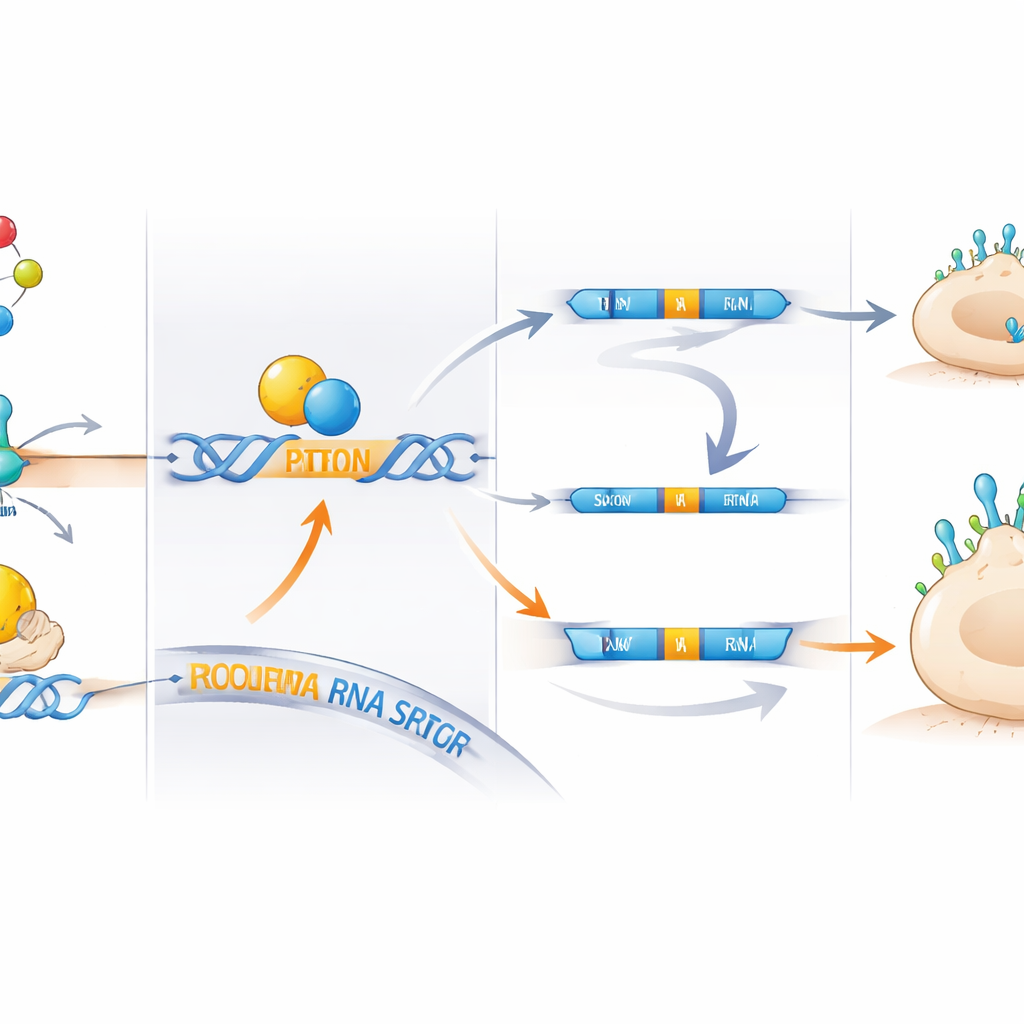
At the nuts-and-bolts level, the decoy site is recognized by U1 snRNP, a core component of the cell’s splicing machinery that normally binds true splice sites. The authors showed that proteins within U1 snRNP physically associate with the decoy sequence, and that reducing these U1 core proteins alters Enox splicing in a way that depends on the decoy’s presence. In human liver, kidney, and ovarian cell lines, drugs that inhibit parts of the Insulin and mTOR (the mammalian version of TOR) pathways triggered similar changes: the human ENOX1 exon was skipped more often, full-length ENOX1 protein levels fell, and one U1 core protein, U1‑70K, was produced more efficiently. The data support a cascade in which metabolic pathways tune translation of U1‑70K, this alters how strongly U1 snRNP binds the decoy, and that, in turn, fine-tunes whether the essential exon is included.
A Conserved Metabolic Tuning Circuit
Altogether, the work reveals a remarkably compact regulatory circuit: nutrient and hormone signals modulate the production of a splicing factor, that factor engages an ultraconserved decoy site in ENOX1/Enox RNA, and the resulting change in RNA editing adjusts ENOX protein levels, influencing ovarian development in flies. The fact that this nine-nucleotide motif and its associated exon are preserved from insects to mammals suggests that animals universally rely on this hidden switch to link metabolic state to growth and tissue development. For non-specialists, the key message is that even the tiniest pieces of genetic “dark matter” can serve as finely tuned sensors, ensuring that reproductive capacity and cell growth stay in step with the body’s energy supply.
Citation: Ding, Z., Fang, ZY., Li, H. et al. An ultraconserved pseudo 5’ splice site fine-tunes development by regulating alternative splicing within TOR-related pathways. Nat Commun 17, 3673 (2026). https://doi.org/10.1038/s41467-026-70278-6
Keywords: alternative splicing, TOR signaling, insulin pathway, ovary development, ENOX1