Clear Sky Science · en
Concise construction of β-branched aromatic D-amino acids via transaminase-catalyzed dynamic kinetic resolution
Why new building blocks for medicines matter
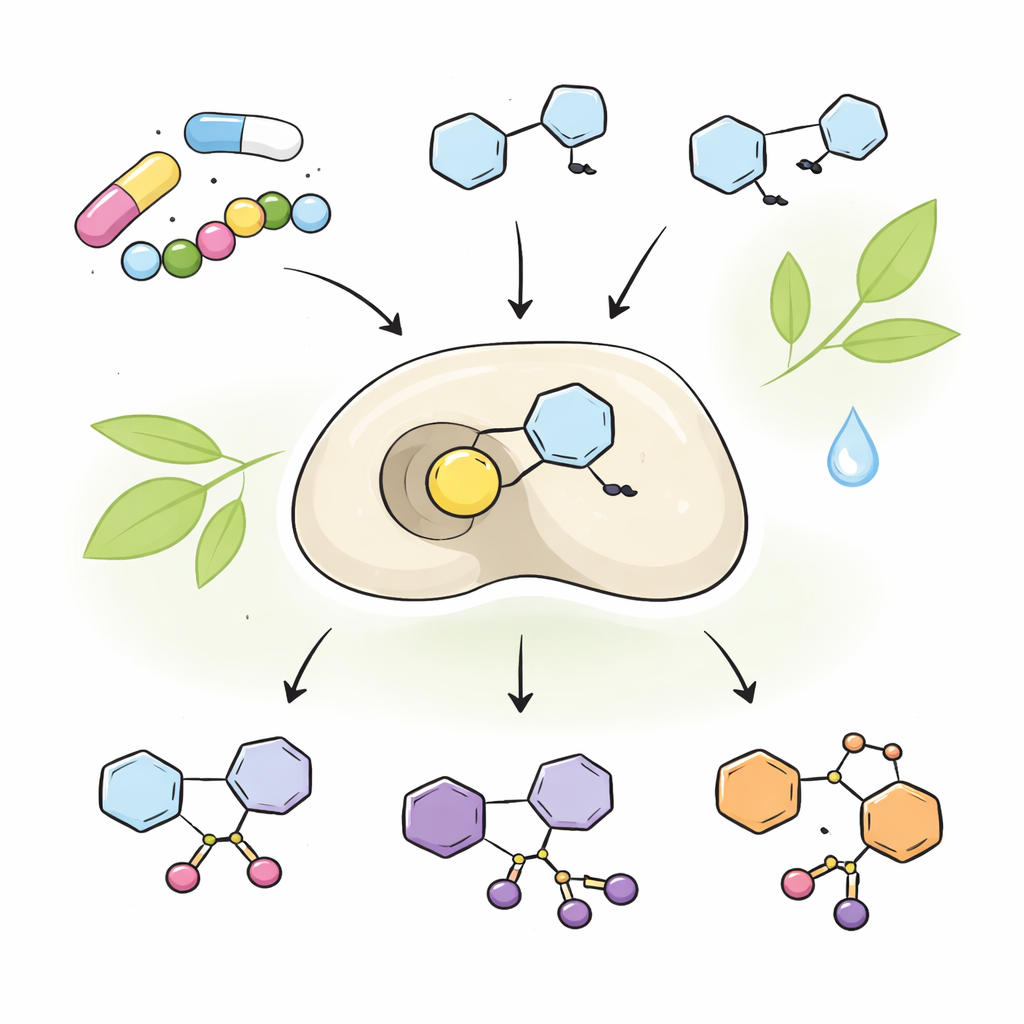
Modern drugs often rely on tiny three‑dimensional details to work properly in the body. This study explores a new, cleaner way to make a special class of these details: unusual versions of amino acids, the small units that build proteins and many medicines. By tailoring the shape of these amino acids, chemists can tune how a drug fits its target, how long it lasts in the bloodstream, and how well it resists breakdown. The work introduces an efficient biocatalytic method to make hard‑to‑access “mirror image” amino acids with extra side‑chain branches, and shows that they can be plugged directly into a cancer‑related peptide drug.
Unusual amino acids as precision tools
Amino acids come in two mirror forms, called L and D, much like left and right hands. Life mostly uses the L forms in proteins, but D‑amino acids play crucial roles in biology and medicine, from nerve function to antibiotics and anti‑tumor agents. Drug designers increasingly swap natural amino acids for modified versions to improve activity and stability. In particular, changes at a position called “beta” on the side chain can give better drug behavior for L‑amino acids. Yet almost no one had tested whether adding such beta branches to D‑amino acids could similarly boost the performance of D‑containing drugs, largely because making these molecules cleanly and efficiently has been technically difficult.
Using an enzyme as a selective molecular factory
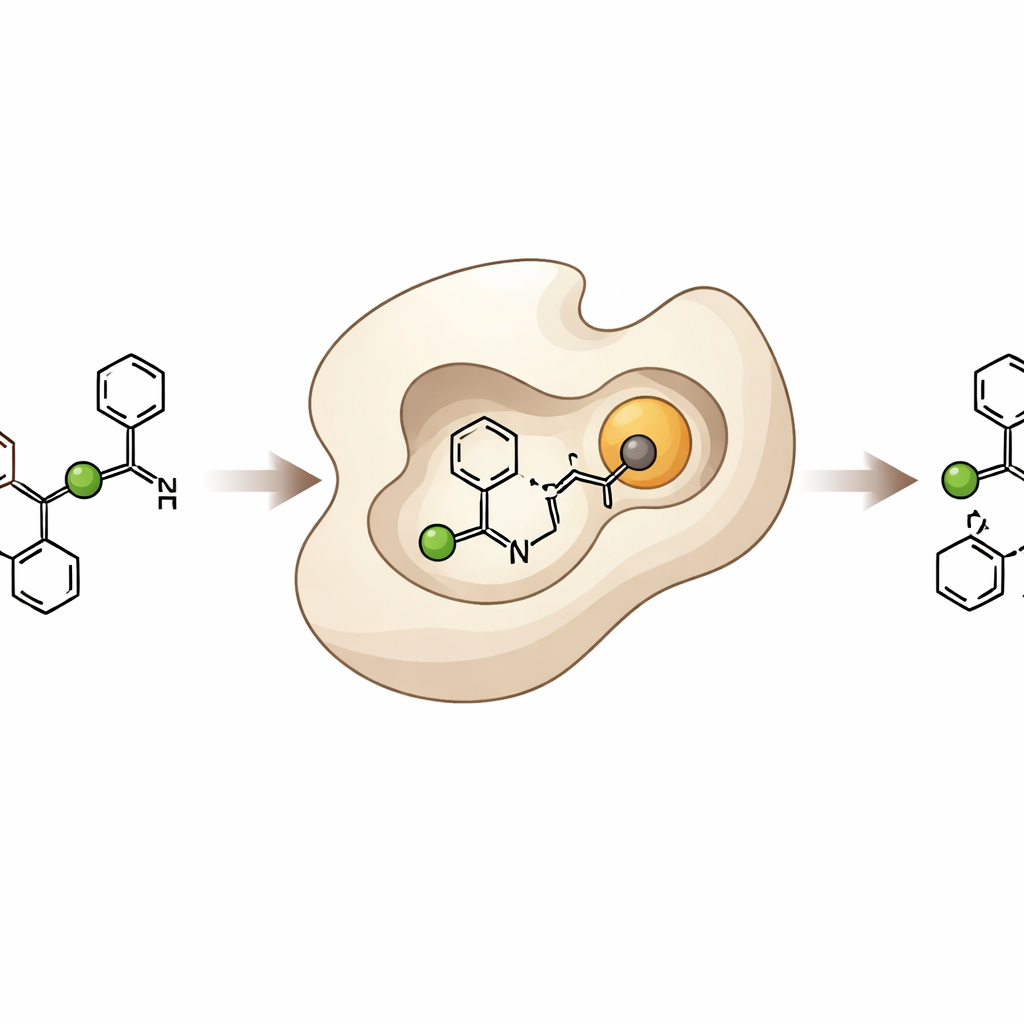
The authors turned to biocatalysis, using enzymes as tiny reaction factories that operate under mild, environmentally friendly conditions. They focused on an enzyme called BsDAAT, a D‑amino acid transaminase from a Bacillus bacterium, which naturally helps build D‑phenylalanine. Their strategy relies on a process known as dynamic kinetic resolution: a pool of starting molecules that exist as a racemic pair of mirror images can rapidly interconvert between forms, while the enzyme selectively converts only one form into product. Over time, the “wrong” mirror is continuously recycled into the “right” one, and nearly the entire mixture is funneled into a single, highly pure product. Using a carefully chosen amino donor, D‑lysine, to push the reaction forward, the team optimized conditions so that BsDAAT could transform beta‑branched aromatic ketoacids into D‑amino acids with two neighboring chiral centers in very high yield and optical purity.
Tuning the enzyme to accept many different shapes
Although the wild‑type enzyme worked well for a few model substrates, it struggled with many others, giving modest yields or a mix of stereochemical outcomes. To broaden its usefulness, the researchers used a focused engineering strategy. Guided by computer docking models of how substrates sit inside the enzyme’s active pocket, they identified sixteen nearby amino acid positions to mutate. By systematically swapping these positions for residues of different sizes and testing the resulting variants on representative “difficult” substrates, they pinpointed key hotspots. Two mutants, V33F and V33A, emerged as particularly powerful. V33F, with a bulkier aromatic side chain, improved stacking interactions with many substrates and sharply raised stereoselectivity, while V33A, with a smaller side chain, created extra space that rescued reactivity for sterically hindered ortho‑substituted molecules. Across a panel of nearly thirty aromatic substrates, these variants delivered up to 99% isolated yield and outstanding stereocontrol, often exceeding a 20:1 ratio of desired diastereomer and more than 99% enantiomeric excess.
Limits, insights, and design rules
The team also probed the boundaries of the system. Larger beta‑side chains such as ethyl or propyl were accepted only weakly, and aliphatic (non‑aromatic) substrates generally showed poor stereocontrol, highlighting a pocket that is well suited to flat, ring‑containing groups that can engage in stacking or steric shaping. Detailed modeling revealed how changes at specific residues tightened or loosened the fit, balanced flexibility against preorganization, and affected how the substrate’s carboxyl group interacted with key binding residues. These structural insights suggest that both steric crowding and subtle electronic effects govern which substrates are ideal for this enzyme. They also provide a roadmap for future rounds of evolution aimed at handling bulkier or purely aliphatic side chains.
From enzyme benchwork to drug‑like molecules
To demonstrate practical value, the authors scaled up selected reactions and used the resulting beta‑branched D‑amino acids as building blocks in solid‑phase synthesis of derivatives of Lanreotide, a peptide drug related to the hormone somatostatin and used in cancer‑related conditions. By swapping one of Lanreotide’s unnatural residues for the newly accessible beta‑methyl D‑phenylalanine or D‑naphthylalanine analogues, they created new variants that could be explored for improved activity or pharmacokinetics. Overall, the study showcases an efficient, green route to a broad family of beta‑branched aromatic D‑amino acids and highlights how precision‑engineered enzymes can unlock new chemical space for drug discovery.
Citation: Liu, Z., Zhai, W., Zeng, Z. et al. Concise construction of β-branched aromatic D-amino acids via transaminase-catalyzed dynamic kinetic resolution. Nat Commun 17, 3591 (2026). https://doi.org/10.1038/s41467-026-70265-x
Keywords: D-amino acids, biocatalysis, enzyme engineering, dynamic kinetic resolution, peptide drugs