Clear Sky Science · en
Modifying muscle metabolic dysregulation in inclusion body myositis with pioglitazone: a single-arm trial
Why tired muscles in aging matter
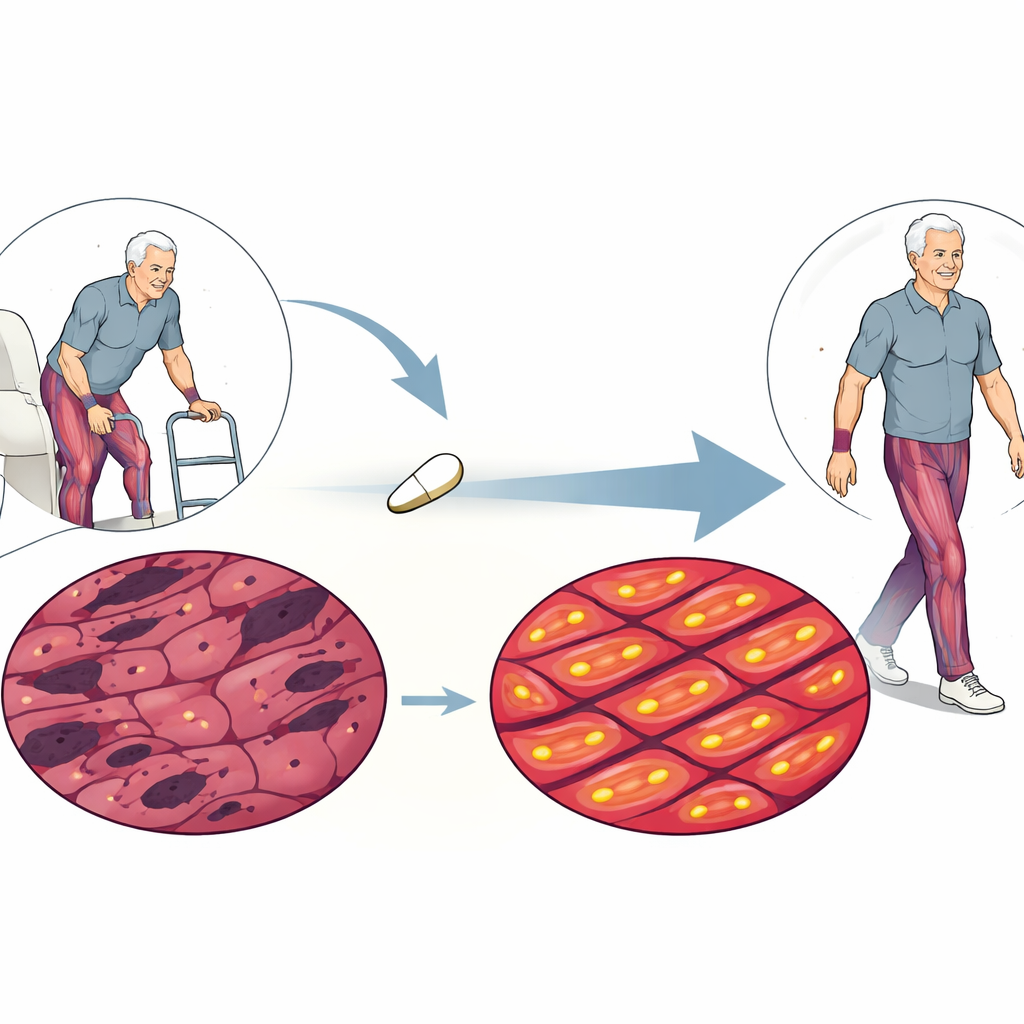
As people grow older, some develop a puzzling muscle disease called inclusion body myositis that slowly robs them of strength in their thighs and hands. It makes standing from a chair, climbing stairs, or gripping everyday objects increasingly difficult, and current treatments do little to slow its march. This study explores whether a long‑used diabetes drug, pioglitazone, can nudge sick muscles in this disease back toward a healthier way of making and using energy.
A slow muscle disease with few options
Inclusion body myositis mainly affects adults over 50 and progresses over years, often leading to loss of independent walking. Under the microscope, their muscles show a mix of chronic inflammation, protein clumps, and damaged energy factories called mitochondria. Standard immune‑suppressing medicines have failed, suggesting that faulty energy handling inside muscle cells may be just as important as the immune attack. The researchers set out to test a simple idea: if they could correct the way muscle cells process fuel, might they at least slow the decline, even if they could not reverse the disease?
Borrowing a diabetes drug to help muscle energy
Pioglitazone is a pill commonly prescribed for type 2 diabetes. It activates a cellular switch that boosts genes involved in burning fuel and building new mitochondria. In this single‑arm phase 1 trial, 16 people with inclusion body myositis were first followed for 16 weeks without treatment to measure their natural rate of change. Thirteen then took pioglitazone daily for 32 weeks. At key visits, the team collected muscle biopsies and blood samples and measured walking ability, standing speed, grip strength, and a detailed functional rating scale tailored to this disease.
What the muscles revealed about energy use
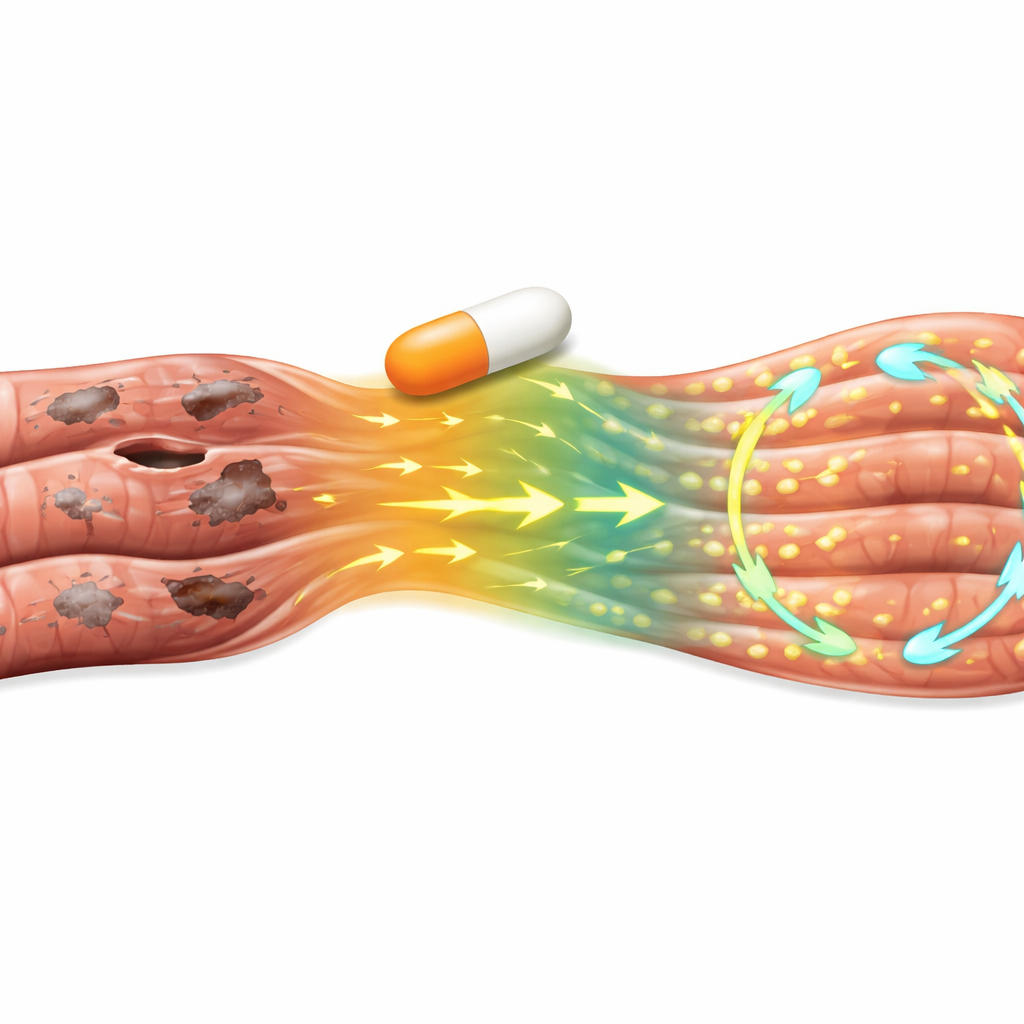
Before any treatment, the participants’ muscles looked very different from those of healthy volunteers at the level of small molecules. Many building blocks and intermediates used to generate energy—such as certain sugars, amino acids, and nucleotide components—were either depleted or abnormally increased. These changes pointed to strain in central fuel‑processing routes and to higher oxidative stress, a kind of chemical wear and tear. People with more severe muscle damage on ultrasound tended to show a more extreme version of this metabolic fingerprint, suggesting that disturbed chemistry and worsening weakness go hand in hand.
How pioglitazone shifted muscle chemistry
After four months on pioglitazone, gene activity in the biopsy samples changed direction. Networks of genes tied to energy production, including fuel‑burning cycles and mitochondrial respiration, were turned up, while genes linked to inflammation were relatively dialed down—opposite to the drift seen during the untreated observation period. The pattern of small molecules in muscle also shifted modestly away from the disease signature and slightly closer to that of healthy muscle. Some metabolites that had been especially low, such as certain nucleotide components and a fatty‑acid‑related molecule that feeds the energy cycle, rose toward normal levels. Notably, these improvements were mostly confined to muscle tissue and did not show up clearly in blood, hinting that the drug’s most important effects occur locally inside muscles.
Who seemed to benefit the most
The trial was not designed or powered to prove clinical benefit, and average strength and walking measures did not significantly improve. Yet when the scientists looked more closely, they found that about one‑third of participants had a clear “metabolic response,” meaning their muscle chemistry moved further away from the disease pattern during treatment. In exploratory analyses, this subgroup tended to lose function more slowly on the inclusion body myositis rating scale and a timed standing‑and‑walking test. People with milder disease at the start were more likely to show this favorable chemical shift, suggesting that earlier intervention may offer a better chance to influence the course of illness.
What this means for future care
This early‑stage study, though small and interrupted by the COVID‑19 pandemic, shows that pioglitazone can measurably rewire how diseased muscles handle energy in inclusion body myositis, and that these shifts may track with a gentler decline in day‑to‑day function for some patients. The work does not yet establish pioglitazone as a treatment, but it strengthens the case that the inner fuel economy of muscle cells is a promising target. Larger, controlled trials will be needed to learn whether adjusting muscle metabolism can truly change the lives of people living with this disabling muscle disease.
Citation: Adler, B.L., Bene, M.R., Zhang, C. et al. Modifying muscle metabolic dysregulation in inclusion body myositis with pioglitazone: a single-arm trial. Nat Commun 17, 3995 (2026). https://doi.org/10.1038/s41467-026-70262-0
Keywords: inclusion body myositis, muscle metabolism, pioglitazone, mitochondria, metabolomics