Clear Sky Science · en
Accurate atomic resolution XFEL structures of a metalloenzyme reveal key insights into its catalytic mechanism*
Why tiny metal machines in microbes matter
Copper-containing enzymes help microbes run a crucial part of Earth’s nitrogen cycle, quietly turning pollutants into less harmful gases. Understanding exactly how these microscopic metal machines work is vital for predicting greenhouse gas emissions and for designing better catalysts inspired by nature. This study uses ultra-fast, ultra-bright X-ray lasers to take “freeze-frame” pictures of one such enzyme at near‑atomic clarity, revealing how copper atoms and their surrounding atoms rearrange as the reaction proceeds.
A key step in the global nitrogen clean‑up
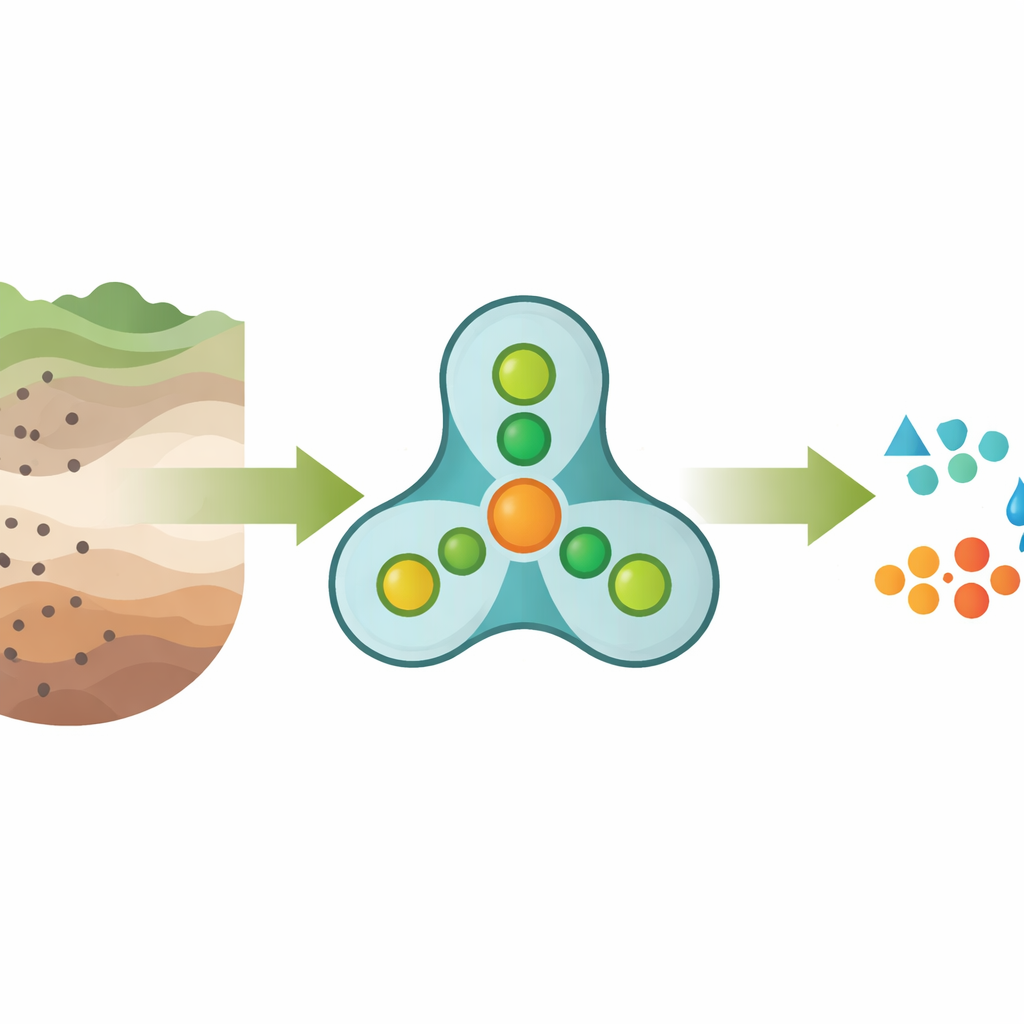
The enzyme at the center of this work is copper nitrite reductase (CuNiR), found in many soil and water microbes. CuNiR performs a pivotal step in denitrification, the process that converts nitrogen compounds from fertilizers and other sources back into gases that return to the atmosphere. It transforms nitrite into nitric oxide and water using a single electron and two protons. Each copy of CuNiR is built from three identical protein units and contains two copper sites: one near the surface that receives electrons, and a deeper catalytic site where nitrite binds and is chemically changed.
Taking radiation‑free molecular snapshots
Traditionally, researchers have used synchrotron X‑rays to reveal protein structures at high resolution. But for enzymes that react to changes in electron state, those X‑rays can unintentionally trigger chemistry inside the crystal itself, subtly changing what is being measured. The authors overcame this by using an X‑ray free electron laser (XFEL) at higher energy (13 keV), delivering pulses lasting just quadrillionths of a second. These pulses are so brief that they record a “time-frozen” image before radiation damage can occur. By combining this beam with an automated serial crystallography method and high‑precision SHELXL refinement, the team achieved true atomic or even sub‑atomic resolution (down to 0.95 Å) for several forms of CuNiR.
Watching copper centers change their grip
The researchers examined CuNiRs from two Bradyrhizobium species (bluish‑green enzymes) and from the model green enzyme Achromobacter cycloclastes, in multiple states: resting oxidized, nitrite‑bound, chemically reduced, and at different pH values. Across all oxidized resting states, they consistently saw a catalytic copper ion (the so‑called type‑2 copper) held in a five‑partner arrangement, coordinated by three histidine amino acids plus two solvent‑derived molecules, often best described as a water and a hydroxide. When nitrite binds, these solvent partners are displaced but the copper remains five‑coordinated, now gripping nitrite in a “top‑hat” fashion via both of its oxygen atoms. At very high resolution, the team could also see small shifts and multiple positions for key protein side chains and even detect when catalytic amino acids were likely to be protonated or not, which is crucial for understanding proton transfer during the reaction.
Revealing the preferred reaction pathway
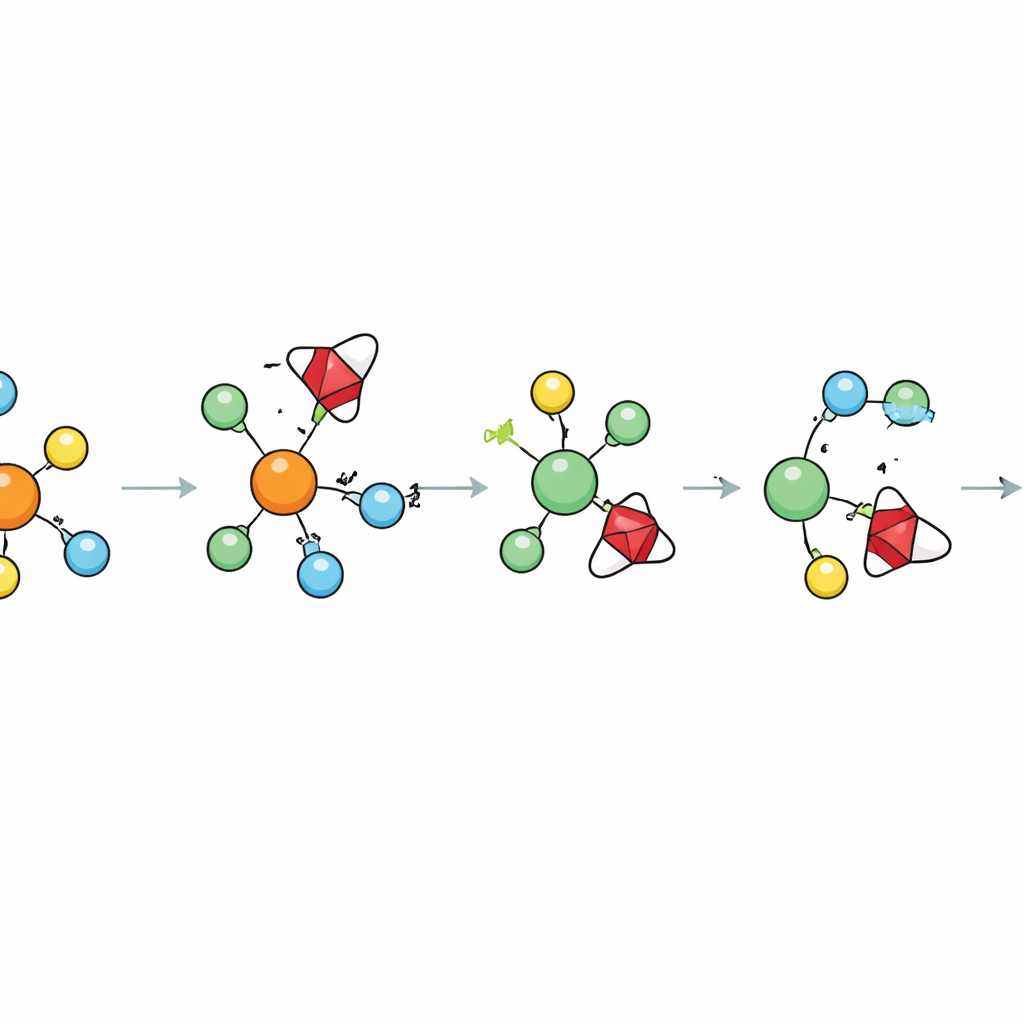
The ultra‑sharp structures of the reduced enzyme add a missing piece. When the catalytic copper is in its reduced state, the team observed two distinct forms: one in which a single solvent molecule remains bound (a four‑partner site) and another in which that solvent is gone and a nearby amino acid side chain swings in to fill the space, creating a three‑partner “dead‑end” state unable to bind nitrite. Combining these structural snapshots with single‑crystal optical spectroscopy, the authors show that nitrite binds most strongly to the oxidized five‑coordinated copper, and that binding to the fully reduced site is limited. This supports a “binding‑before‑reduction” branch of a so‑called random‑sequential mechanism: the enzyme tends to grab nitrite first and then accept an electron, rather than the other way around.
What this means for enzymes and future catalysts
By delivering the most accurate, damage‑free structures yet for a copper metalloenzyme, this work provides a unified picture of how CuNiRs use copper centers, nearby amino acids, and bound water or hydroxide ions to choreograph electron and proton delivery. The consistent five‑coordinated oxidized copper, the detailed nitrite binding mode, and the identification of productive versus dead‑end reduced states together clarify why some microbial enzymes are more efficient than others and how subtle changes in pH or protein geometry tune activity. More broadly, the study showcases how high‑energy XFELs, paired with advanced refinement, can uncover the fine details of catalytic mechanisms in metal‑containing enzymes, guiding both environmental models of nitrogen cycling and the design of bio‑inspired catalysts.
Citation: Rose, S.L., Antonyuk, S., Ferroni, F.M. et al. Accurate atomic resolution XFEL structures of a metalloenzyme reveal key insights into its catalytic mechanism*. Nat Commun 17, 3735 (2026). https://doi.org/10.1038/s41467-026-70261-1
Keywords: copper nitrite reductase, XFEL crystallography, nitrogen cycle, metalloenzymes, enzyme catalysis