Clear Sky Science · en
Unbiased recording and identification of thymic cellular interactomes using synthetic Notch receptors
Why the Immune System’s “Training Camp” Matters
The thymus is a small organ tucked above the heart, but it acts as a boot camp for T cells, the white blood cells that patrol our bodies for infections and cancer. As we age, this training camp slowly falls apart, weakening our immune defenses. This study introduces a clever genetic "tracking system" in mice that lets scientists see, with unusual precision, which cells in the thymus physically touch and train developing T cells. Understanding this hidden conversation between cells could point the way to boosting immunity in aging and disease.
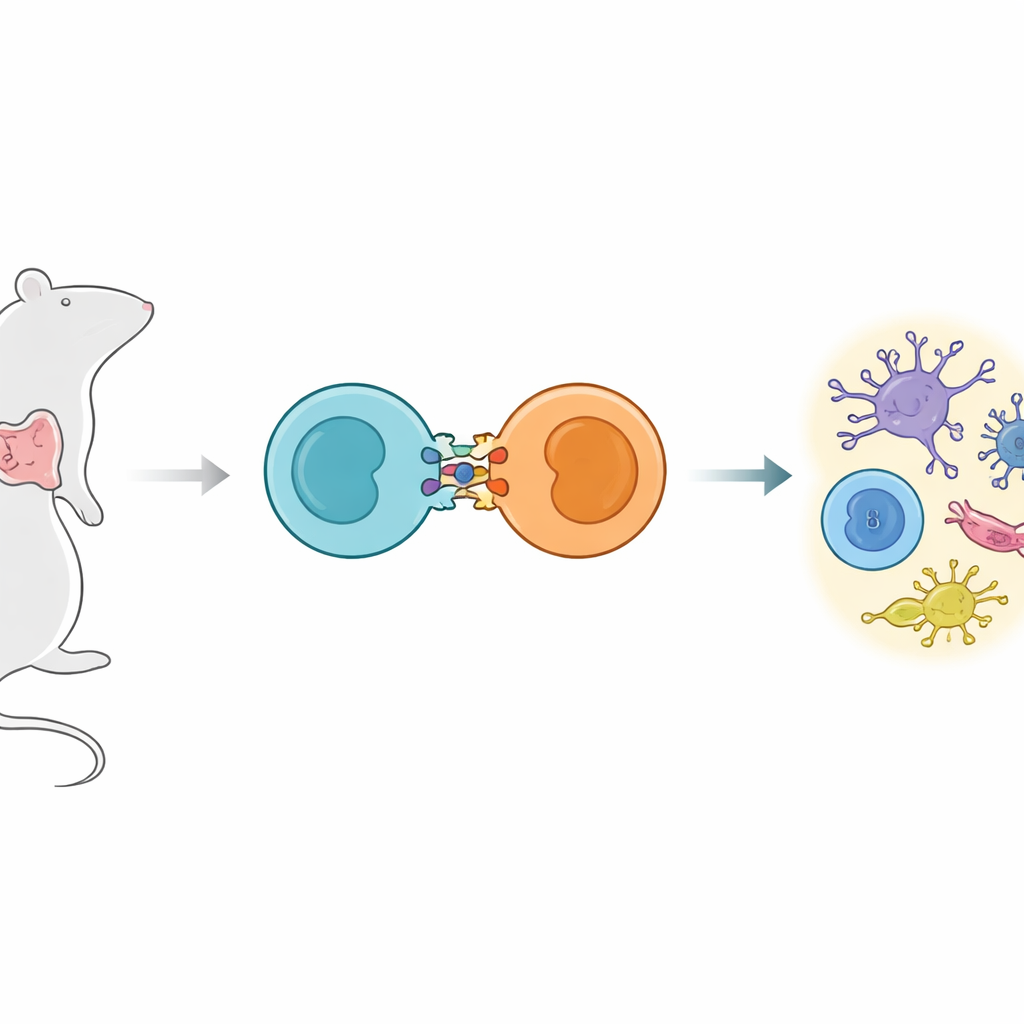
A New Way to Watch Cells Talk
The authors engineered a mouse system they call "Yin & Yang" to record when two cells come into direct contact inside the thymus. They split thymic cells into two roles. A chosen group of T cells becomes "sender" cells that display a green fluorescent protein on their surface. All the other cells in the thymus become potential "receiver" cells, equipped with a synthetic receptor that recognizes this green signal. When a sender and receiver touch, this synthetic receptor is triggered and switches on a red fluorescent signal inside the receiver. In effect, any cell that has recently touched a developing T cell lights up red, allowing it to be isolated and studied one by one.
Turning Fleeting Encounters into Lasting Records
Many important immune decisions are made during brief brushes between cells that last less than an hour, making them easy to miss. The team first tested Yin & Yang in fibroblast cells grown in dishes. They showed that even short or repeated half‑hour contacts were enough to turn receivers red, and that this red signal persisted for at least six days and several cell divisions. That stability is crucial: it converts a momentary interaction into a durable record, so that cells that once met can be captured and profiled later, long after they have moved away from their partners.
Revealing the Thymus’s Hidden Supporting Cast
With the system validated, the researchers switched it on in the thymus of living mice, focusing mainly on CD4 "helper" T cells as senders. By sorting and sequencing the red‑labeled cells, they assembled an atlas of the thymus’s cellular "neighborhood" that directly contacts these developing T cells. Some of the interactors were expected: various types of dendritic cells and B cells, which are known to present self molecules and help eliminate harmful, self‑reactive T cells. Others were structural or supportive cells, including several fibroblast subtypes and thymic epithelial cells, as well as early T‑cell precursors, specialized gamma‑delta T cells, eosinophils, and blood vessel cells. Together, these findings show that T‑cell maturation depends on a surprisingly broad and complex network of neighbors.
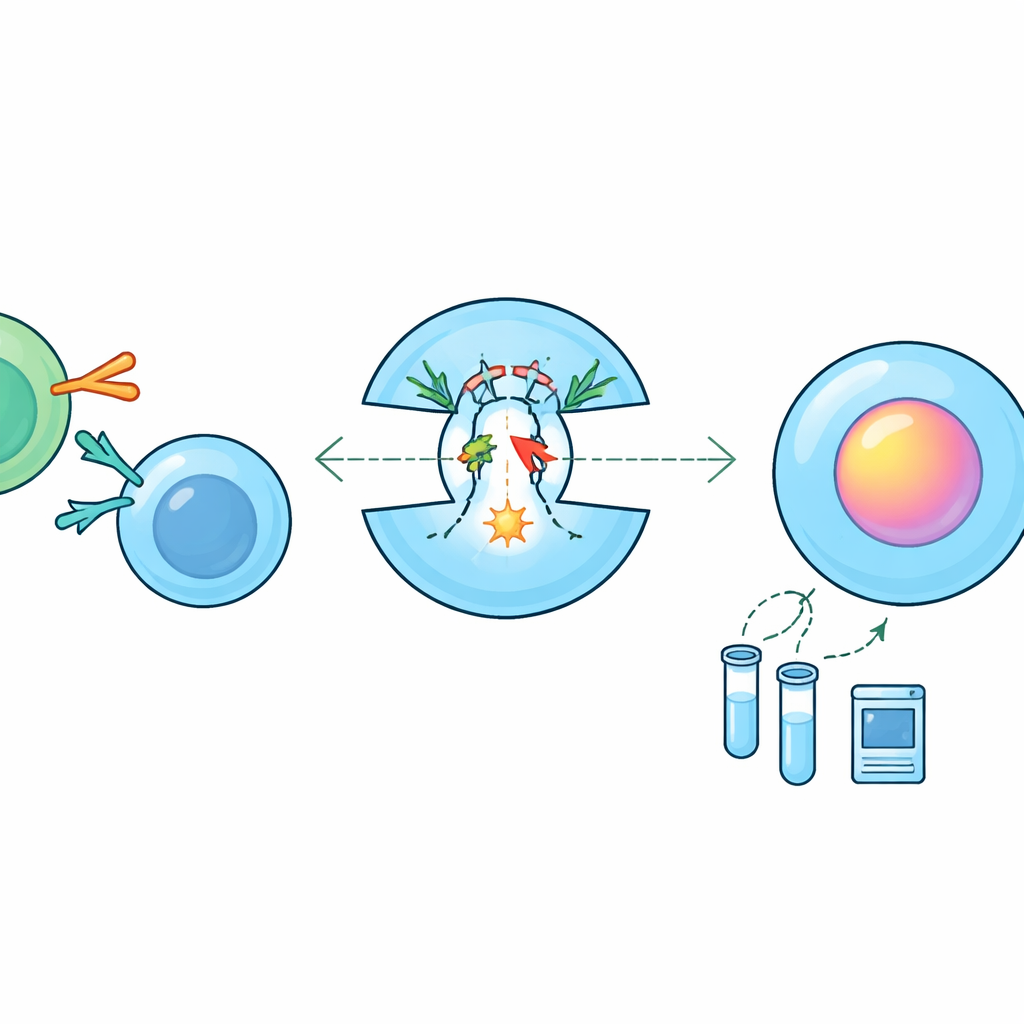
Decoding the Molecular Conversations
Because each red‑labeled cell was analyzed at single‑cell resolution, the authors could go beyond identifying who interacts to asking how they signal to one another. Using computational tools that match ligands to their receptors, they uncovered well‑known cues, such as chemokines that guide T cells into the thymic medulla, survival signals from B cells and dendritic cells, and molecules that promote the formation of regulatory T cells, which help prevent autoimmunity. They also found lesser‑known candidate pathways, including adhesive molecules and signaling pairs not previously linked to T‑cell training. These newly highlighted interactions offer starting points for future experiments aimed at tuning T‑cell development.
How Aging Erodes Immune Training
The team then compared young adult mice with older mice to see how these cellular contacts change over time. The overall list of partner cell types stayed largely the same, but the frequency of recorded interactions fell with age, and many stromal and immune partners contacted CD4 T cells less often. This drop in cellular cross‑talk mirrors the well‑known shrinkage and deterioration of the thymus during adulthood. The Yin & Yang system thus captures, in living tissue, how the immune training environment frays as animals grow older, helping to explain why new T‑cell production declines.
What This Means for Future Immune Health
By converting invisible, short‑lived cell‑to‑cell touches into stable fluorescent marks, the Yin & Yang system provides a powerful new way to map who talks to whom in the thymus. The study confirms many known relationships, uncovers new ones, and shows that these vital contacts become rarer with age. For a lay observer, the key message is that our immune system’s training camp depends on a dense web of direct cellular encounters—and that this web slowly unravels over time. Tools like this could help researchers design strategies to preserve or restore thymic function, bolstering immunity in aging, after chemotherapy, or in immune disorders.
Citation: Sánchez-Lanzas, R., Jiménez-Pompa, A., Smith, E. et al. Unbiased recording and identification of thymic cellular interactomes using synthetic Notch receptors. Nat Commun 17, 3708 (2026). https://doi.org/10.1038/s41467-026-70225-5
Keywords: thymus, T cell development, cell-cell interactions, synthetic Notch, immunology aging