Clear Sky Science · en
Unpacking sources of transmission in HIV prevention trials with deep-sequence pathogen data
Why infections spill over community borders
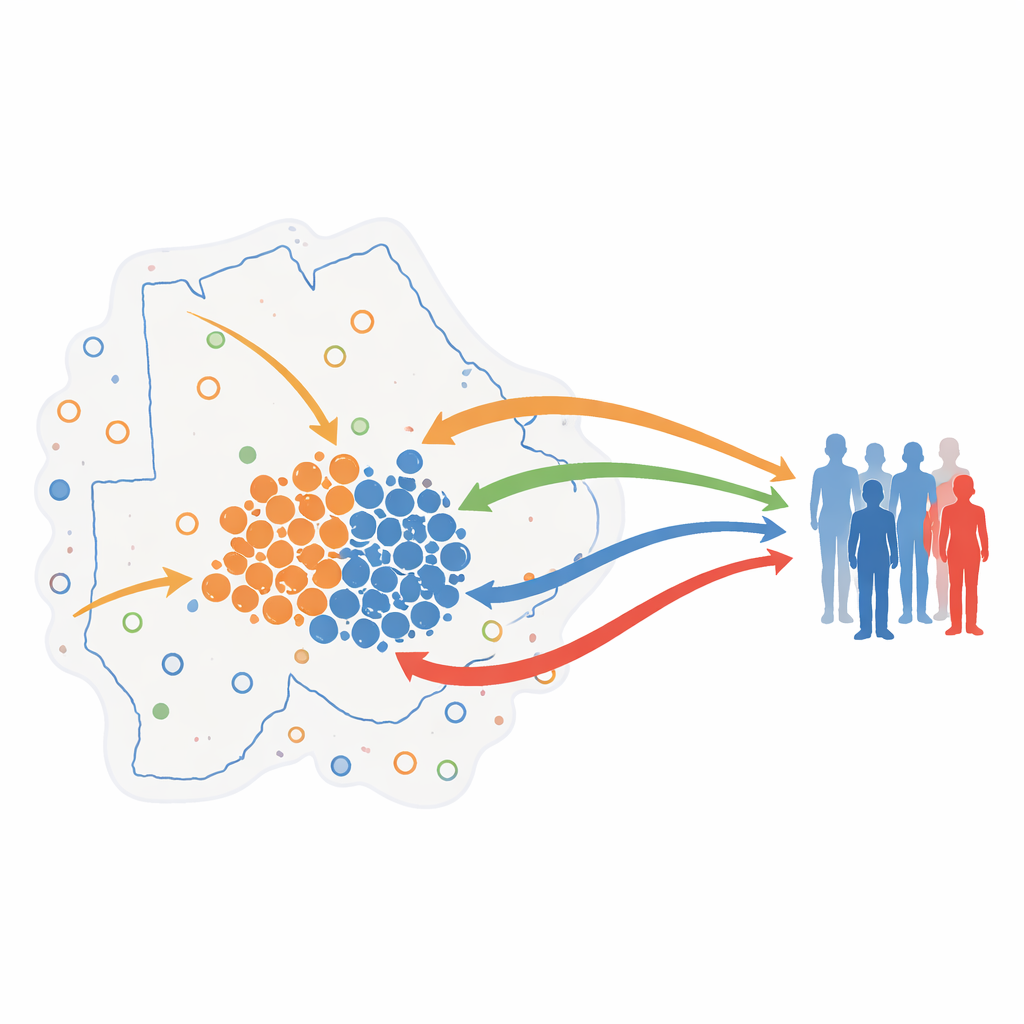
Public health leaders have pinned big hopes on "test-and-treat" strategies, where people are widely offered HIV testing and immediate treatment to curb the epidemic. Yet large community trials in Africa have shown smaller drops in new infections than expected, even when treatment greatly reduced virus levels in those who were positive. This study asks a simple but crucial question: are prevention programs being undermined because many new infections come from outside the communities where the trials took place?
Looking closely at one major HIV trial
The researchers focused on the Botswana Combination Prevention Project (BCPP), a large study in 30 rural and peri-urban communities across Botswana. Half the communities were randomly assigned to receive an intensive package of HIV testing and treatment, while the others continued with standard care. Earlier work showed that this program cut new HIV cases by about 30 percent. To understand why the impact was not larger, the team combined detailed maps, travel distances between communities, and genetic information from HIV viruses sampled in thousands of participants.
Reading the virus to trace who infected whom
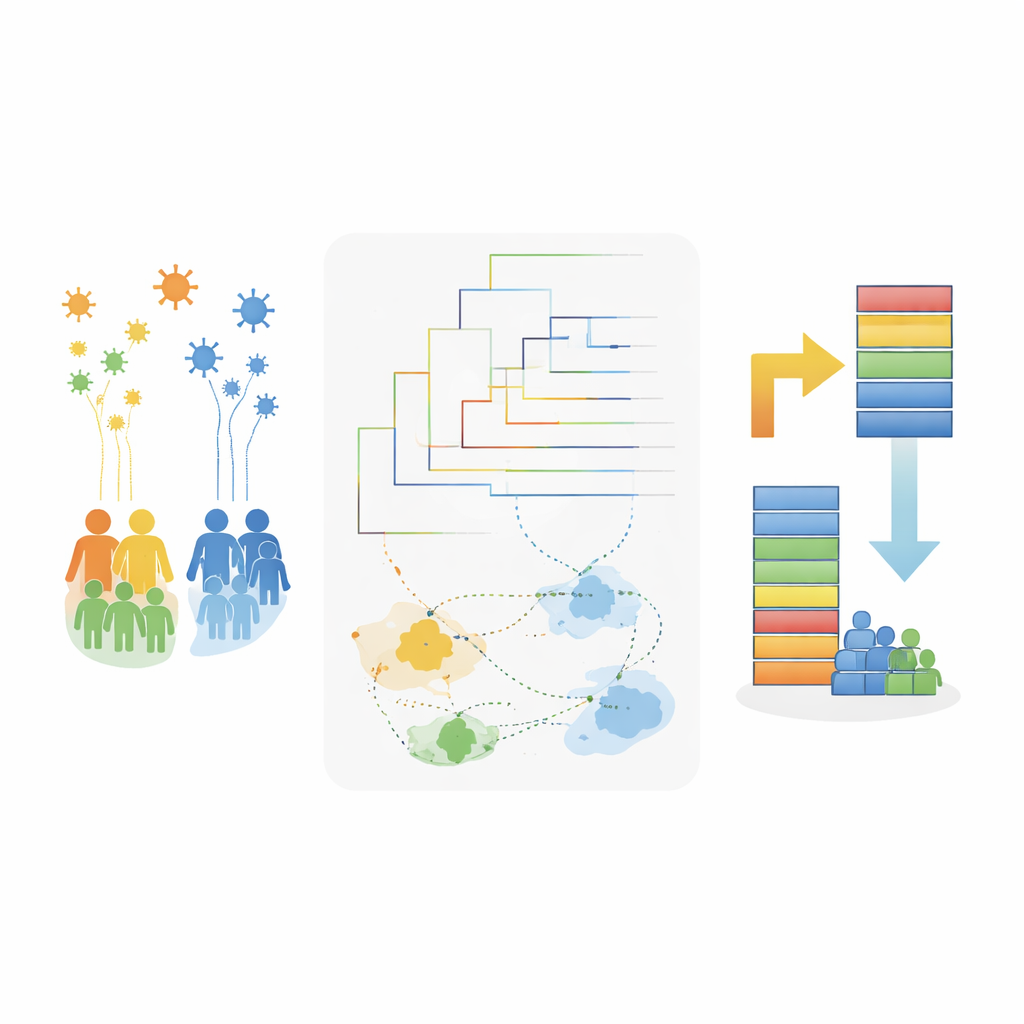
The team used deep sequencing, a technology that reads many copies of each person’s virus in great detail. By comparing these genetic sequences, they could identify people whose viruses were so similar that one likely infected the other, and in which direction. They found 82 likely opposite-sex transmission pairs among trial participants. Using these pairs, they built a statistical model that estimated the chance that a random person with HIV in one community would be genetically linked to a person in another community. This model took into account whether people lived in the same community, whether their communities received the test-and-treat program, and how far apart the communities were by road.
Distance and community boundaries matter
The analysis showed that people were far more likely to infect someone in their own community than in another one, and that the chance of transmission dropped as driving distance between communities grew. Even so, when the researchers scaled this relationship up to all communities in Botswana using census data and regional HIV prevalence, a striking pattern emerged: most infections in the trial communities were estimated to come from people living outside the 30 trial sites altogether. On average, about 90 percent of infections in communities that received the intensive intervention, and 86 percent in standard-care communities, were attributed to sources in non-trial communities scattered across the country.
Uneven risks near cities and across trial arms
How close a community was to major towns also shaped the pattern of spread. More isolated rural communities saw a somewhat larger share of infections coming from within their own borders, while communities near large urban centers appeared to receive more infections from outside. The study also compared the two trial arms: people from control communities contributed more infections to intervention communities than the reverse pattern. This is consistent with the idea that better treatment in intervention communities helped reduce onward spread from those areas, even as residents continued to be exposed to infections arriving from elsewhere.
What if the program went nationwide?
Because most infections in the trial communities appeared to be imported from outside the trial area, the researchers asked what might happen if the same test-and-treat package were offered nationwide. Using their model, they estimated that such a roll-out could cut transmissions to residents of the trial communities by about 59 percent—roughly double the reduction seen when only the trial communities received the intervention. While the confidence range around this figure is wide, the result strongly suggests that the trial underestimates what this strategy could achieve if applied broadly.
What this means for future HIV control
For non-specialists, the key message is that strong local HIV prevention programs can be blunted when people’s sexual networks extend far beyond the boundaries of a study or clinic catchment area. In Botswana, mobility and dense links to nearby cities meant that many new infections in the trial communities were seeded from elsewhere, limiting how much a community-level trial could reduce overall incidence. The authors argue that prevention strategies—and the trials that test them—must account for these cross-community connections. In practice, that means considering wider, sometimes national, roll-outs and using genomic surveillance of viruses to reveal where infections are really coming from, so that resources can be targeted where they will have the greatest impact.
Citation: Magosi, L.E., Tchetgen, E.T., Novitsky, V. et al. Unpacking sources of transmission in HIV prevention trials with deep-sequence pathogen data. Nat Commun 17, 3935 (2026). https://doi.org/10.1038/s41467-026-70203-x
Keywords: HIV prevention, test and treat, Botswana, genomic surveillance, infectious disease trials