Clear Sky Science · en
Going wild in banana breeding enables Fusarium-resistant hybrids with improved fruit quality
Why Better Bananas Matter
Bananas are a daily staple for hundreds of millions of people, yet the plants behind this familiar fruit are surprisingly fragile. Most commercial bananas are genetic near-clones, which makes them easy targets for fast-spreading diseases. One of the most dangerous threats is a soil fungus that can wipe out entire plantations and is difficult to control once it arrives. This study explores how a little-known wild banana from Himalayan forests can inject fresh resilience and flavor into our favorite fruit, offering a new path to protect banana supplies in a warming, disease-prone world. 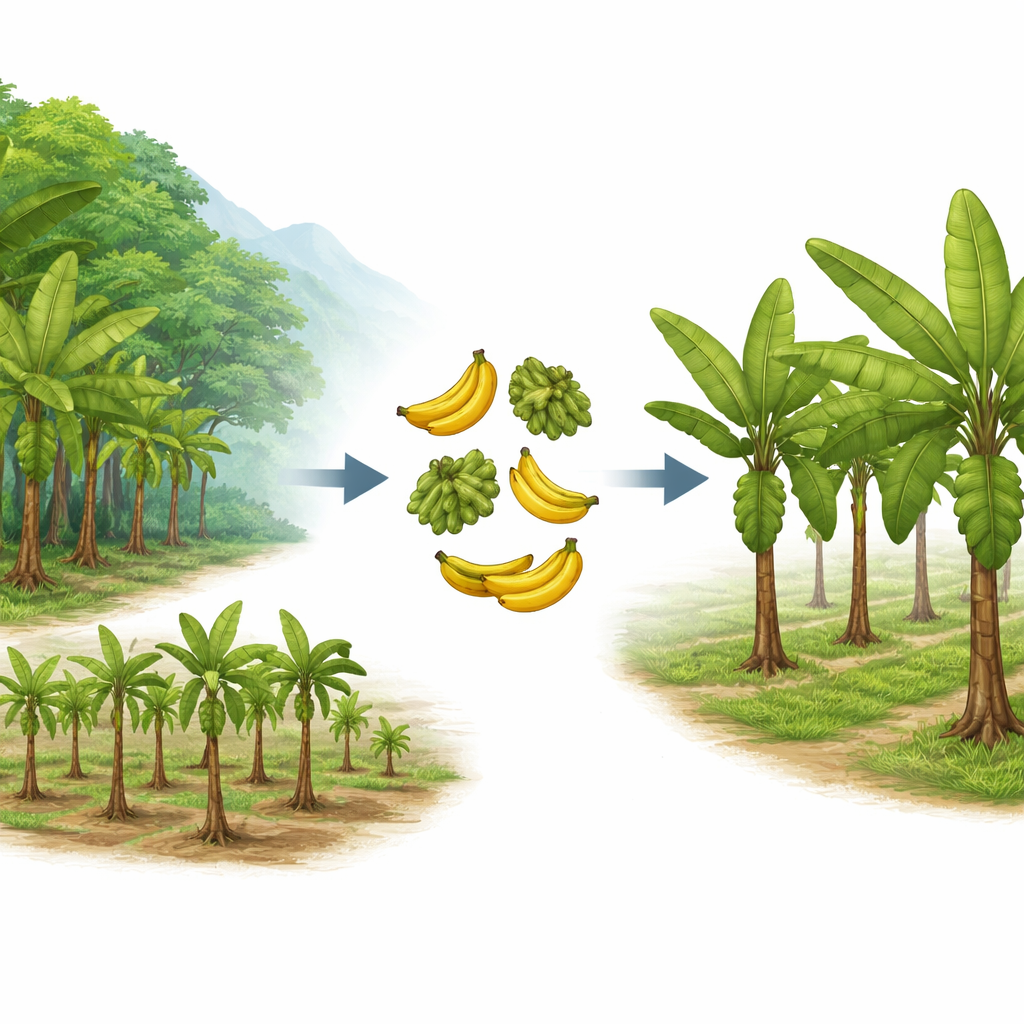
A Hidden Ally in the Forest
Modern bananas descend from just a few wild ancestors and are usually propagated by cuttings, not seeds. That history has produced bananas that are convenient to grow and eat, but it has also left them with very little genetic variety. By contrast, their wild relatives are highly diverse and often tougher, having evolved under harsher, more variable conditions. The researchers focused on Musa cheesmanii, a tall wild banana with a striking dark stem that grows on the cool, wet slopes of the eastern Himalayas. Field observations hinted that this species shrugs off Fusarium wilt, a devastating root disease caused by a fungus known as tropical race 4 that is spreading through banana-growing regions worldwide.
Turning Wild Strength into Farm Value
To test whether the wild species could improve crop bananas, the team crossed M. cheesmanii with two popular Chinese cooking-banana varieties known as ‘Yulin’ and ‘Jinyu’. These cultivated parents normally have low fertility, making breeding slow and difficult, but they produced viable seeds when pollinated with the wild pollen. The resulting hybrids were grown in greenhouses and in fields naturally infested with the Fusarium fungus. Compared with their cultivated mothers, the hybrids showed fewer disease symptoms, delayed or completely absent wilting, and much cleaner tissue inside the stem and roots when cut open. In particular, one cross named ‘Haijiao No. 1’ remained essentially symptom-free while its cultivated counterparts suffered clear damage.
Better Taste, Bigger Bunches
Disease resistance alone would not be enough if the fruit were unappealing. The study therefore measured yield, plant structure, and eating quality. Hybrids fathered by M. cheesmanii produced heavier bunches than those fathered by other wild species, with some combinations nearly doubling bunch weight compared with the cultivated parent. Their stems were thicker relative to their height, suggesting better resistance to wind and an ability to support bigger bunches. Taste panels preferred the hybrid fruit over the original cultivar, and chemical tests showed higher levels of natural sugars, starch, and the orange pigment beta-carotene, hinting at richer flavor and improved nutritional value. The bananas also stayed in good eating condition for several extra days after ripening, even when the peel darkened, effectively extending shelf-life. 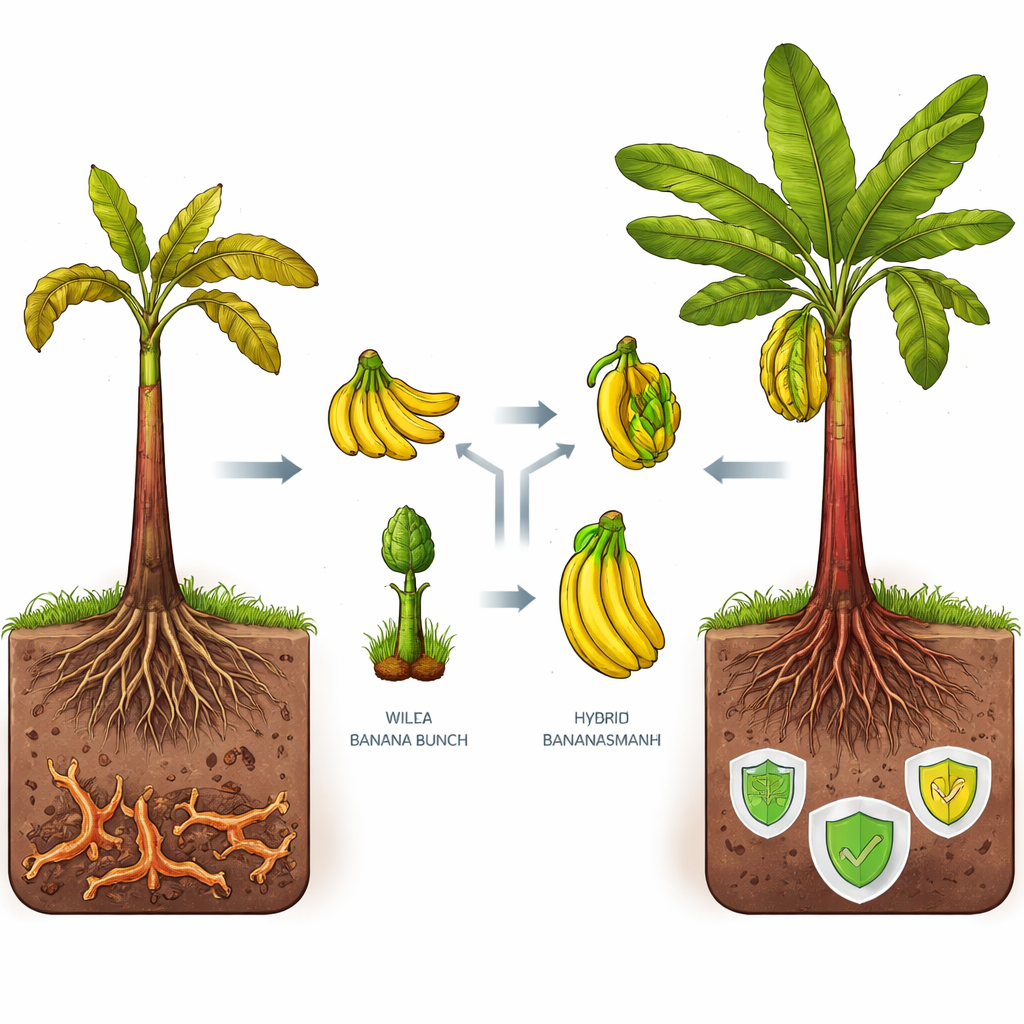
Cracking the Genetic Code of a Wild Banana
To understand why M. cheesmanii is such a strong donor of useful traits, the scientists built a complete, gap-free map of its DNA, from one chromosome end to the other. They compared this genome to those of other bananas, revealing that M. cheesmanii belongs to a branch of the family that has evolved compact genomes enriched in genes linked to sugar transport and disease defense. Importantly for breeders, it carries only broken, inactive fragments of a virus that is fully embedded and potentially activatable in one of its close relatives, M. balbisiana, which has previously limited that species’ use in breeding. The team also pinpointed gene networks and colorful plant compounds that likely explain the species’ blackish stem, a visible reminder of its distinctive chemistry and metabolism.
What This Means for Future Bananas
Together, the field trials, fruit tests, and genomic analyses show that Musa cheesmanii can act as a powerful new “father” in banana breeding. Its genes confer strong resistance to Fusarium wilt, larger yields, sturdier plants, appealing taste, and longer shelf-life, all while avoiding the viral baggage that hampers some other wild relatives. Although the wild parent itself is too tall and slow to grow for intensive farms, its hybrids and future descendants could diversify and strengthen the global banana crop. For consumers, that could mean bananas that look and taste familiar, but are quietly fortified by wild forest genes—better equipped to withstand diseases and environmental stress while keeping supermarket shelves, and dinner tables, well supplied.
Citation: Liu, X., Fu, N., Li, J. et al. Going wild in banana breeding enables Fusarium-resistant hybrids with improved fruit quality. Nat Commun 17, 3524 (2026). https://doi.org/10.1038/s41467-026-70186-9
Keywords: banana breeding, crop wild relatives, Fusarium wilt, plant disease resistance, Musa cheesmanii