Clear Sky Science · en
Polyphenol mediated zinc-oxygen synergistic hydrogel remodels senescent microenvironment for periodontal tissue regeneration
Why healing aging gums matters
As people live longer, chronic gum disease becomes more than a nuisance: it can lead to tooth loss, difficulty eating, and links to heart disease and diabetes. Dentists can clear infections, but fully rebuilding the bone and tissues that hold teeth in place has proven stubbornly difficult, especially in older mouths where stem cells and local tissues have “aged.” This study describes a smart, injectable gel designed to reset that worn-out environment around teeth so that the body’s own repair machinery can work again.
An aging neighborhood around the tooth
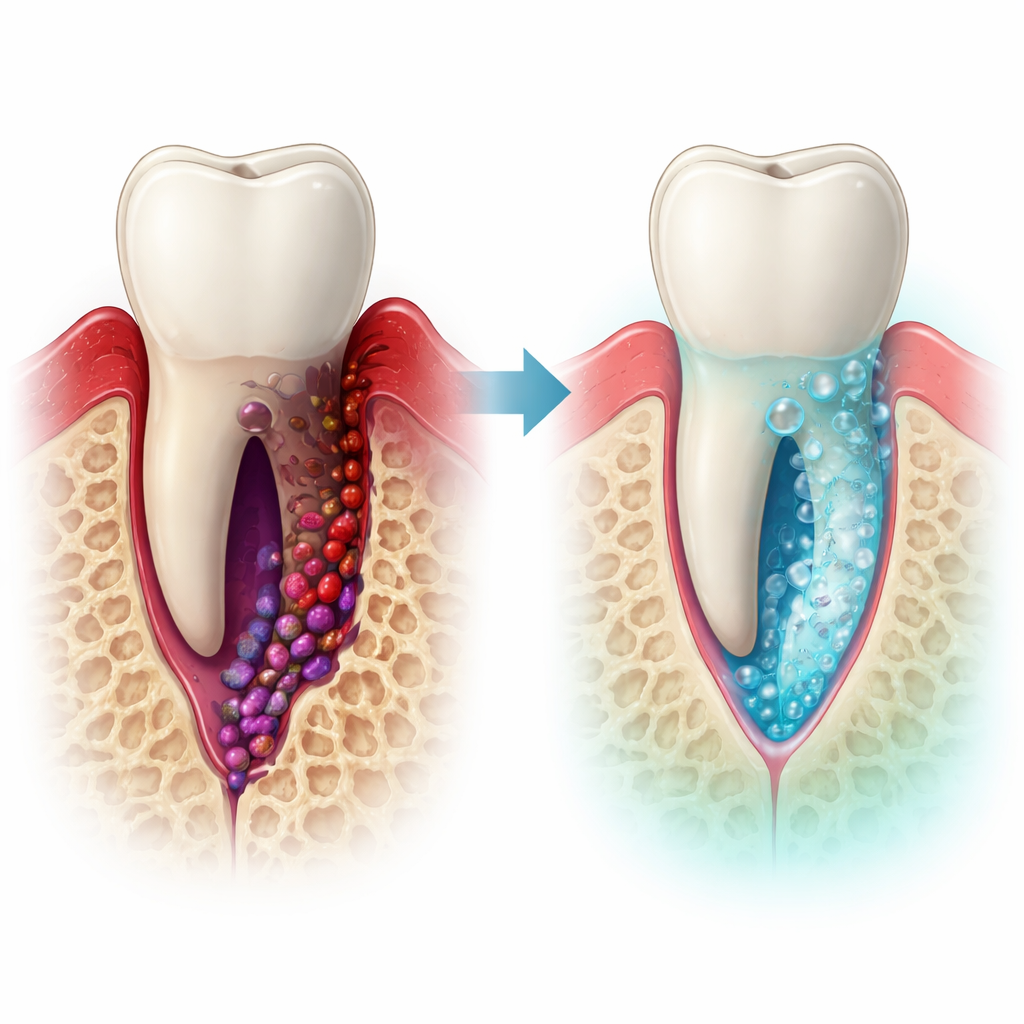
Periodontitis is a long-lasting infection of the tissues that anchor teeth. In deep gum pockets, harmful bacteria thrive in low-oxygen conditions and stir up continuous inflammation. The stem cells that normally repair ligament and bone are bombarded with stress, build up DNA damage, and slip into a senescent state—a sort of permanent retirement where they stop dividing but continue to release inflammatory signals. This “aged” neighborhood around the tooth becomes a vicious circle: disturbed microbes, lack of oxygen, and raging immune cells keep tissues from healing and bone from regrowing.
A multifunctional gel built for the mouth
To break this cycle, the researchers created an injectable hydrogel that behaves like a soft, sticky scaffold inside periodontal pockets. The backbone of the gel is a modified silk protein, chosen for safety and strength. Into this matrix they blended two types of tiny particles. One, based on calcium peroxide and coated with manganese and a plant-derived polyphenol called hydrocaffeic acid, slowly produces oxygen while also breaking down harmful hydrogen peroxide that would otherwise damage cells. The other, a zinc-rich crystalline particle similarly coated with the polyphenol, steadily releases zinc ions and disperses evenly throughout the gel. The polyphenol coating makes the gel more adhesive and tougher, allowing it to cling to wet tooth and bone surfaces and withstand chewing forces.
Recharging stem cells and calming immunity
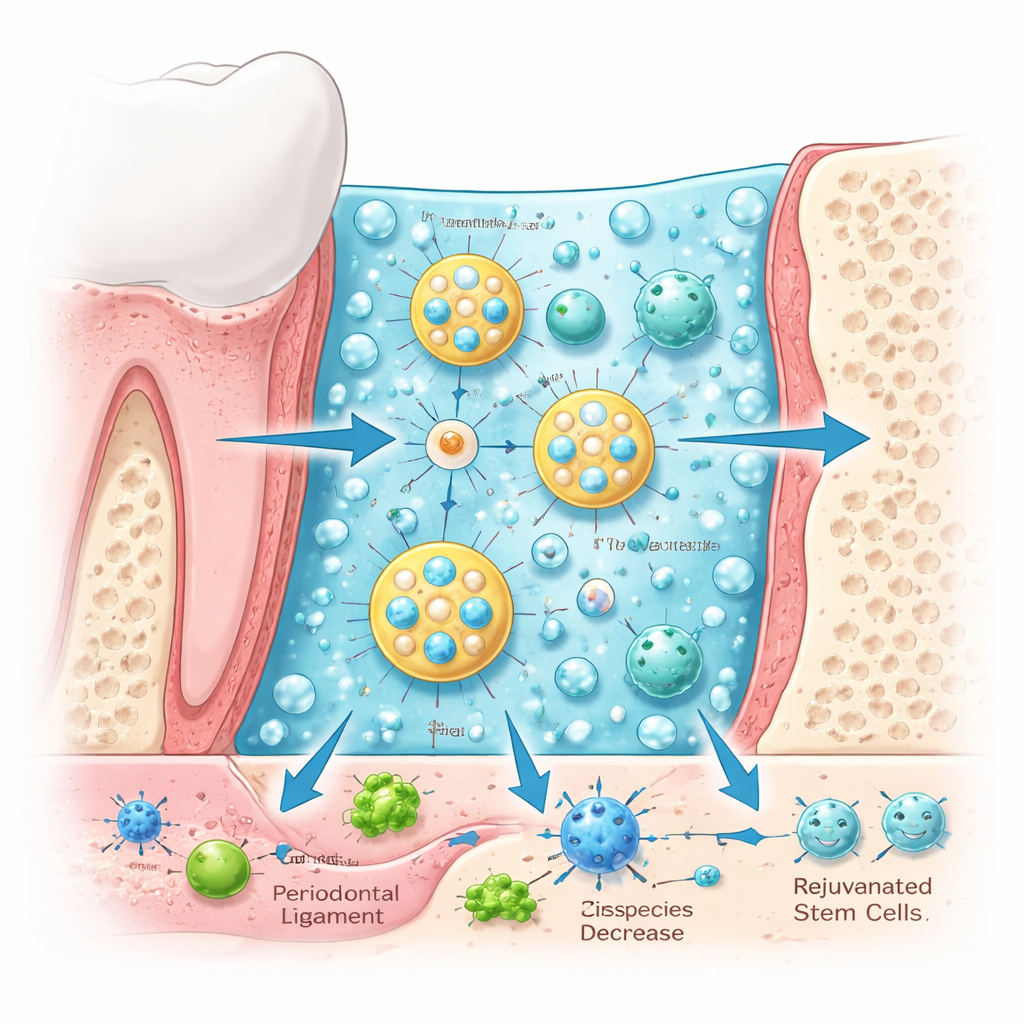
In cell culture tests that mimicked inflamed gums, the gel’s components worked together to dial down aging signals in human periodontal ligament stem cells. Levels of reactive oxygen species fell, markers of cellular senescence dropped, and the cells began to divide and form bone-like tissue more readily. The hydrogel also nudged immune cells called macrophages away from an aggressive, tissue-damaging state toward a more reparative one. Genetic analyses showed that treated stem cells switched on genes involved in DNA repair, telomere maintenance, antioxidant defenses, and proper zinc handling—molecular hallmarks of a more youthful, resilient state.
Repairing gums and reshaping microbes in animals
To test the treatment in living tissue, the team used rats with ligature-induced periodontitis, a standard model in which a thread tied around a tooth triggers deep pockets, inflammation, and bone loss. After removing the ligature, they injected different hydrogels into the pockets. Over four weeks, animals receiving the full zinc–oxygen–polyphenol gel showed the most striking recovery: bone height and density around the teeth rebounded, gum tissue reattached more closely, and ligament fibers regained a more ordered appearance. Tissue samples contained fewer senescent cells, less oxidative damage, reduced hypoxia, and lower levels of inflammatory molecules. At the same time, bacterial communities in the treated pockets shifted away from classic anaerobic pathogens toward a more balanced mix that included beneficial species, indicating that the gel helped reset the local microbiome without broad antibiotics.
A new way to help the mouth heal itself
For non-specialists, the key message is that this hydrogel does not simply kill germs or add a single growth factor. Instead, it tackles several root problems of aging gum tissue at once: low oxygen, lack of zinc, oxidative stress, chronic inflammation, and a skewed microbial community. By making the environment around the tooth more hospitable, it allows resident stem cells and immune cells to behave more like those in younger, healthier tissue, leading to stronger bone and better support for teeth in animal models. While human trials are still needed, the work points toward future dental therapies that “rejuvenate the neighborhood” rather than just patch the damage, with possible relevance for other age-related inflammatory diseases beyond the mouth.
Citation: Ye, C., Liu, J., Ran, J. et al. Polyphenol mediated zinc-oxygen synergistic hydrogel remodels senescent microenvironment for periodontal tissue regeneration. Nat Commun 17, 3719 (2026). https://doi.org/10.1038/s41467-026-70176-x
Keywords: periodontitis, hydrogel, stem cell senescence, oral microbiome, zinc and oxygen therapy