Clear Sky Science · en
Pathways to global hydrogen production within planetary boundaries
Why hydrogen’s future matters for the whole planet
Hydrogen is often hailed as a clean wonder fuel that could power ships, factories and heavy industry without warming the planet. But producing vast amounts of hydrogen will itself place new demands on land, water, energy and the wider environment. This study asks a simple but crucial question: can the world ramp up hydrogen production fast enough to help meet climate goals without pushing Earth’s life-support systems beyond safe limits?
The idea of a safe operating space for humanity
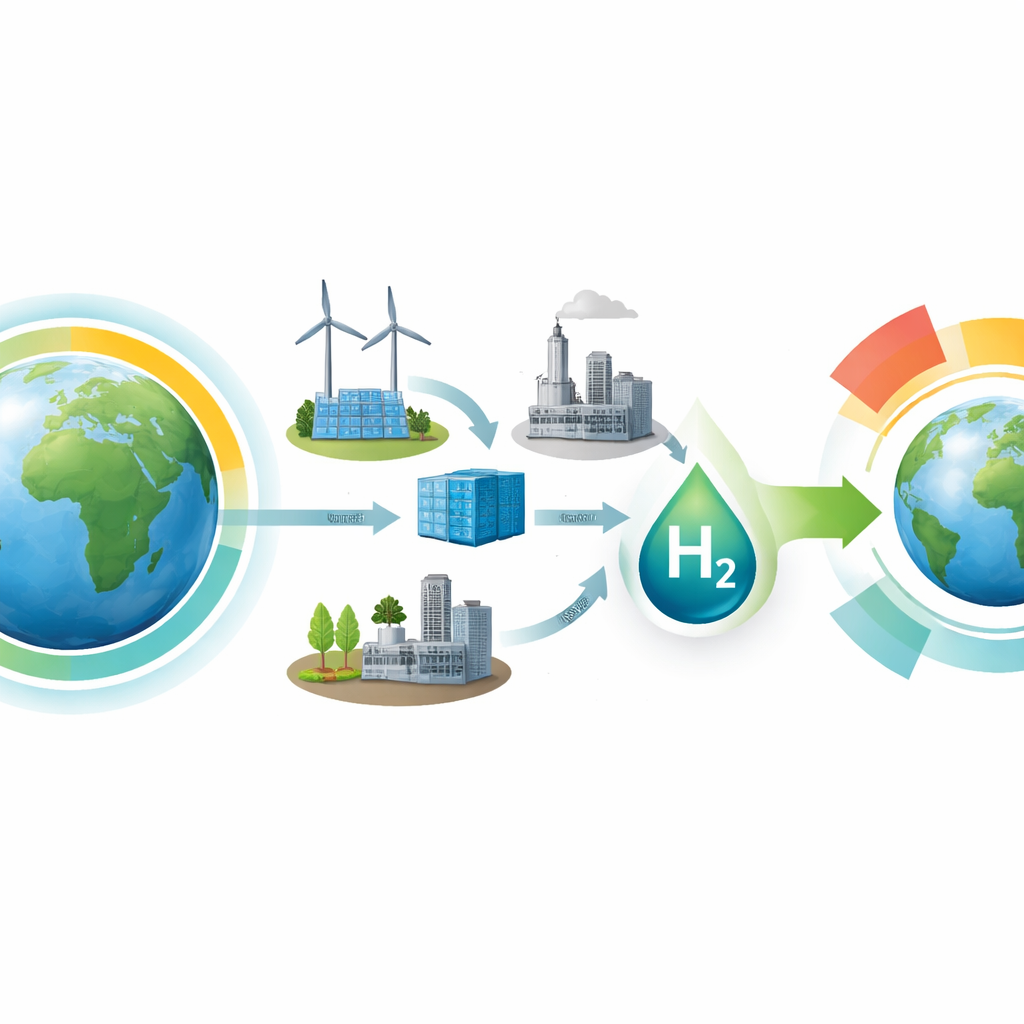
The researchers build on the concept of planetary boundaries, which defines a “safe operating space” for human activity across nine Earth processes, including climate, biodiversity, freshwater use and nutrient pollution. Many of these boundaries are already exceeded. Because future climate plans assume a huge role for hydrogen in cutting emissions from steel, chemicals, fertilisers and transport, the team argues that hydrogen must stay within its fair share of this safe space. That means looking beyond carbon dioxide alone and considering how hydrogen production ripples through the entire Earth system.
A global model of future hydrogen and the Earth system
To explore this, the authors combine two powerful tools. First, they use climate mitigation scenarios from the UN climate panel that are consistent with limiting warming to around 1.5 °C. These scenarios specify how much hydrogen the world is likely to need between 2025 and 2050 and how quickly other sectors decarbonise. Second, they construct a detailed, bottom-up model of thirteen different ways to make hydrogen, including water electrolysis using renewable electricity, fossil fuel routes equipped with carbon capture and storage, and various biomass-based technologies. They then connect this production system to an Earth system interaction model that tracks how pressures on one planetary boundary can amplify or dampen pressures on others through feedback loops.
What happens to the planet as hydrogen scales up
The model shows that even under optimistic assumptions, global hydrogen production is likely to be environmentally unsustainable between now and 2050. As hydrogen volumes rise from a few million tonnes today to hundreds of millions of tonnes mid-century, the environmental “space” available per unit of hydrogen shrinks because other sectors are also cutting emissions. The team finds that, without considering Earth-system feedbacks, hydrogen production would already exceed its allocated share of six out of nine planetary boundaries by 2025, including climate, ocean acidification and nutrient cycles. When feedbacks are included—for example, how biodiversity loss can worsen climate change—these transgressions are strongly amplified, and previously minor impacts such as freshwater use and land change are pushed beyond safe limits as well.
The best and worst ways to make hydrogen
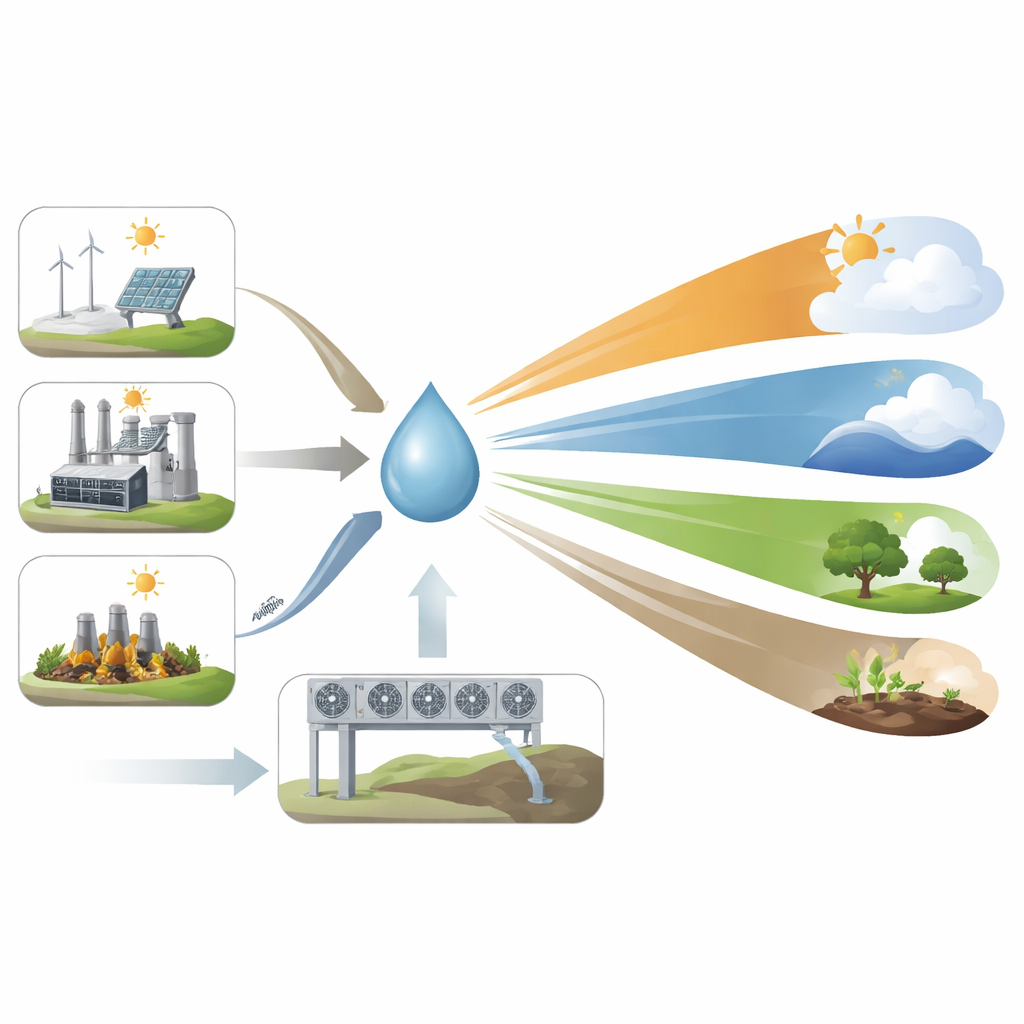
Not all hydrogen is equal. The analysis shows that hydrogen made from water electrolysis powered by low-emission electricity has the lowest overall planetary footprint. However, even this “green” option overshoots several boundaries because the production of solar panels, wind turbines and other infrastructure still relies on mining and industrial processes that emit greenhouse gases and release large amounts of nitrogen and phosphorus into the environment. Hydrogen from fossil fuels equipped with carbon capture performs similarly to electrolysis in absolute terms and could serve as a transitional option if sufficient underground storage for captured carbon is available. In stark contrast, large-scale biomass-based hydrogen fares worst: it greatly intensifies pressures on climate, biodiversity, water and nutrient cycles, largely because growing and processing biomass disturbs ecosystems and releases stored carbon.
Can extra carbon removal make hydrogen sustainable?
The authors also test whether combining hydrogen production with direct air capture of carbon dioxide could pull the system back inside planetary boundaries. In their model, capturing and permanently storing several kilograms of CO₂ for every kilogram of hydrogen can significantly reduce climate-related overshoot and moderate some other impacts. Yet this fix comes with its own demands: huge additional amounts of renewable electricity are needed to power the capture plants, and nutrient-related pressures from mining materials for renewable technologies remain high. The benefits are also highly sensitive to hydrogen leaks, which could erode much of the climate advantage if not tightly controlled.
What this means for a truly clean hydrogen future
For non-specialists, the central message is that hydrogen is not automatically “green” just because it does not emit carbon dioxide when burned. According to this study, large-scale hydrogen production will likely remain environmentally unsustainable in the coming decades unless it is carefully managed. The most promising path involves prioritising efficient water electrolysis powered by genuinely low-impact electricity, retrofitting existing fossil-based plants with effective carbon capture as a bridge, limiting biomass use to genuine wastes and residues, deploying carbon removal where feasible, and tightening control of hydrogen leaks. In short, hydrogen can be a vital tool for cutting emissions in sectors with few alternatives—but only if its production is planned within the wider limits of the Earth system.
Citation: Lejeune, M., Kara, S., Hauschild, M.Z. et al. Pathways to global hydrogen production within planetary boundaries. Nat Commun 17, 3521 (2026). https://doi.org/10.1038/s41467-026-70168-x
Keywords: clean hydrogen, planetary boundaries, renewable electrolysis, carbon capture, direct air capture