Clear Sky Science · en
Cost-effective strategies can reduce water and energy requirements in China’s wastewater treatment by 2035
Why this matters for water and power
Modern cities depend on vast treatment plants to clean wastewater before it returns to rivers, lakes, and coasts. Yet this essential service quietly consumes huge amounts of water and electricity. In a country as large and fast-growing as China, even small improvements in how plants are designed and run can translate into massive savings. This study asks a simple but urgent question: can China treat more wastewater, meet stricter pollution rules, and still cut the water and energy it uses—without breaking the bank?
Following water and power from start to finish
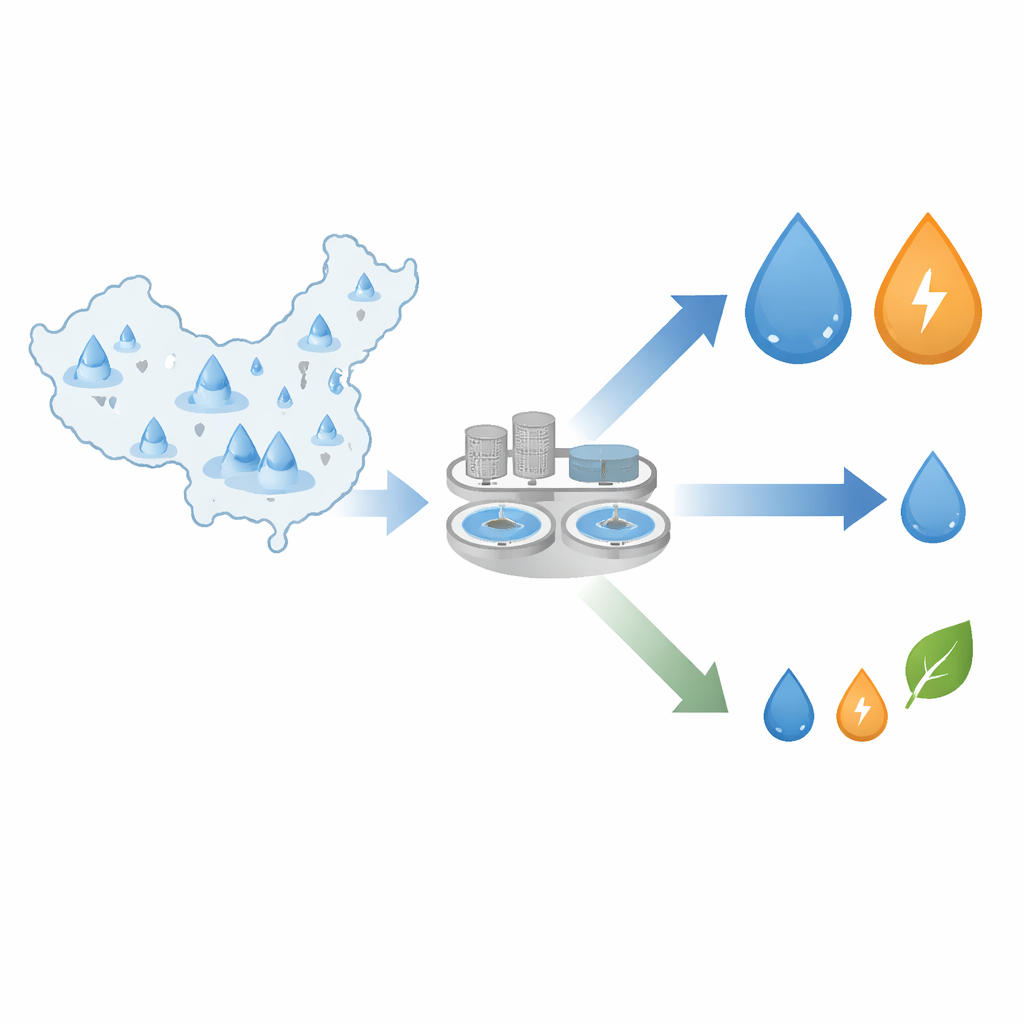
The researchers assembled detailed information from 90 real treatment projects and more than 10,000 urban wastewater treatment plants across China. They traced water and energy use over the full life of a plant—from pouring concrete and installing equipment, through daily operation, to eventual demolition. This “cradle-to-gate” view shows not only how much electricity the pumps and aerators use, but also how much water is needed to build the facilities in the first place and how much hidden energy is embedded in chemicals and materials. All results were expressed per cubic meter of wastewater treated, allowing different technologies and regions to be compared on equal footing.
Which treatment methods use less
China relies on several biological treatment methods that differ in how tanks are arranged and how oxygen is supplied to microbes that break down pollution. The team found large differences in the “footprints” of these methods. On average, biological filter systems had the lowest water and energy use per unit of wastewater, while a flexible technology known as continuous activated sludge treatment had the highest and the widest spread between plants. Advanced processes that remove more nitrogen and phosphorus generally used more resources than simpler ones, but some new designs, such as the Linpor system, showed promisingly low water and power demands. Across all methods, most of the water use occurred during construction, while most of the energy was consumed during operation, mainly for aeration and mixing.
Regional patterns across a vast country
By linking process footprints to the actual mix of technologies used in each city, the authors mapped how resource use varies across China. Central and eastern provinces had the highest average footprints, reflecting their heavy reliance on energy-intensive processes and large treatment volumes. Northeastern provinces, by contrast, tended to use slightly less water and energy per cubic meter. Regions dependent on groundwater and those with scarce water resources often showed lower footprints, likely because rising pumping costs and strict policies push utilities toward more efficient designs. Areas with abundant water, where household wastewater is more diluted, paradoxically needed more energy per unit of pollution removed. Social factors also mattered: places with better management of human waste outside the piped sewer system required less intensive treatment, while investments in high-end reuse plants tended to raise electricity use even when total water use did not change much.
Testing different futures for 2035
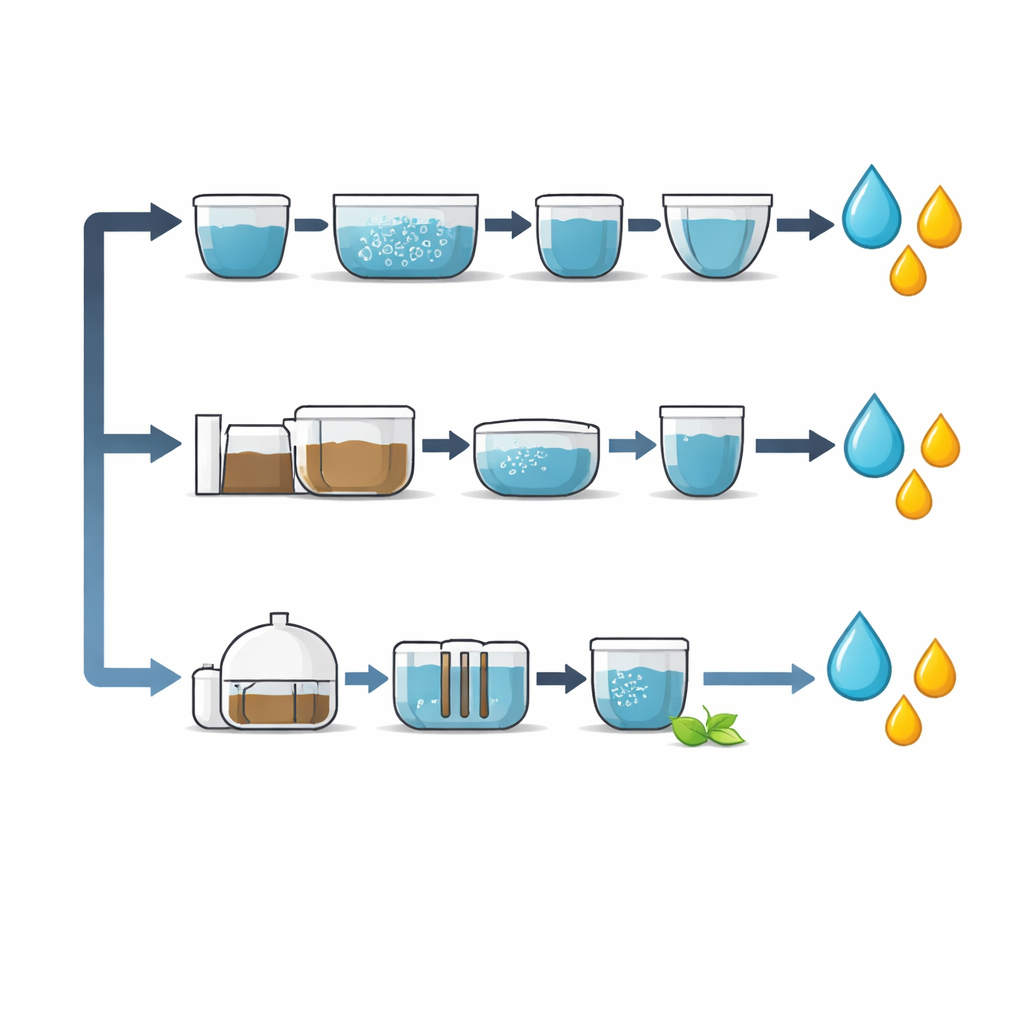
China’s wastewater load and total resource use have surged since 2009 as treatment coverage expanded and pollution standards tightened, with total water and energy footprints roughly tripling by 2022. To explore how this might change, the authors built scenarios that reshuffle treatment technologies under different goals: cutting costs, maximizing pollution removal, shrinking water and energy footprints, or balancing them. They then projected plant capacity to 2035 based on population trends. In the most ambitious optimization scenario, provinces replace less efficient processes with better-performing options tailored to local conditions. This package reduces the national water footprint by about 16 percent and the energy footprint by about 26 percent compared with continuing current trends, while keeping nitrogen removal stable and slightly improving phosphorus removal. The required extra spending stays below 8 percent of total treatment costs, and in some regions, smarter choices even lower operating costs.
What this means for everyday life
For non-specialists, the message is straightforward: it is possible to clean wastewater thoroughly, protect rivers, and still save substantial amounts of water and electricity. By 2035, China’s treatment plants are expected to use tens of billions of kilograms of water and tens of billions of kilowatt-hours of electricity each year. The strategies outlined in this study could trim roughly a quarter of that demand while keeping the quality of treated water high. Because the analysis links technology choices to real-world costs and regional conditions, it offers a practical roadmap for city planners and utilities—not just in China but in other countries facing rapid growth and tight water and climate constraints—to upgrade their wastewater systems in ways that are cleaner, cheaper, and more sustainable over the long term.
Citation: Han, S., Jones, E.R., Yin, T. et al. Cost-effective strategies can reduce water and energy requirements in China’s wastewater treatment by 2035. Nat Commun 17, 3390 (2026). https://doi.org/10.1038/s41467-026-70159-y
Keywords: wastewater treatment, water footprint, energy use, China infrastructure, sustainable utilities