Clear Sky Science · en
Clay-organic matter interactions drive microbial necromass preservation in soils
Why dead microbes in soil matter to everyone
Soils quietly store more carbon than all the world’s plants and the atmosphere combined, helping to feed crops and buffer climate change. A surprising share of this hidden reserve comes not from leaves or roots, but from the remains of dead microbes, known as microbial necromass. This study asks a simple but crucial question: what controls whether that dead microbial material is locked away in soils for years, or quickly washed out or breathed back into the air?
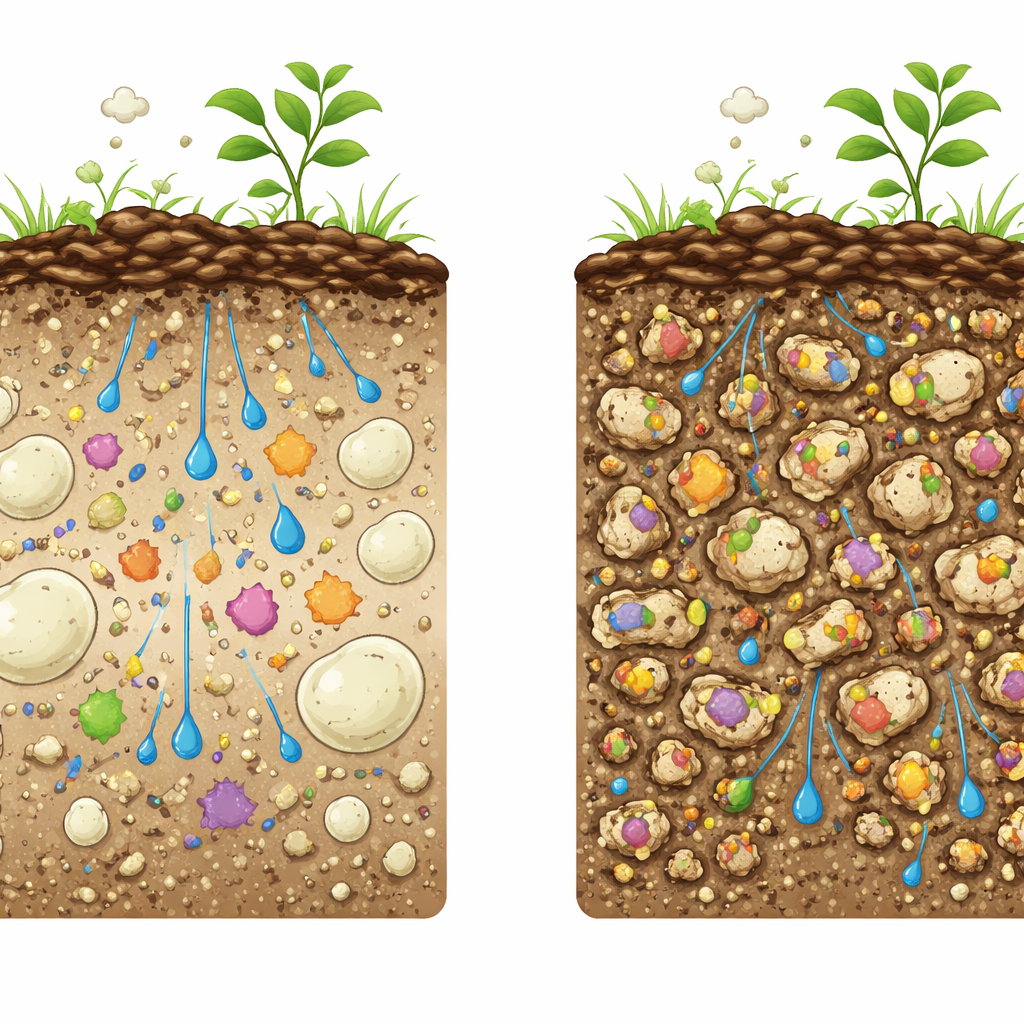
How tiny clay particles shape a big carbon store
Soils differ enormously in how much clay they contain, and those fine mineral particles are thought to act as microscopic safes for organic matter. Clay has a large reactive surface area and forms tight associations with carbon- and nitrogen-rich compounds, shielding them from hungry microbes and from being flushed away by rain. At the same time, clay-rich soils tend to hold more water and nutrients, which can energize microbial life and speed up decay. The authors set out to untangle this push-and-pull: do clays mainly protect microbial remains, or do they also encourage their breakdown enough to cancel out that protection?
A field experiment with labeled dead microbes
To answer this, the researchers built artificial soils with low, medium, and high clay content by mixing quartz sand, a common clay mineral, and sterilized forest leaf litter. They then reintroduced a natural soil microbial community and let these soils stabilize before placing them back into a temperate forest. Into each soil, they injected small, known amounts of dead bacterial or fungal material whose carbon and nitrogen atoms were specially labeled. Over more than a year, they tracked where this labeled material went: how much was converted to carbon dioxide, how much stayed in the soil, how much moved deeper with water, and how much became tied up in different soil pools.
What happens to dead microbes in different soils
The team found that clay-rich soils held on to far more microbial necromass than sandy soils. In high-clay soils, a smaller share of the added carbon was respired as carbon dioxide, and a larger share of both carbon and nitrogen remained after 386 days. Losses by leaching were also dramatically lower when clay content was high; in sandy soils, up to half of the added labeled material was quickly flushed into deeper layers after rainfall. Interestingly, the dead remains from bacteria and fungi behaved very similarly overall, despite their different chemistry. This suggests that broad differences between microbial groups matter less than shared fine-scale features, such as small molecular size and abundant reactive groups, when it comes to long-term preservation.
Microscopic glue at mineral-organic interfaces
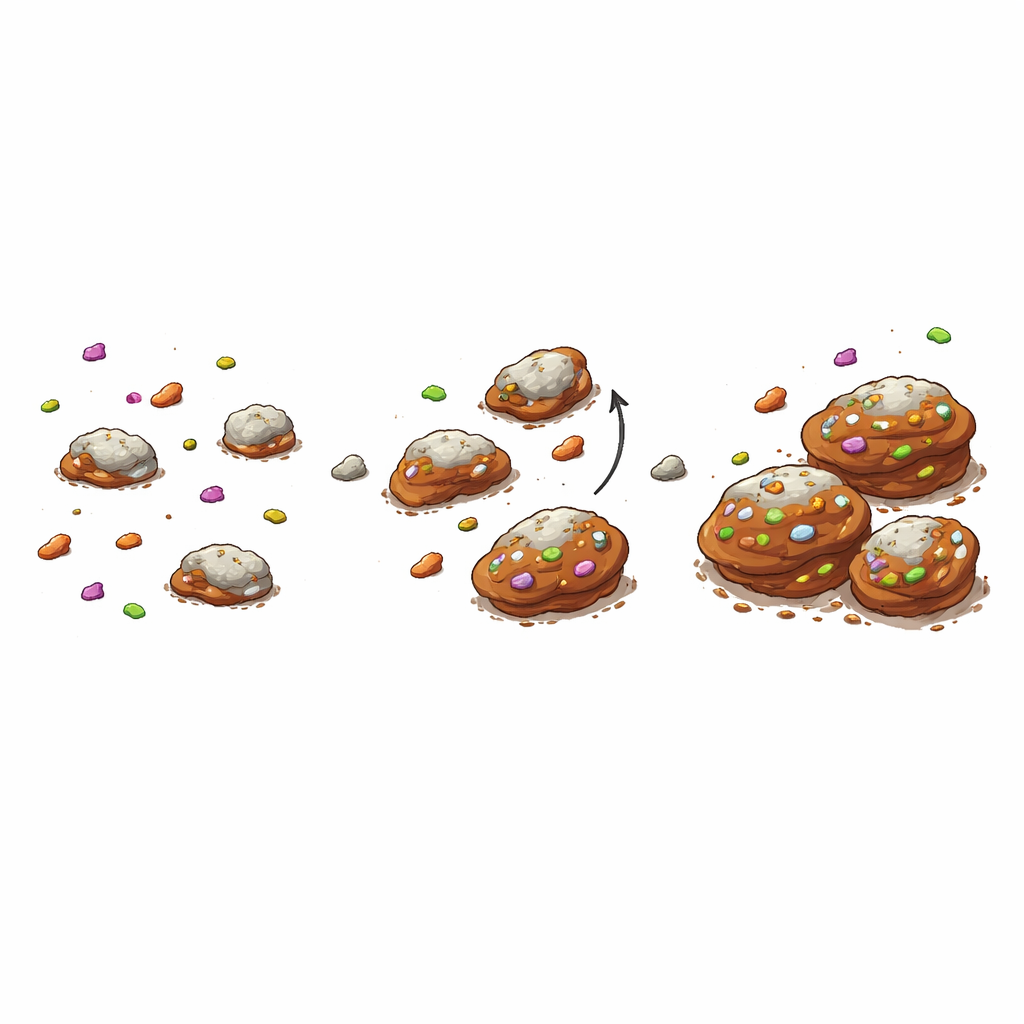
Using high-resolution imaging, the authors zoomed in on how preserved necromass is actually arranged on mineral grains. They discovered that most new microbial carbon and nitrogen did not jump straight onto bare mineral surfaces. Instead, it preferentially attached to organic coatings already stuck to rough clay particles, building up multilayered shells of mineral, older organic matter, and fresh microbial remains. Soils with more clay had more of these coated, rough surfaces and a larger total area for such associations. At the same time, high clay content altered water and air balance in the soil, lowering oxygen supply and dampening microbial activity and diversity, which further slowed decomposition of the immobilized necromass.
What this means for soil and climate
In plain terms, this study shows that clay helps soils act like long-term vaults for the remains of dead microbes. Fine minerals encourage microbial necromass to stick to existing organic coatings, form protective layers, avoid being flushed away, and resist being burned off as carbon dioxide. The origin of the necromass—bacterial or fungal—turns out to matter little compared with how much clay is present, how wet the soil stays, and how much oxygen microbes can access. These insights clarify why clay-rich soils tend to store more stable organic matter and highlight the importance of mineral–organic “glues” in keeping carbon and nitrogen in the ground rather than in the air or waterways.
Citation: Wang, X., Kallenbach, C.M., Almaraz, M. et al. Clay-organic matter interactions drive microbial necromass preservation in soils. Nat Commun 17, 3368 (2026). https://doi.org/10.1038/s41467-026-70156-1
Keywords: soil organic matter, microbial necromass, clay minerals, carbon sequestration, soil carbon cycle