Clear Sky Science · en
Minimal N-hydroxyphthalimide-urethane bonds enable superior thermomechanical stability for covalent adaptable networks
Plastics That Can Be Remade Again and Again
From airplane parts to insulation foams, many everyday plastics are built to last—but that durability makes them nearly impossible to recycle. This study introduces a new type of tough, heat‑resistant plastic network that can be reshaped or repaired like a metal, without losing its strength. By carefully redesigning just a small fraction of the chemical links that hold the material together, the authors show a way to make high‑performance plastics more sustainable.
Why Most Hard Plastics Are So Stubborn
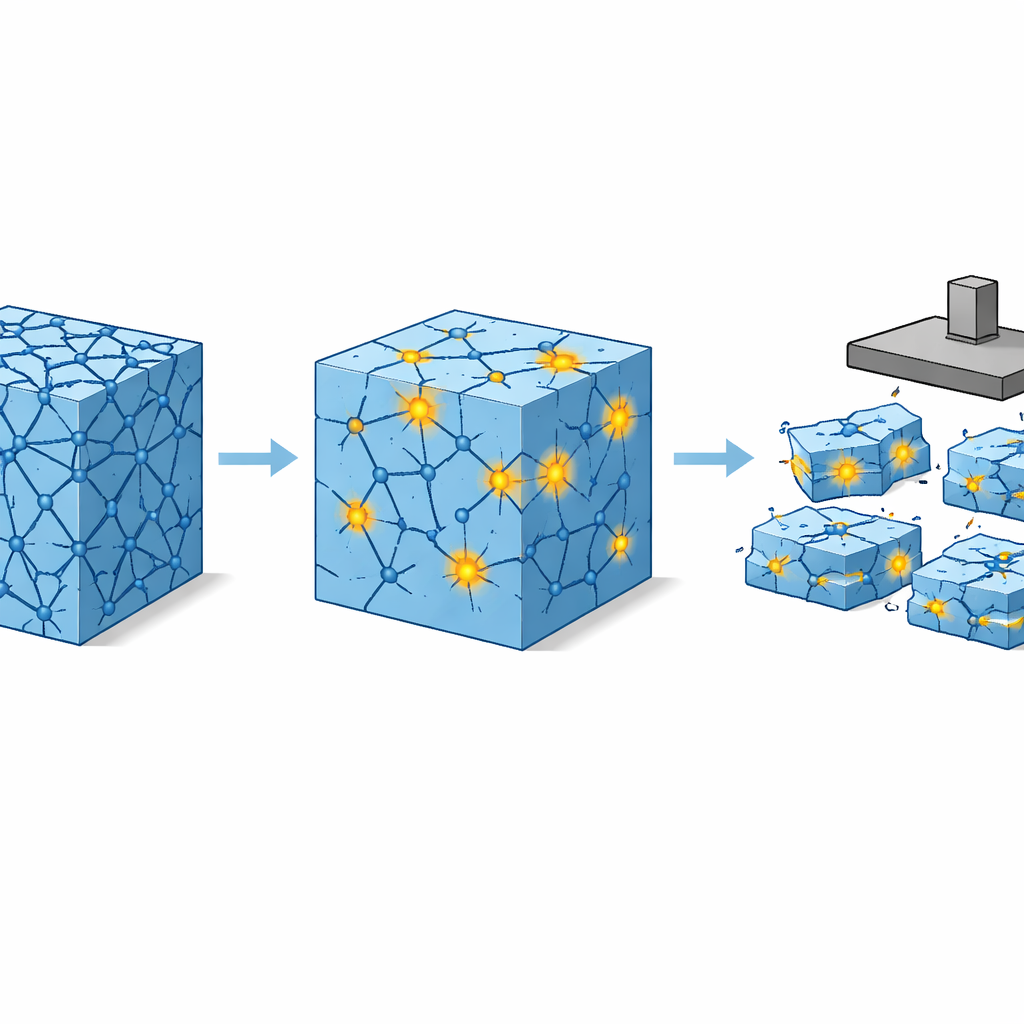
Conventional hard plastics, known as thermosets, are held together by a dense web of permanent chemical bonds. This gives them high strength, resistance to solvents, and long service life—but once set, they cannot be melted down and reformed. A newer class of materials, called covalent adaptable networks, tries to solve this by using bonds that can break and reform. These dynamic links let the plastic flow or be reprocessed at high temperature. However, there has been a stubborn trade‑off: making the network too dynamic weakens the material and causes it to creep or deform when hot, whereas limiting the dynamics preserves strength but kills recyclability.
A “High Activity & Low Content” Design Trick
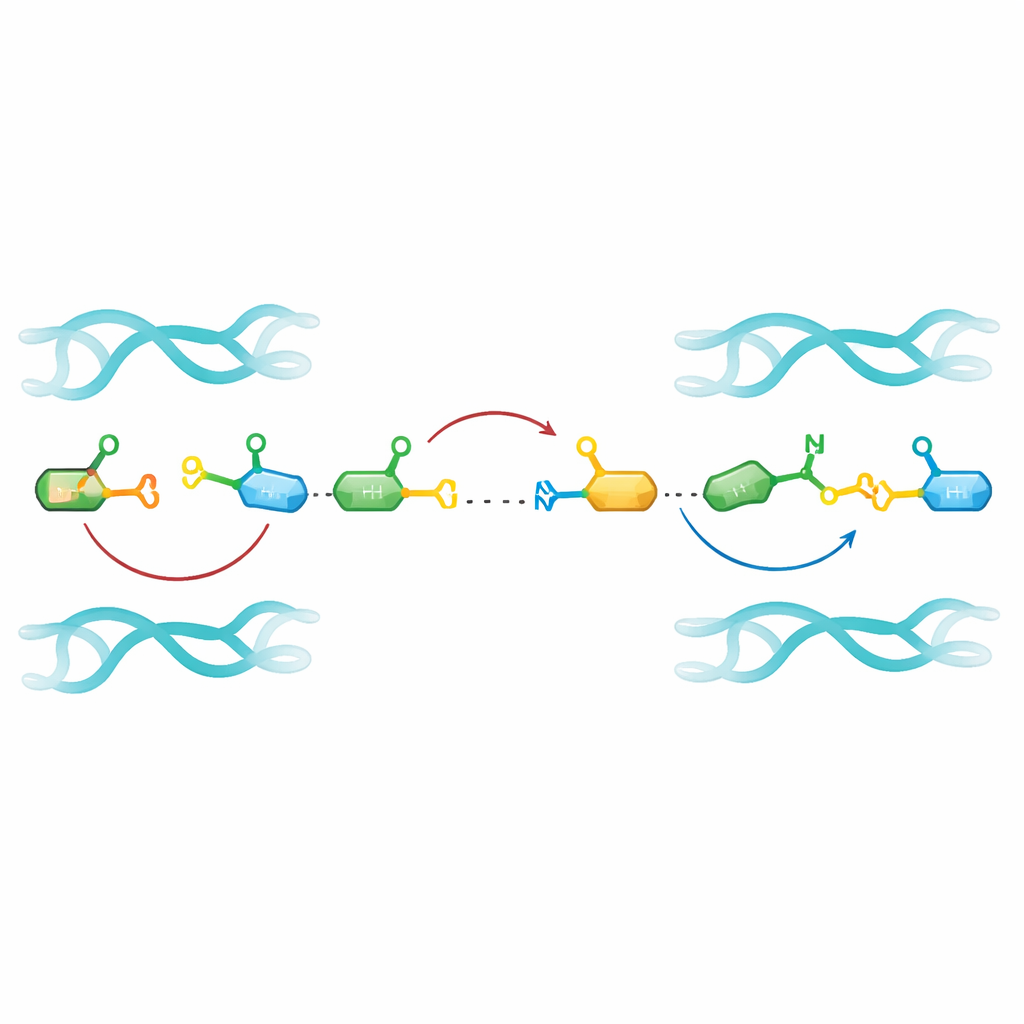
The researchers propose a simple but powerful strategy to escape this trade‑off: instead of filling the material with many mediocre dynamic bonds, they add only a tiny amount—about 5 percent—of exceptionally active ones. They base their design on a special reversible link called an N‑hydroxyphthalimide‑urethane bond. In solution, these bonds form very quickly at room temperature without any added catalyst, and at elevated temperatures a significant portion of them falls apart into their starting pieces. Because the broken pieces also snap back together rapidly, the network can rearrange its internal connections efficiently even when such bonds are rare.
How the New Bonds Work at the Molecular Scale
To understand why these links are so effective, the team combines experiments with computer modeling. They show that the N‑hydroxyphthalimide unit strongly pulls electrons away from the bond, making it a good “leaving group” that can pop off at higher temperatures. Quantum‑chemical calculations reveal an unusual reaction pathway involving a charged intermediate that is stabilized in highly polar solvents. Measurements using infrared and nuclear magnetic resonance spectroscopy confirm that, at processing temperatures around 120 °C, roughly a quarter of these bonds open and reclose quickly, providing the mobility needed for reshaping without dissolving the whole network.
Tough, Crack‑Resistant, and Stable When Hot
Building on this chemistry, the authors create polyurethane‑like materials in which the vast majority of links are standard strong bonds, and only a small fraction are the new dynamic ones. These poly(N‑hydroxyphthalimide‑urethane) networks stretch to nearly twenty times their original length and exhibit very high toughness, rivaling or surpassing other state‑of‑the‑art reprocessable elastomers. Detailed structural measurements show that, under strain, soft segments extend first and harder segments then line up and partially crystallize, reinforcing the material much like strain‑hardened rubber. The networks also resist crack growth: instead of sharp cracks racing across the sample, the crack tips blunt, stress is spread out, and the path of failure is deflected, allowing the material to absorb large amounts of energy before breaking.
Holding Shape While Allowing Repair and Recycling
Crucially, these plastics remain mechanically stable at high temperatures relevant for real‑world use. With only 5 percent dynamic links, the material keeps a nearly constant stiffness up to about 160 °C and shows very little unwanted flow or sagging when heated. When the fraction of dynamic bonds is raised to 15 or 30 percent, the networks become noticeably softer and begin to behave more like viscous liquids at high temperature, illustrating why low content is key. Despite the minimal amount of dynamic bonds, the samples can be chopped up and hot‑pressed into new shapes multiple times with almost no loss in strength—something comparable control materials cannot achieve.
Gentle Breakdown and a Path Toward Greener Plastics
The same reversible chemistry that enables reshaping also allows the material to be broken down under mild conditions. In warm water‑containing solvent, the special bonds open, and the released reactive pieces are captured by water, gradually converting the long chains into shorter fragments. These fragments, enriched in polar groups, can then be reused directly as strong adhesives on metals, plastics, wood, and glass. In plain terms, the authors have shown that by sprinkling a small number of highly active, reversible links into an otherwise robust plastic, it is possible to combine strength, heat resistance, repairability, and controlled degradability—offering a practical design recipe for tougher, more recyclable high‑performance plastics.
Citation: Yin, Y., Yang, S., Zhou, Y. et al. Minimal N-hydroxyphthalimide-urethane bonds enable superior thermomechanical stability for covalent adaptable networks. Nat Commun 17, 3421 (2026). https://doi.org/10.1038/s41467-026-70151-6
Keywords: recyclable thermoset polymers, dynamic covalent networks, polyurethane materials, self‑healing plastics, sustainable polymers