Clear Sky Science · en
Neuroimaging subtypes of adolescent sleep insufficiency stratify natural short sleepers from comorbidity or environment driven insufficiency
Why Teen Sleep Isn’t One-Size-Fits-All
Many parents and doctors worry when teenagers sleep less than the recommended eight hours a night. This study shows that not all short sleep is equally harmful. By looking directly at the developing brain, the researchers found that some teens naturally thrive on less sleep, while others lose sleep because of harsh environments or mental health struggles. Understanding these differences could help families and clinicians decide who truly needs help, and what kind of help will work best. 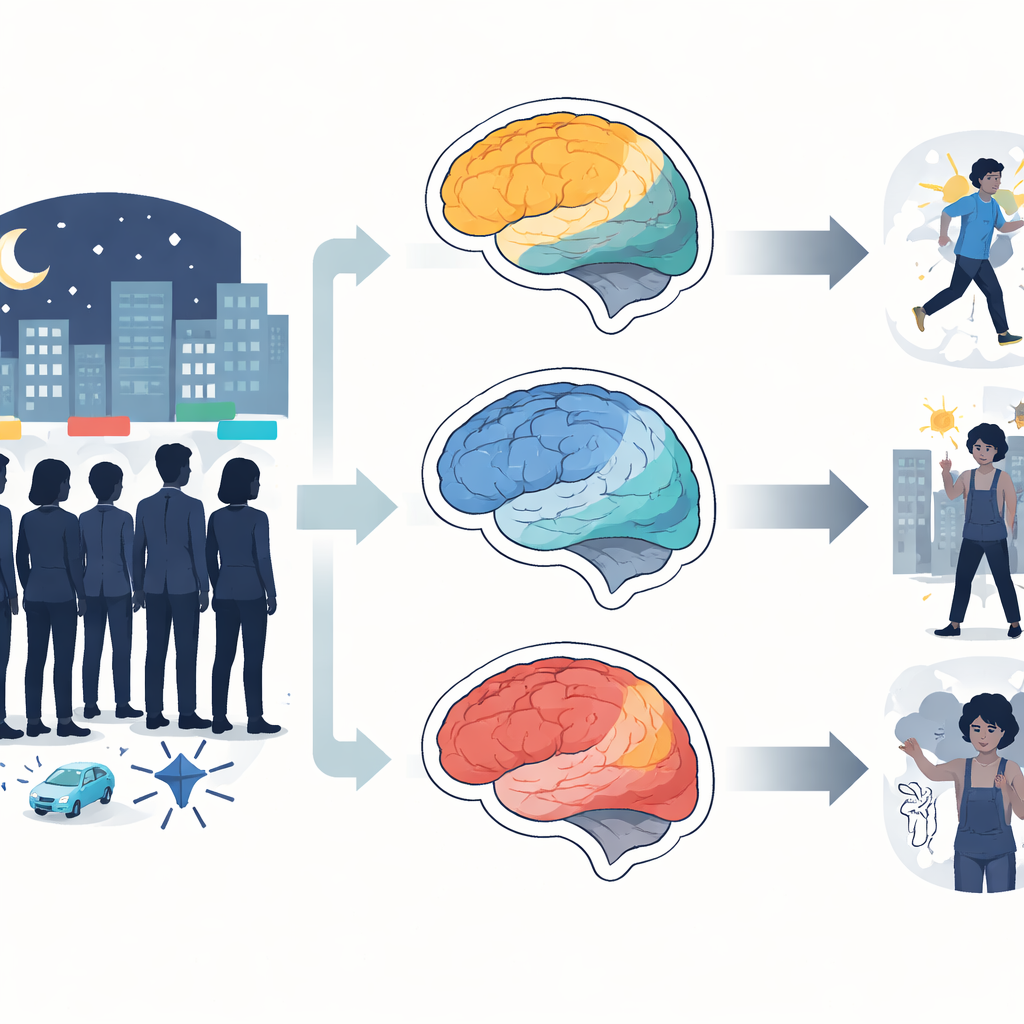
Looking Inside the Teen Brain
The team analyzed brain scans and wearable sleep data from thousands of adolescents in the large U.S. Adolescent Brain Cognitive Development (ABCD) study, and confirmed their findings in a smaller group of children from Shanghai. They tracked how long each teen actually slept over at least a week using Fitbit-like devices, then labeled those who slept less than eight hours a night as having “insufficient sleep.” Next, they measured the thickness of the brain’s outer layer—the cortex—which normally thins in a carefully timed way during adolescence as the brain matures. Using a data-driven method, they asked whether teens with short sleep could be grouped into distinct patterns of brain change.
Three Types of Short-Sleeping Teens
The analysis revealed three clear subtypes, each with a different pattern of thinning in the cortex. One group showed the earliest and strongest changes in a region that helps process touch and body awareness (the postcentral area and nearby parietal regions). A second group showed changes starting in visual areas at the back of the brain (the pericalcarine and lingual regions). The third group began with differences in the entorhinal cortex, a key entry point between memory systems and the rest of the brain. These patterns were not random: when the researchers followed teens over time, real-world changes in brain thickness lined up well with the “virtual” progression predicted by their model. This suggested that each subtype follows its own developmental path. 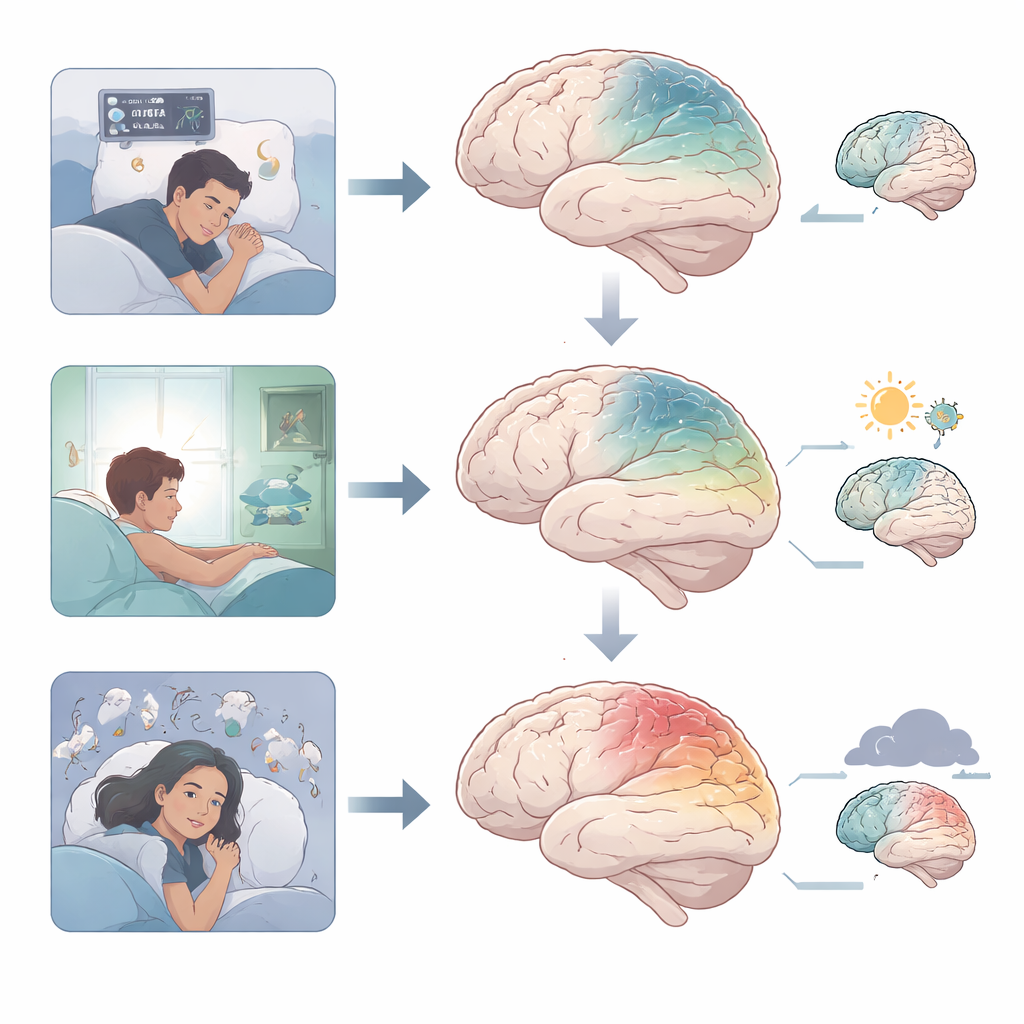
Natural Short Sleepers, Stressed Sleepers, and Struggling Sleepers
Crucially, the three brain-based types also differed in their daily lives. Teens in the postcentral subtype looked surprisingly healthy: their sleep habits, home surroundings, school and family situations, and mental health were all similar to those of well-rested peers. Yet their brains appeared slightly “older” than expected, and they carried more genetic markers linked to short sleep. These findings match the idea of “natural short sleepers”—people who function well on less sleep without obvious costs. In contrast, teens in the pericalcarine subtype tended to live in brighter, noisier, and poorer neighborhoods, and had more trouble falling asleep and staying asleep. In this group, the amount of time they slept partly explained how nighttime light exposure was linked to thinning in visual brain areas, suggesting that environmental light pollution may gradually reshape the developing brain through lost sleep.
When Short Sleep Signals Deeper Problems
The third, entorhinal subtype painted a different picture. These teens showed more emotional and behavioral problems, including anxiety and other inwardly directed difficulties. Their brains looked slightly “younger” than expected, hinting at delayed maturation, and their pattern of cortical thinning aligned strongly with brain chemical systems that have been tied to serious mental illnesses. Within this group, teens who were further along the brain-change pathway tended to have more severe emotional symptoms. Unlike the natural short sleepers, they did not have a higher genetic tendency toward short sleep; instead, their shortened nights appeared tightly bound to broader mental health challenges.
What This Means for Parents and Clinicians
For families, the message is that short sleep in teenagers is not automatically a crisis—but it is not automatically harmless either. This work suggests three broad stories behind short nights: some teens are simply wired to need less sleep; others are being robbed of sleep by harsh, noisy, or brightly lit surroundings; and still others are losing sleep because of underlying emotional or psychiatric problems. Brain imaging made it possible to untangle these stories by revealing distinct patterns of brain development. In the long run, the authors argue, this kind of brain-based stratification could guide more tailored responses, from improving neighborhood lighting and household routines to prioritizing mental health care, while avoiding unnecessary alarm for teens who are natural short sleepers.
Citation: Chen, Y., Li, M., Zhao, Z. et al. Neuroimaging subtypes of adolescent sleep insufficiency stratify natural short sleepers from comorbidity or environment driven insufficiency. Nat Commun 17, 3643 (2026). https://doi.org/10.1038/s41467-026-70135-6
Keywords: adolescent sleep, brain development, natural short sleepers, sleep environment, mental health