Clear Sky Science · en
Alpha frequency shapes perceptual sensitivity by modulating optimal phase likelihood
Why brain rhythms matter for what we see
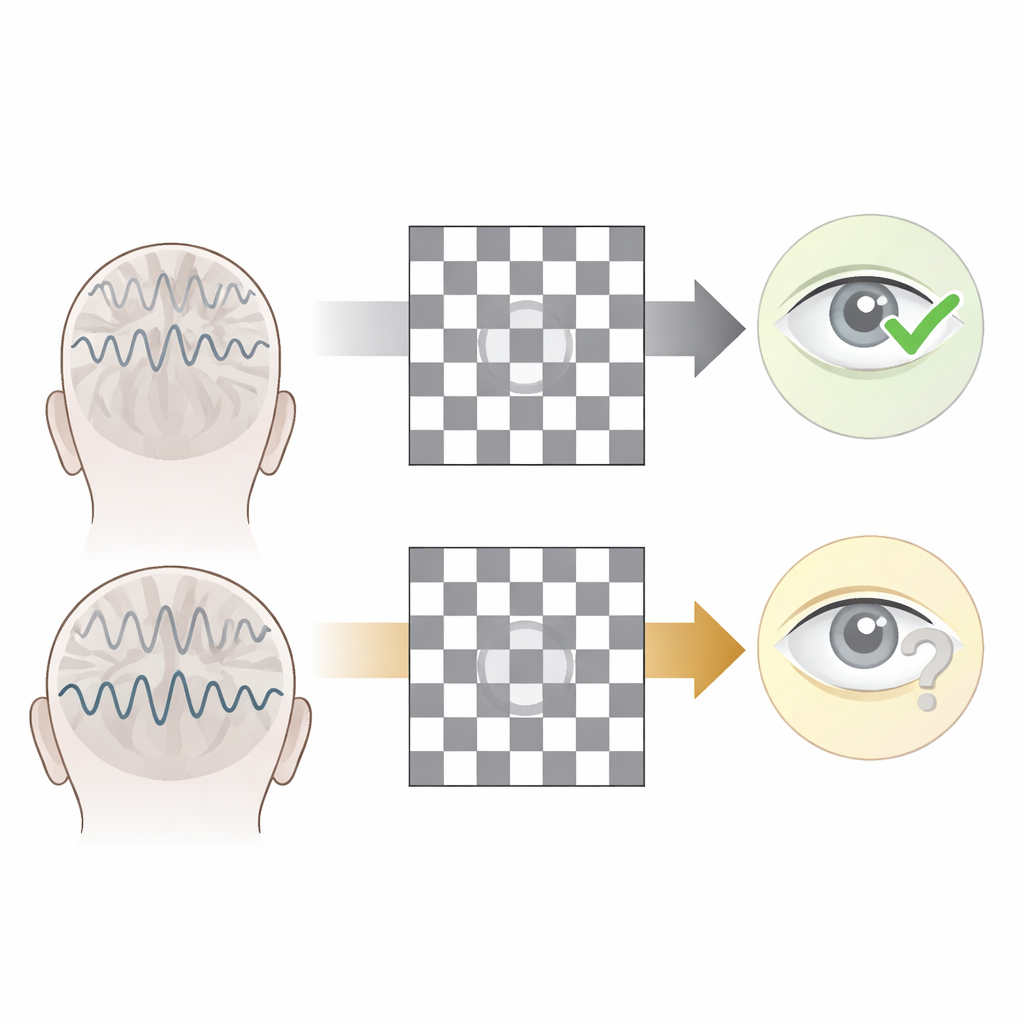
We tend to think of vision as a smooth, continuous movie. But our brains do not work like a camera; they sample the world in rhythmic snapshots. This study asks a deceptively simple question with wide implications: does the speed of a natural brain rhythm known as the alpha wave influence how precisely we see faint objects? By examining tiny, moment‑to‑moment changes in people’s brainwaves, the authors show that faster alpha rhythms can sharpen visual perception by giving the brain more chances to catch a stimulus at just the right moment.
Brain snapshots instead of a steady stream
Alpha waves are gentle electrical rhythms that cycle about 7–13 times per second in the back of the brain, especially when we quietly look at the world. Many scientists believe these waves act like an internal sampling clock, slicing incoming information into brief windows. A faster clock should, in principle, create more snapshots in the same amount of time, which could lead to a clearer picture. Earlier small studies hinted that people with faster alpha waves might, for example, better distinguish two rapid flashes of light. But findings were mixed, and critics argued that hidden decision biases, limited sample sizes and crude averaging methods might be confusing the picture.
Testing visual precision in real time
To tackle these concerns, the researchers recorded brain activity with EEG in a large group of 125 volunteers while they performed a simple but demanding visual task. On each trial, a checkerboard briefly appeared in the lower left part of the screen for just 59 thousandths of a second. Sometimes a faint gray circle was hidden in the pattern; sometimes it was absent. Before the main experiment, the contrast of the circle was fine‑tuned for each person so that they detected it correctly about 70% of the time, placing them near the edge of visibility. During the task, participants simply reported whether they thought the circle was present or not, while the researchers tracked the speed and phase (timing within the wave cycle) of alpha rhythms just before each flash.
Faster cycles, clearer signals
Analyses converged on the same message: when alpha waves happened to be slightly faster just before a stimulus, people were more accurate and more sensitive to the faint circle, without becoming more biased toward saying “present” or “absent.” This held whether the team grouped trials into bins of slower versus faster alpha or looked at trial‑by‑trial correlations. Computational models that jointly considered accuracy and reaction time showed that faster alpha was linked to a higher “drift rate”—a measure of how quickly and reliably evidence builds toward a decision—rather than to changes in starting bias or non‑sensory delays. Importantly, variations in alpha power (how strong the waves were) did not explain these effects, pointing specifically to the role of rhythm speed, not sheer signal strength.
Timing sweet spots and missed chances
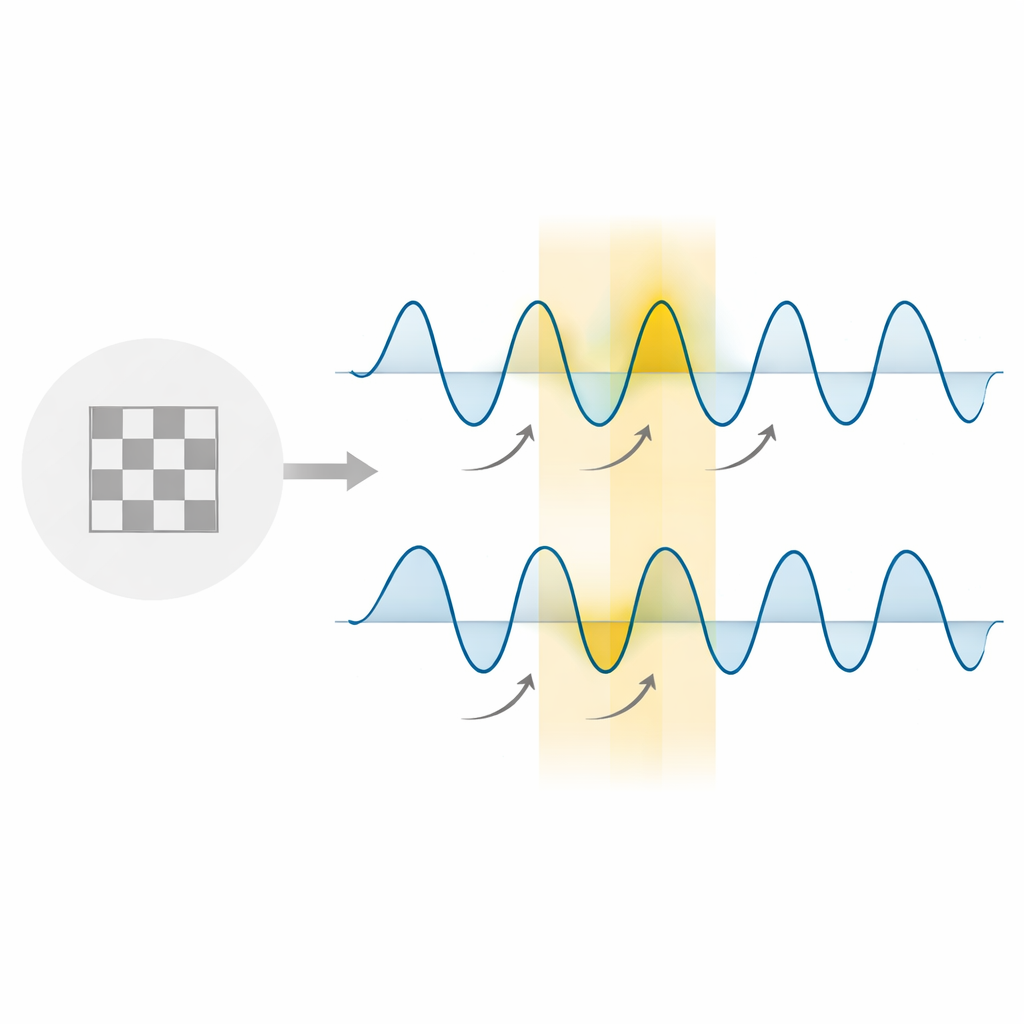
The story becomes richer when the authors examine where in the alpha cycle the brain was when the stimulus appeared. Certain phase ranges were more favorable for correct perception than others, echoing earlier work. Crucially, this phase effect was strongest when alpha was relatively slow. When the rhythm is slow, the brain sweeps through fewer phase angles during the brief 59‑millisecond stimulus, so whether the flash lands in a “good” or “bad” phase matters a lot. When alpha is faster, many more phase angles are visited within the same short time window, increasing the chance that at least one of those passes coincides with an optimal phase for perception. In that regime, the exact initial phase matters less, because the brain gets multiple rapid “tries” at sampling the stimulus.
How speed and timing work together
Putting these pieces together, the authors propose a simple yet powerful mechanism: faster alpha rhythms sharpen perception by increasing the number of opportunities for incoming signals to align with favorable moments in the brain’s cycle. Instead of relying on a single, prolonged exposure during a slow wave, the visual system benefits from several quick sampling points, each offering a new chance to confirm or update what is out there. This framework may help explain why some clinical conditions marked by unusually slow alpha rhythms are accompanied by distorted or less reliable perceptions, and it suggests that carefully tuning alpha speed using brain stimulation or sensory training could, in principle, improve how faithfully we experience the visual world.
Citation: Romei, V., Tarasi, L. Alpha frequency shapes perceptual sensitivity by modulating optimal phase likelihood. Nat Commun 17, 3384 (2026). https://doi.org/10.1038/s41467-026-70124-9
Keywords: alpha brain waves, visual perception, neural oscillations, EEG, sensory sampling