Clear Sky Science · en
Stress-induced iron-sulfur cluster damage as a conserved trigger of the bacterial stringent response
How Bacteria Sense Danger Inside Our Bodies
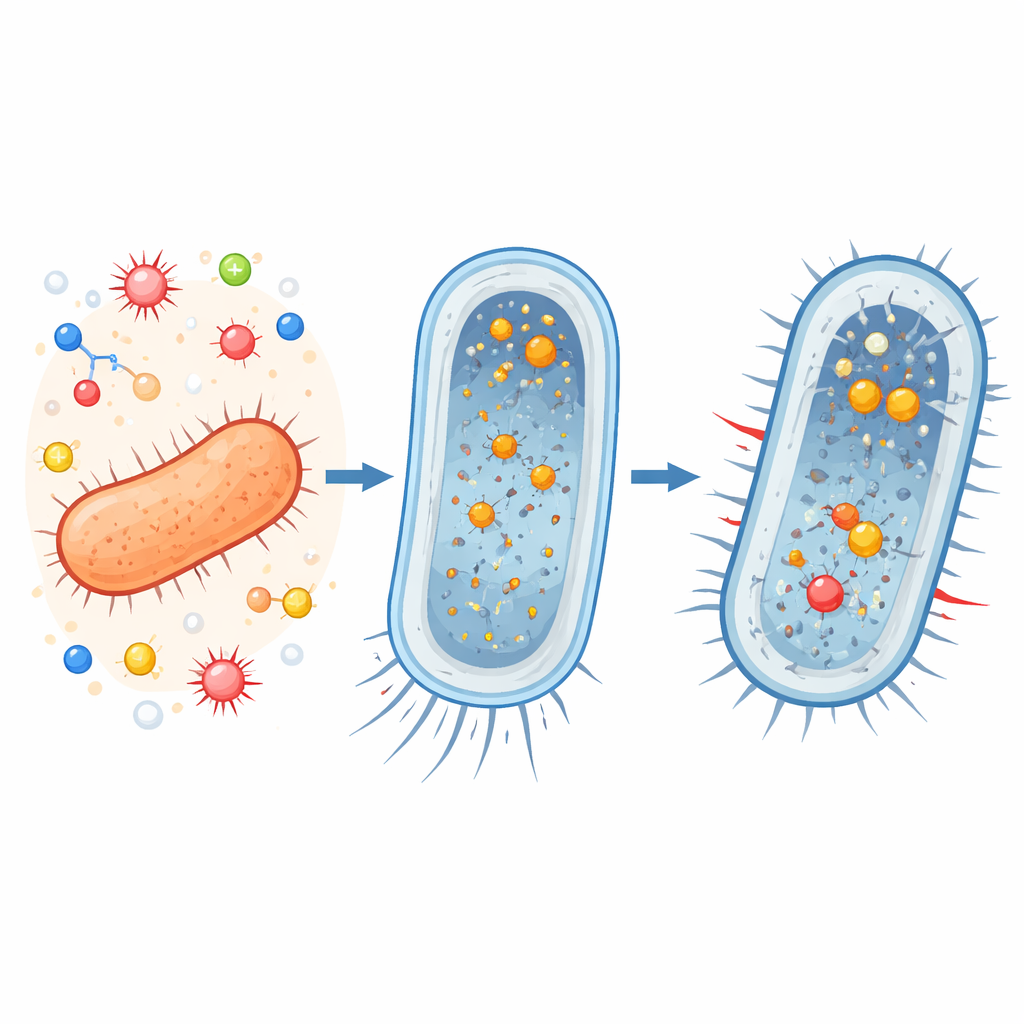
When harmful bacteria invade the human body, they enter a world full of biochemical hazards: toxic metals, reactive molecules, and an immune system intent on wiping them out. Yet many pathogens not only survive, they adapt and become more dangerous. This paper uncovers a core “danger sensor” that bacteria use to detect hostile conditions inside a host and flip on survival and virulence programs. Understanding this switch could open new ways to disarm infections without relying solely on traditional antibiotics.
Tiny Metal Clusters as Internal Alarm Sensors
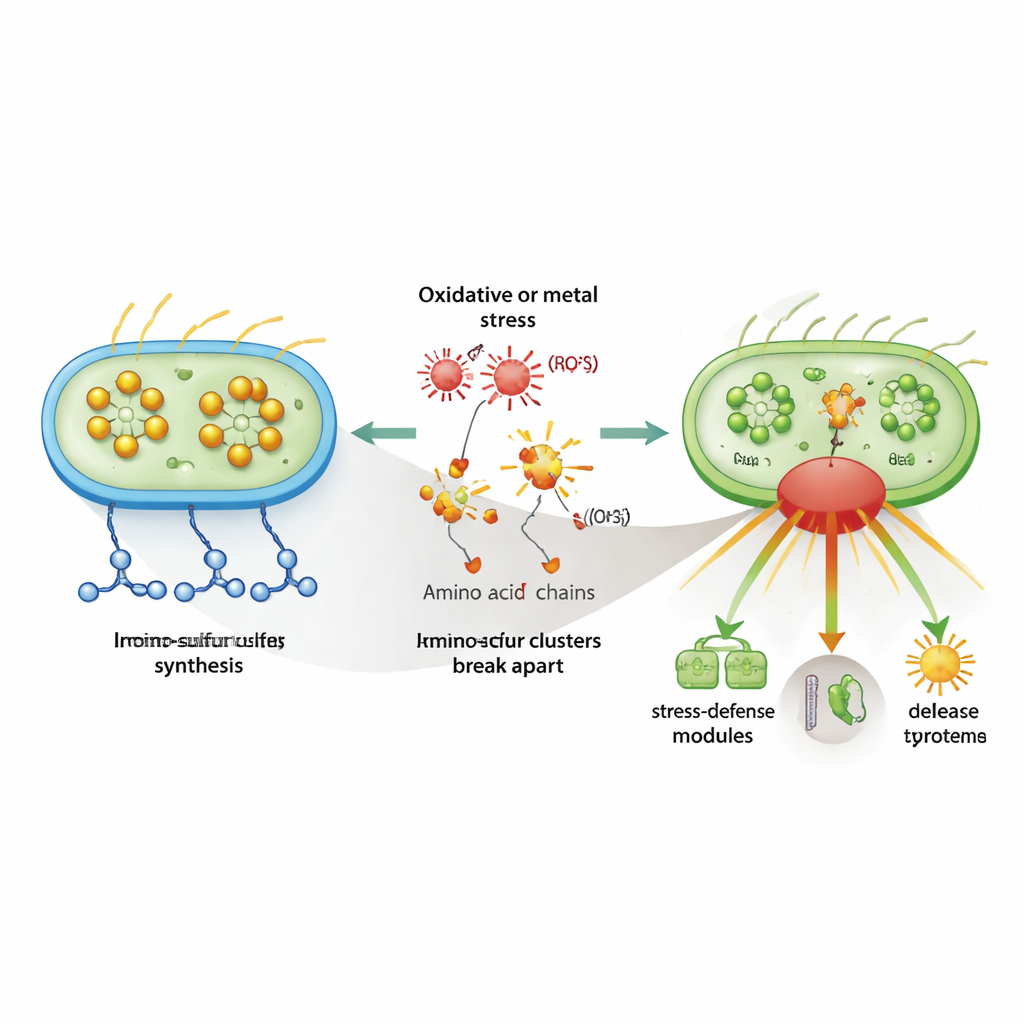
Inside bacterial cells, many key enzymes contain iron–sulfur clusters—tiny assemblies of iron and sulfur atoms that help drive energy production and the making of essential building blocks. The authors show that when these clusters are damaged by stress, they become a universal trigger for a powerful stress program called the stringent response. In several important gut pathogens, including Salmonella, Enterobacter, and Klebsiella, damage to iron–sulfur clusters reliably leads to the buildup of a small signaling molecule known as (p)ppGpp. This molecule functions as an alarm signal, telling the cell that conditions are dangerous and that it must shift from growth to survival mode.
From Metal Imbalance to Shortage of Building Blocks
The team first looked at what kinds of metal stress actually alarm these bacteria. They tested conditions where cells were starved of metals or flooded with them. Surprisingly, only an excess of manganese strongly activated the alarm signal. The researchers found that too much manganese disrupts proteins that depend on iron–sulfur clusters, reducing the activity of enzymes needed to make certain amino acids—especially branched-chain and sulfur-containing ones. As the supply of these amino acids drops, the protein RelA is activated on the ribosome, triggering a pulse of (p)ppGpp. Adding back the missing amino acids or preventing uncharged transfer RNAs from entering the protein-making machinery shuts down this alarm, confirming that the signal arises from a shortage of building blocks caused by iron–sulfur damage.
Iron–Sulfur Damage Links Multiple Stresses
Iron–sulfur clusters are easily harmed not only by metal imbalance but also by reactive oxygen species produced by immune cells. The authors showed that both manganese overload and hydrogen peroxide, a classic oxidant, cause similar drops in key amino acid pools and similar rises in the alarm molecule. Reducing agents that help protect or rebuild iron–sulfur clusters prevent this alarm from firing. When iron itself is scarce, bacteria struggle to rebuild damaged clusters, so the alarm signal stays high for longer after stress. This pattern holds across several clinically important pathogens, suggesting that iron–sulfur damage is a conserved way for bacteria to “feel” the host’s chemical attacks and gauge how long they must remain in a defensive state.
Rewiring Bacterial Behavior for Survival and Attack
Turning on the stringent response is not just a panic reaction; it reprograms the entire bacterium. Using genome-wide measurements of gene activity, the authors found that high (p)ppGpp levels reshape which genes are turned on under iron–sulfur–damaging conditions. Normal cells exposed to manganese stress increased the expression of hundreds of genes involved in nutrient transport, stress resistance, and metal and iron–sulfur cluster management. They also strongly boosted the machinery Salmonella uses to inject proteins into host cells, known as the SPI-2 type III secretion system. Mutant bacteria unable to make the alarm signal grew poorly under stress and could not maintain basic processes like protein production, highlighting how crucial this response is for fitness and virulence.
Why This Matters for Treating Infections
This work reveals that when the host environment damages iron–sulfur clusters, pathogenic bacteria interpret it as a call to arms. The resulting alarm signal, (p)ppGpp, coordinates a shift from fast growth to a hardened, attack-ready state that helps bacteria survive immune assaults and persist during infection. For a lay audience, the key message is that these fragile metal–sulfur pieces act like internal tripwires: when they snap, bacteria know they are under attack and respond by becoming tougher and more virulent. Targeting the enzymes that sense or generate this alarm, or the pathways that repair iron–sulfur clusters, could offer new strategies to weaken pathogens without directly killing them, potentially slowing the rise of antibiotic resistance.
Citation: Michaud, E., Ricci, L., Lallement, C. et al. Stress-induced iron-sulfur cluster damage as a conserved trigger of the bacterial stringent response. Nat Commun 17, 3559 (2026). https://doi.org/10.1038/s41467-026-70079-x
Keywords: bacterial stress response, iron–sulfur clusters, Salmonella pathogenesis, stringent response, (p)ppGpp signaling