Clear Sky Science · en
Tumor-induced orexigenic imbalance lowers protein appetite and drives early organ wasting symptoms
Why Cancer Can Steal Your Appetite
Cancer patients often lose weight even when they cannot afford to, and one of the earliest warning signs is a fading desire to eat—especially protein-rich foods like meat, eggs, or beans. This paper uses fruit flies to uncover how tumors in the gut can quietly rewire the brain’s hunger circuits days before visible wasting begins. By pinpointing this early disruption, the work suggests new ways to detect and possibly slow the deadly wasting syndrome known as cancer cachexia.
A Silent Syndrome Behind Dangerous Weight Loss
Cancer cachexia is a severe wasting condition that affects up to 80% of people with advanced cancer. Muscles and fat melt away, energy use soars, and patients lose weight even when they try to eat. Once full-blown organ wasting sets in, it is largely irreversible and shortens both lifespan and quality of life. Doctors know that loss of appetite and shifts in food preference usually appear before obvious weight loss, but it has been difficult in mammals to cleanly capture the brief “pre-cachexia” window when the first changes occur. The authors turn to the fruit fly, a surprisingly powerful model for metabolism and feeding behavior, to study this early phase with precise timing and genetics.
Gut Tumors that Trigger Brain-Driven Anorexia
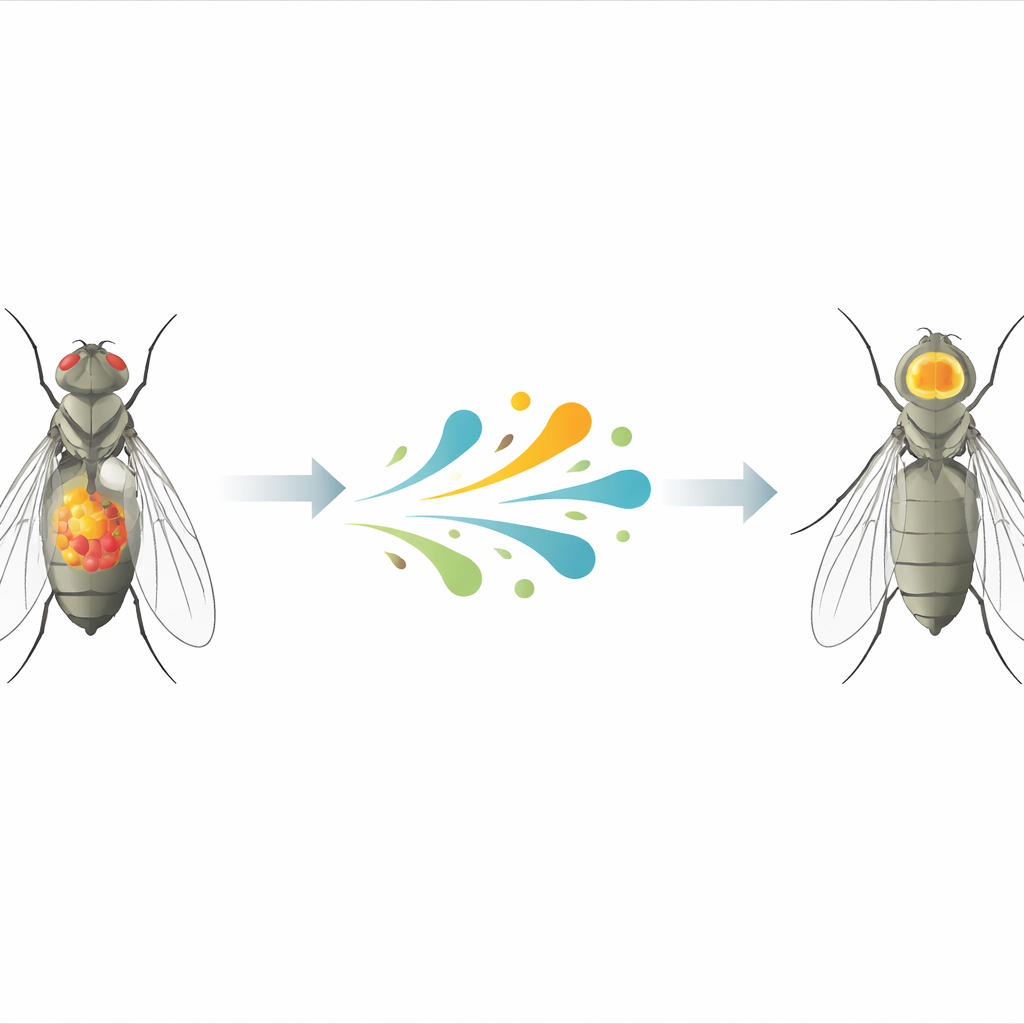
The researchers engineered adult flies to grow tumors specifically in the gut by activating an oncogene called Yorkie in intestinal stem cells. Within about a week, these flies developed hallmark features of cachexia, including fat breakdown, organ shrinkage, and weight loss. Using sensitive feeding assays, the team showed that the flies’ food intake drops sharply one day before these wasting symptoms appear. This fall in feeding is not a generic response to any gut tumor: other tumor types that do not cause wasting did not reduce food intake. The change also persisted when diet composition or gut microbes were altered, pointing to a tumor-driven signal, rather than bad-tasting food or infection, as the root cause.
A Hunger Signal in the Brain Gets Switched Off
To find that signal, the authors measured many known hunger- and satiety-related molecules. They discovered that levels of neuropeptide F (NPF)—the fly equivalent of the human appetite hormone neuropeptide Y—drop by more than 40% in the brain just as feeding begins to decline. When they artificially boosted NPF activity in the nervous system, flies with gut tumors ate normally again, even though the tumors themselves kept growing. In contrast, activating NPF only in hormone-producing cells of the gut did not help, and in some cases further suppressed feeding. Imaging experiments on isolated brains revealed that substances circulating in the blood of tumor-bearing flies directly dampen the activity of specific NPF-producing neurons, suggesting that secret messages from the tumor chemically silence a key hunger circuit in the brain.
Tumor Signals That Undermine Protein Appetite
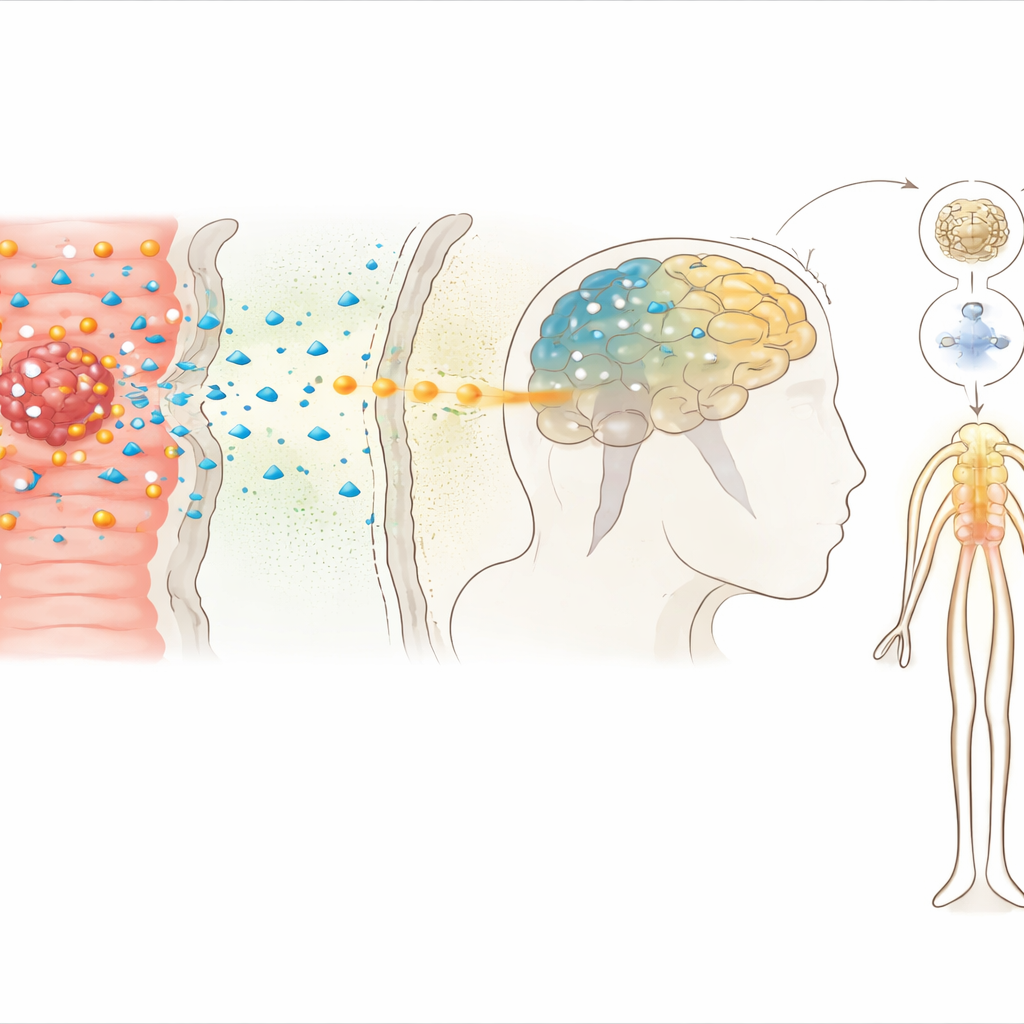
The team then asked what these secret messages are. They focused on two tumor-driven factors already known to be elevated in cachexia: ImpL2, which blocks insulin-like growth signals, and upd3, a fly version of the inflammatory molecule interleukin-6. Both rose early during tumor growth, in lockstep with the fall in brain NPF. Silencing ImpL2 specifically in the gut tumor restored NPF levels and feeding, without shrinking the tumor, showing that ImpL2 is required for tumor-induced anorexia. On its own, however, ImpL2 circulating from muscle tissue only modestly reduced NPF and did not cut food intake. When the researchers co-produced ImpL2 and upd3 together, feeding dropped sharply and NPF levels fell by about 40%, mimicking the tumor condition. Additional genetic tests suggest that upd3 helps loosen the blood–brain barrier, allowing more ImpL2 to reach and inhibit NPF neurons.
Early Protein Shortage Deepens Wasting and Death Risk
Strikingly, the appetite loss is not uniform across foods. Tumor-bearing flies specifically avoid protein-rich food and essential amino acids, while eating sugar and fat almost normally. Even before total food intake falls, they already show a reduced preference for protein over sugar, indicating that protein appetite is skewed first. When NPF activity in the brain is restored during this early window, flies regain their protein-seeking behavior, avoid weight loss, and survive longer despite still carrying tumors. Lifespan analyses show that boosting NPF shifts the survival curve toward that of healthy flies and roughly halves the risk of death by the time control animals reach midlife.
What This Means for People with Cancer
Together, these findings outline an early chain of events: a gut tumor releases factors that lower insulin-like signals and heighten inflammation; these, in turn, breach the brain’s protective barrier and silence a key hunger hormone system. The first victim is protein appetite, leading to subtle but crucial amino acid shortages that hasten weight loss and increase the risk of death once full cachexia sets in. While fruit flies are far from humans, the molecules involved—insulin blockers, IL-6–like cytokines, and NPY-like peptides—are evolutionarily conserved. This work argues that carefully tracking and supporting protein intake, and protecting or restoring brain appetite circuits early in disease, could be central to preventing the worst outcomes of cancer-related wasting.
Citation: Petsakou, A., Filine, E., Li, M. et al. Tumor-induced orexigenic imbalance lowers protein appetite and drives early organ wasting symptoms. Nat Commun 17, 3553 (2026). https://doi.org/10.1038/s41467-026-70074-2
Keywords: cancer cachexia, appetite loss, protein malnutrition, neuropeptide Y, tumor–brain signaling