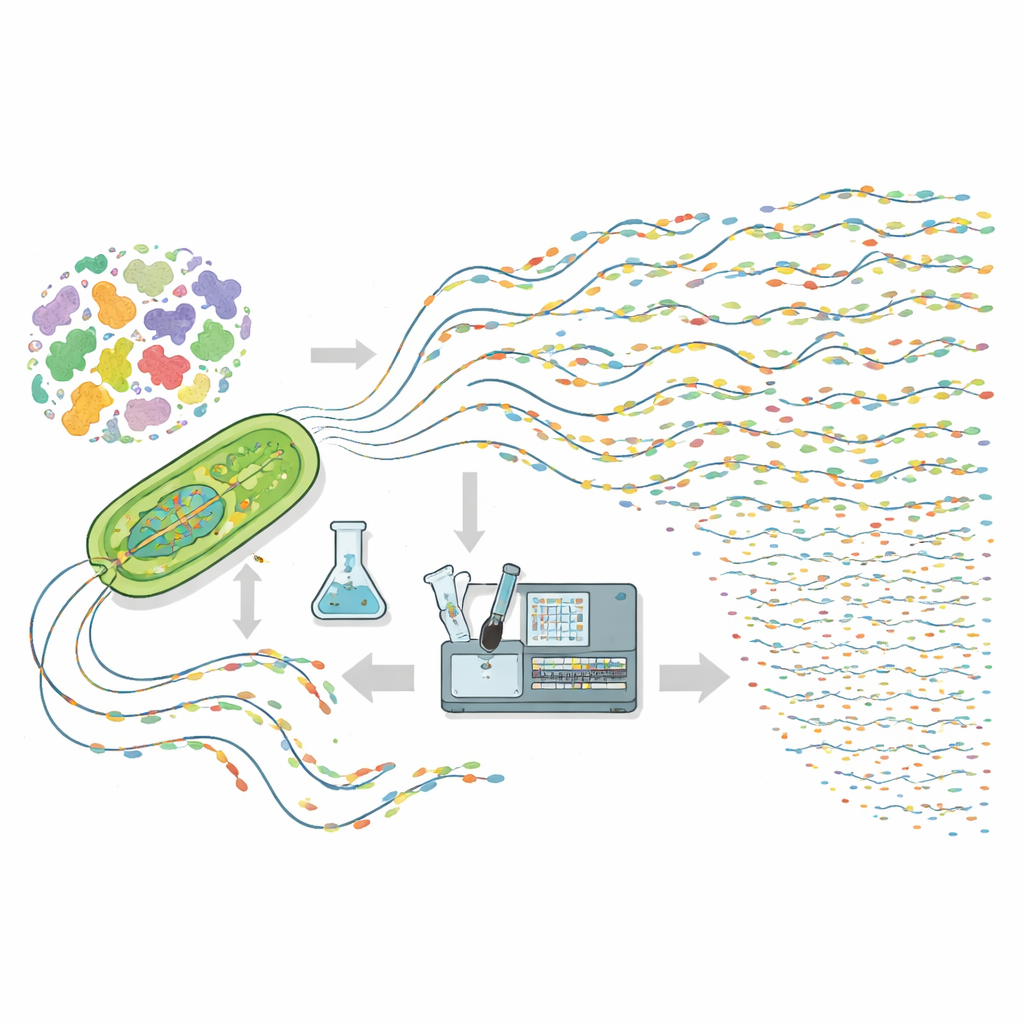
Inside every bacterium, strands of RNA act as the working copies of genetic information, helping build the proteins that keep life going. This study reveals that many of those RNA strands carry a subtle chemical tweak called pseudouridylation far more often than anyone realized. By precisely mapping these tiny changes in the common gut bacterium Escherichia coli and in the human oral microbiome, the authors show that this modification is widespread, linked to RNA stability, and may quietly shape how microbes respond to stress, antibiotics, and changing environments.
What Is Being Changed in Bacterial Messages?
RNA is built from four basic units, and one of them, uridine, can be chemically rearranged into a slightly different form called pseudouridine. This swap does not change the letters of the genetic code but alters the physical properties of the RNA molecule, often making it more stable. Pseudouridine has been known for years in structural RNAs such as transfer RNA and ribosomal RNA, where it helps keep the translation machinery in shape. But whether the everyday working messages of the cell—messenger RNAs—carry this modification in bacteria, and what it might do there, has remained largely mysterious.
A More Sensitive Way to See Hidden Marks Figure 1.
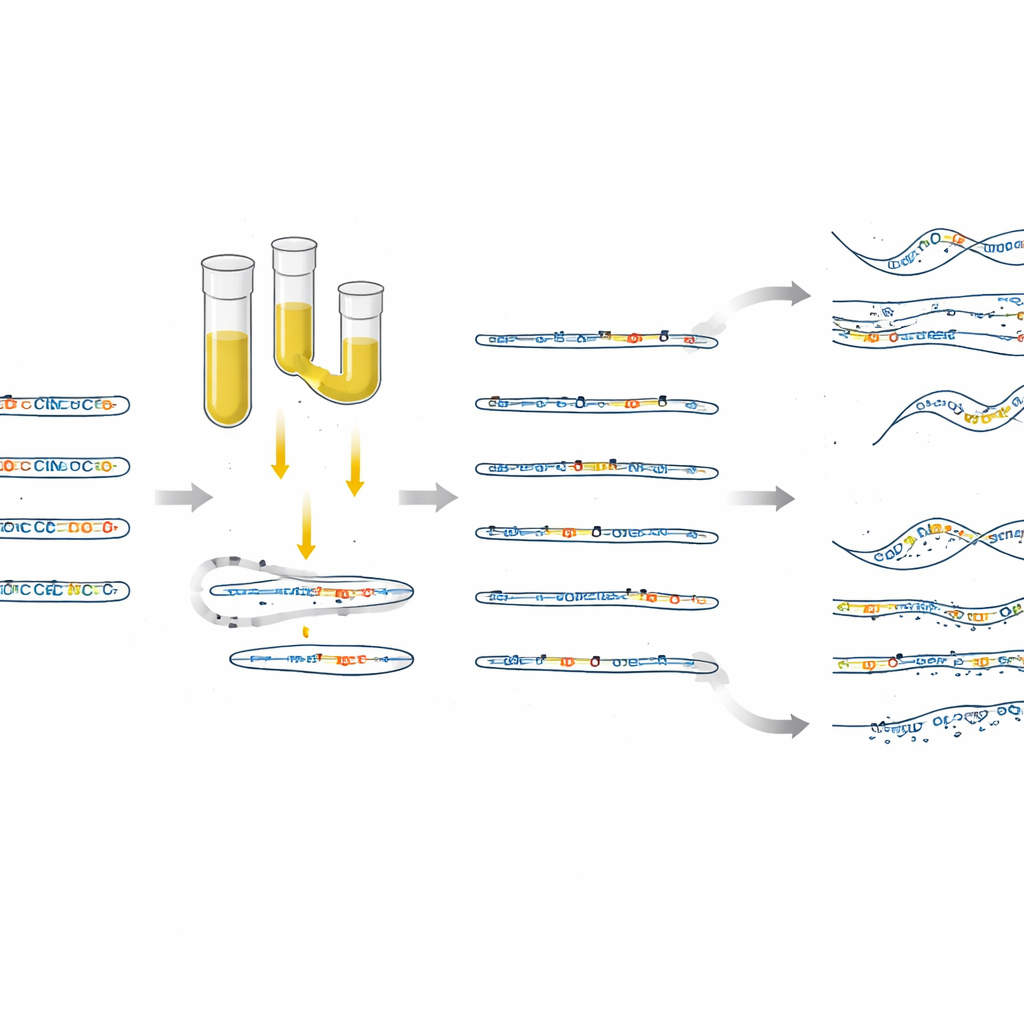
Earlier methods for finding pseudouridine sites in RNA, such as a technique called Pseudo-seq, could only detect a small fraction of the modified positions and suggested that very few bacterial messenger RNAs were involved. The authors adapted a newer, more sensitive chemical strategy based on bisulfite treatment, originally developed for human cells, and re-engineered it to work with fragile bacterial RNA that lacks the convenient tails found on many human transcripts. In their approach, bisulfite reacts specifically with pseudouridines so that, when the RNA is copied into DNA for sequencing, these modified positions tend to be skipped, leaving behind telltale one-base gaps. By carefully comparing treated and untreated samples across many growth and stress conditions, and demanding strong statistical support, the team could pinpoint the locations and relative levels of pseudouridine at single-base resolution.
A Hidden Landscape Inside E. coli Messages
Applying this pipeline to E. coli, the researchers uncovered 1,954 high-confidence pseudouridine sites across 1,331 RNA transcripts—nearly 30 percent of the bacterium’s messenger RNA repertoire and about 29 times more than previous estimates. They confirmed that their method accurately recovered known modification sites in ribosomal and transfer RNAs and even revealed a previously unrecognized site in one transfer RNA. By studying mutant strains lacking specific pseudouridine-making enzymes, they linked distinct sequence patterns and RNA structures to particular enzymes, showing that many of the same proteins that decorate structural RNAs also modify messenger RNAs. Pseudouridines tended to appear in flexible loop regions of the RNA and were especially common in messages involved in producing secondary metabolites and adapting to diverse or stressful environments, hinting at a role in bacterial stress responses.
How Chemical Marks Shape RNA Lifespan Figure 2.
The team then asked what these modifications actually do for bacterial cells. Using a drug to abruptly halt RNA production, they tracked how fast different messages decayed over time and compared wild-type bacteria with strains lacking specific pseudouridine enzymes. Messenger RNAs that normally carried pseudouridines were both less abundant and degraded more quickly in the mutant strains, indicating that the modification helps stabilize these transcripts. Across the genome, messages with more pseudouridine sites tended to be more plentiful, supporting the view that these chemical marks act as a kind of molecular reinforcement, extending the working life of key RNAs and potentially fine-tuning protein production.
From a Single Bacterium to Whole Microbial Communities
To see whether the same principles apply beyond a lab strain, the authors extended their method to dental plaque samples from healthy volunteers and patients with periodontitis. By mapping sequencing reads to a large catalog of oral bacterial genomes, they identified more than 3,500 pseudouridine sites in over 3,000 messenger RNAs from 218 species. As in E. coli, many modified messages were tied to antibiotic production, metabolism, and environmental adaptation, and messages with more pseudouridine sites tended to be more abundant. Surprisingly, genomes richer in the bases G and C, rather than A and T, harbored more modified sites, challenging simple expectations based on uridine content alone. The team also discovered new modification sites in a key ribosomal RNA component across several bacterial groups, suggesting that the detailed pattern of pseudouridylation differs widely between species.
Why These Invisible Marks Matter
By showing that a large fraction of bacterial messenger RNAs carry pseudouridine and that these marks are tied to how long messages last, this work recasts a once-obscure RNA tweak as a widespread regulatory layer in bacteria and their communities. The bisulfite-based mapping strategy offers a general tool for charting these modifications in both isolated strains and complex microbiomes, where simple RNA abundance measurements may miss crucial regulatory nuances. In the long term, understanding how bacteria use such chemical fine-tuning to adjust protein production could improve models of microbial behavior, reveal new vulnerabilities in pathogens, and guide the design of therapies that subtly interfere with these molecular markings rather than bluntly killing the cells.
Citation: Sharma, S., Woodworth, B., Yang, B. et al. Quantitative mapping of pseudouridines in bacterial RNA.
Nat Commun17, 3242 (2026). https://doi.org/10.1038/s41467-026-70073-3