Clear Sky Science · en
Extreme rainfall reshapes permafrost thermal regimes across the Northern Hemisphere
Why Sudden Downpours Matter in Frozen Lands
Across the Arctic and high mountains, the ground can stay frozen for thousands of years, locking in vast amounts of ice and buried carbon. As the climate warms, scientists worry that this frozen ground, called permafrost, will thaw faster, releasing greenhouse gases and destabilizing roads, buildings, and pipelines. This study asks a surprisingly simple but crucial question: what happens to frozen ground when it is hit not just by gentle rain, but by increasingly common extreme downpours?
Heavy Rains on Frozen Foundations
Permafrost is capped by an “active layer” that thaws each summer and refreezes in winter. The thickness and temperature of this layer largely control how quickly the deeper, permanently frozen ground changes. Using data from 131 monitoring sites across permafrost regions in China, Russia, and the United States, the researchers examined how intense rainfall events—days with especially heavy rain—affect soil temperatures. They combined four standard measures of extreme rainfall with three different analytical methods to capture short-term soil responses on the same day the storms occurred.
Shallow Cooling, Deep Warming
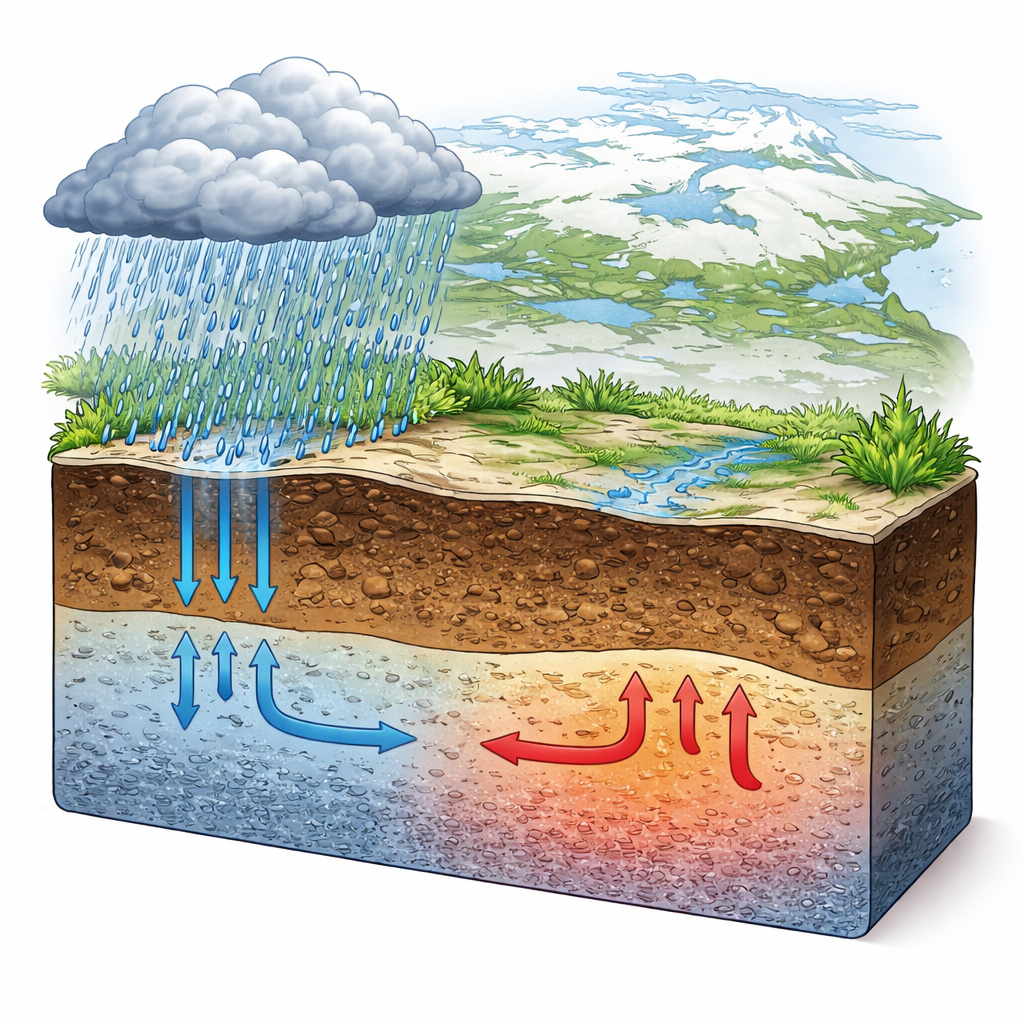
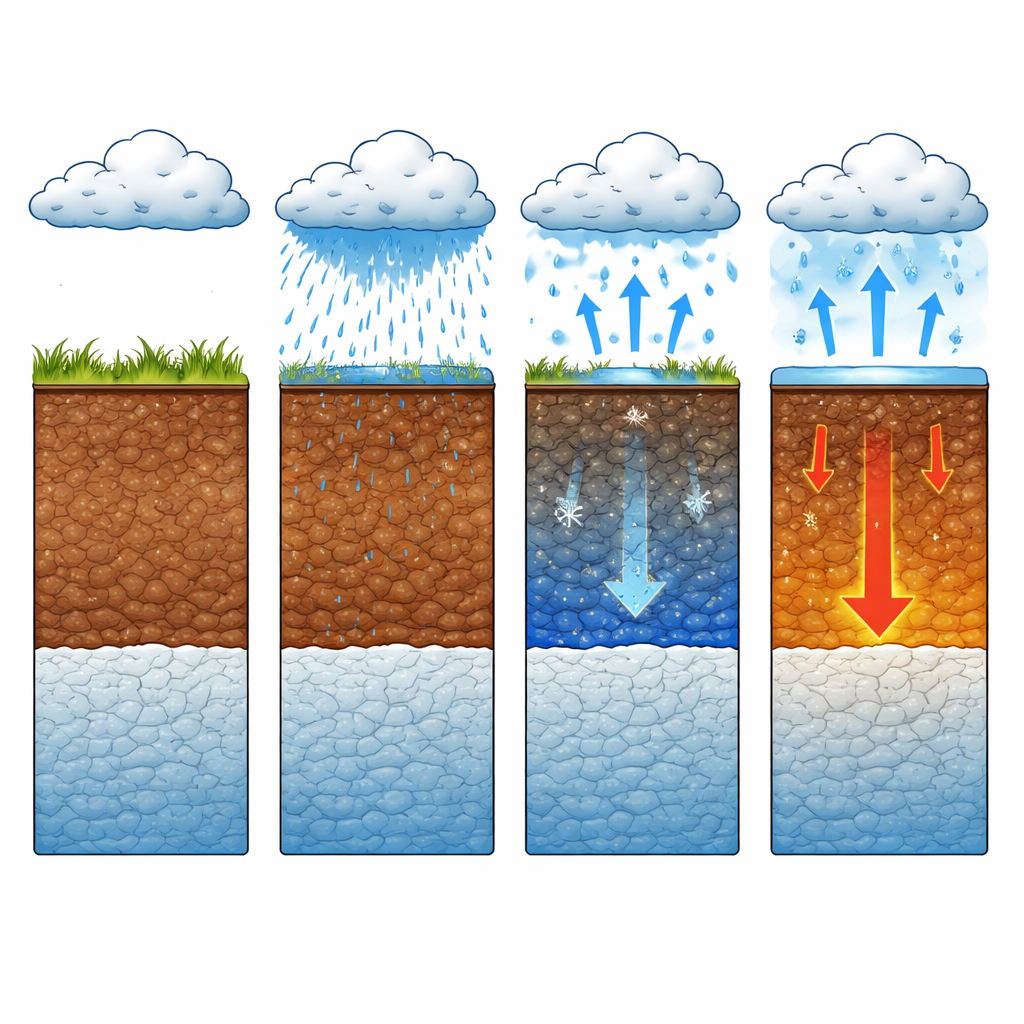
The picture that emerges is counterintuitive. At first glance, one might expect cold rain to simply cool the ground. Instead, the study finds a layered response. In the top few centimeters of soil, extreme rainfall often causes cooling, thanks to enhanced evaporation and the influx of relatively cool rainwater that removes heat from the surface. But deeper down, beyond about 10 centimeters, warming dominates. Across all sites and rainfall definitions, nearly 80% of deeper soil layers warmed during extreme rain events. Overall, more than three-quarters of locations showed a net warming effect somewhere within the active layer, implying that intense rains tend to push heat downward and encourage deeper thaw.
Dry vs. Wet Regions: A Tale of Two Climates
Whether permafrost ultimately warms or cools, however, depends strongly on the surrounding climate. In arid regions, where soils are relatively dry, extreme rainfall warmed the ground at both shallow and deeper layers, sometimes by several degrees. Extra moisture there greatly increases how efficiently heat moves into the soil, and the deeper layers do not gain enough additional “heat storage capacity” to offset this effect. In humid regions, by contrast, shallow soils cooled during downpours and deeper layers showed little change or slight cooling. Already-wet soils there gain a lot of extra capacity to store and buffer heat, which slows the advance of the thaw front even when more water is added.
Plants, Ice, and Organic Matter Shape the Response
Local ecosystems further tilt the balance. Shrub-covered landscapes showed the strongest warming response, especially at depth, while disturbed areas—such as burned or heavily altered ground with sparse vegetation, thin organic layers, and little ground ice—tended to cool in the upper soil. Sites rich in ground ice and organic material experienced the greatest deep warming during heavy rains. These materials insulate and buffer the soil, keeping it relatively cool under normal conditions; when intense rainfall arrives, the added moisture and heat transfer can more effectively penetrate downward, warming layers that were previously well protected. Statistical analyses linking climate, vegetation, soil moisture, organic matter, and ice content confirmed that warm, relatively dry conditions with abundant shrubs and ice-rich ground favor warming, whereas cold, wet, sparsely vegetated settings favor cooling.
What This Means for Future Thaw
Taken together, the findings show that extreme rainfall is not just a side effect of climate change in the North—it is an active driver of permafrost change. Short, intense storms can cool the very surface yet still deliver heat to deeper layers, thickening the seasonally thawed zone in many places, particularly where soils are dry, ice-rich, and shrub-covered. As climate models project more frequent heavy rain events across northern lands, these results suggest that permafrost thaw, ground instability, and carbon release may accelerate in vulnerable regions. To better anticipate future risks to climate and infrastructure, projections of permafrost change will need to account not only for rising air temperatures, but also for the growing punch of extreme rainfall.
Citation: Li, Q., Peng, X., Frauenfeld, O.W. et al. Extreme rainfall reshapes permafrost thermal regimes across the Northern Hemisphere. Nat Commun 17, 3204 (2026). https://doi.org/10.1038/s41467-026-70017-x
Keywords: permafrost thaw, extreme rainfall, Arctic climate, soil temperature, carbon feedbacks