Clear Sky Science · en
Single-crystal growth of complex non-fullerene acceptor molecules via cocrystallization
Why this matters for future electronics
Modern solar cells, sensors, and tiny optical devices rely on how well their molecules line up in a crystal. For many of today’s most powerful organic semiconductors, however, growing large, perfect crystals has been almost impossible because the molecules are too bulky and fragile. This work shows a practical way to coax such complex molecules—especially an important solar-cell material called Y6 and its relatives—into forming high-quality single crystals, unlocking new options for efficient, flexible, and miniaturized optoelectronic devices.
The challenge of taming complex molecules
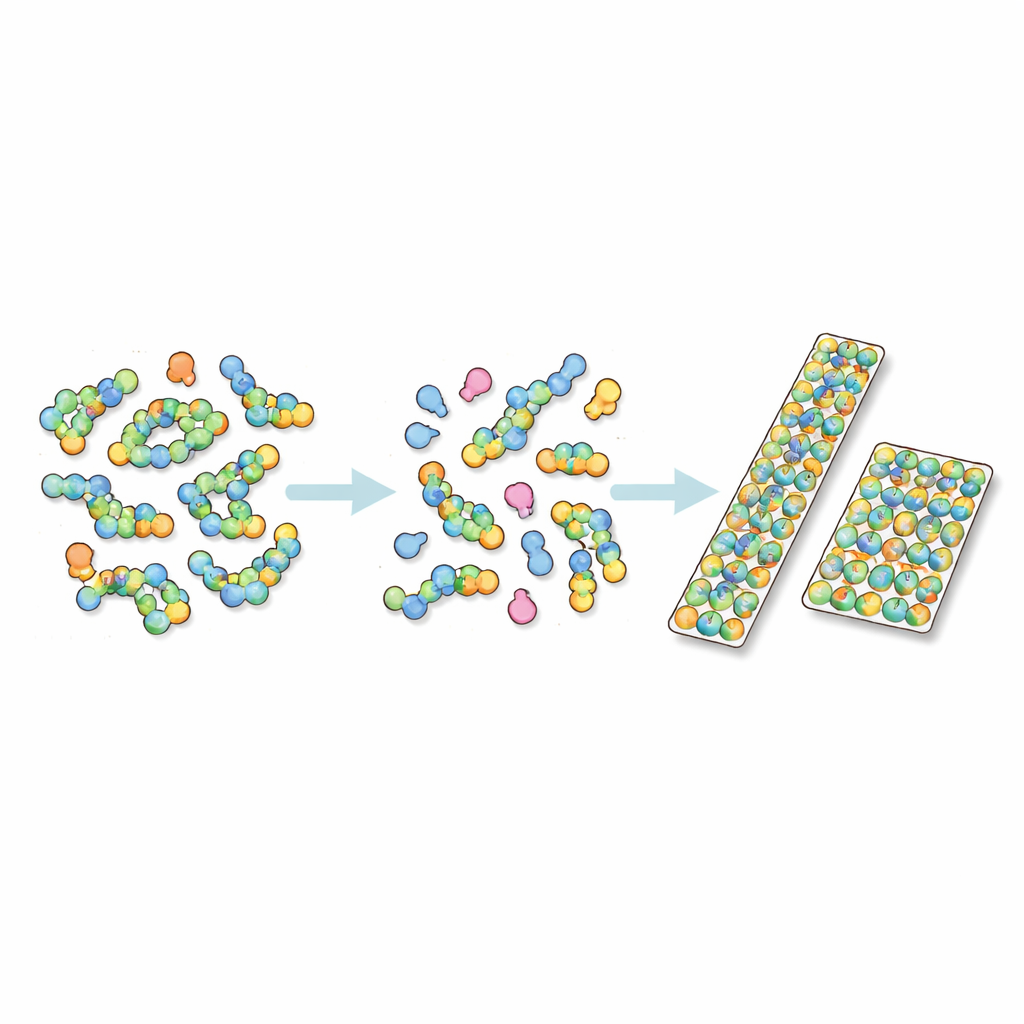
Organic molecules used in cutting-edge solar cells are designed to do many jobs at once: absorb lots of light, transport electrical charges, and dissolve well in common solvents so they can be processed cheaply. Y6, a star player among non-fullerene acceptors, has a long, fused core for absorbing light and many bulky side chains that improve solubility. Those same side chains, however, make it hard for Y6 molecules to stack neatly, and the material breaks down at relatively low temperatures. As a result, traditional crystal growth methods—either evaporating the material in a hot vapor or slowly crystallizing it from a cooling liquid—fail to produce large, well-ordered Y6 crystals.
Using a helpful partner to build crystals
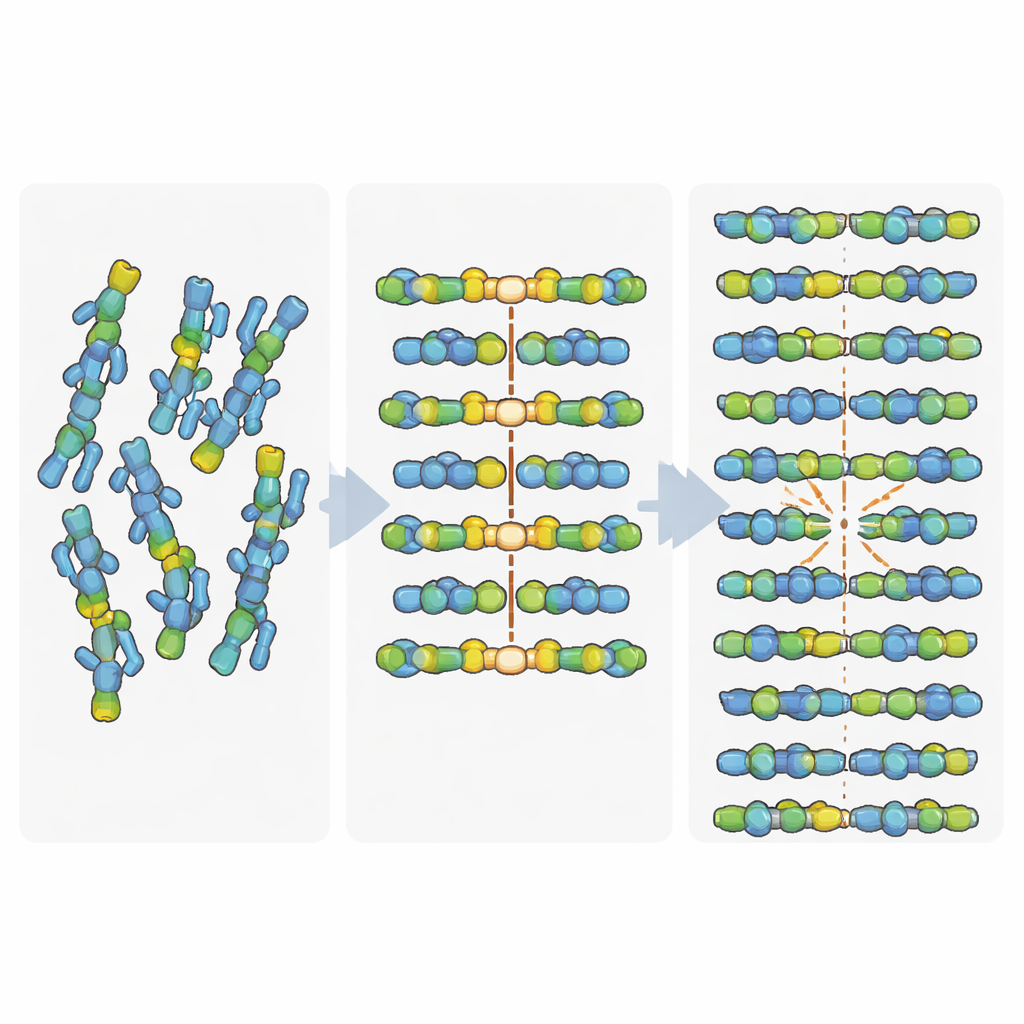
The authors solve this problem by borrowing a trick from pharmaceutical chemistry: cocrystallization. Instead of trying to crystallize Y6 alone, they mix it with a specially chosen “additive” molecule that acts as a structural partner. This additive has a flat central ring that can stack face-to-face with the end rings of Y6, and it exists as a viscous oil at the growth temperature. When dissolved together in chloroform and then gently heated, the two components assemble into new crystals made of alternating Y6 and additive molecules in a strict 1:1 ratio. These cocrystals, called YACs, form either elongated needle-like strips or ultrathin sheets with thicknesses that can be tuned from just 18 nanometers up to 341 nanometers—only a few dozen molecular layers thick.
How the new crystals grow and what they look like
Using a combination of polarized optical microscopy, atomic-force microscopy, and micro electron diffraction, the team tracks how YACs nucleate and grow. Crystals sprout from a central starting point and expand radially, like a microscopic starburst, building up layer by layer. Structural analysis reveals that the additive serves as a bridge between Y6 molecules, creating a new type of coupled stacking arrangement. The flat parts of Y6 and the additive form tight face-to-face contacts, while the extra spacing they create leaves room for Y6’s long side chains without disrupting order. The result is an ordered yet flexible crystal lattice in which the basic repeating unit is a Y6–additive pair arranged back-to-back in a step-like fashion.
A widely applicable recipe for designer crystals
To test whether this approach is general, the researchers apply the same strategy to ten other Y6-like acceptor molecules with different symmetries and side-chain designs, as well as to two additional additives engineered with suitable flat ring regions and oily behavior. In each case they are able to grow well-defined single crystals in a variety of shapes, from strips to plates and blocks, on many types of substrates, including glass, flexible plastic, patterned silicon, metal foil, and even the inner walls of narrow capillaries. The growth can be guided by surface patterns or controlled light exposure, making it possible to “draw” crystal arrays in chosen regions for device integration.
Light tricks and device possibilities
Crucially, the new crystals retain the desirable light-absorbing and emitting properties of the original molecules while gaining the directional order of a crystal. Many YACs show strong second harmonic generation, in which incoming light at one color is efficiently converted to light at half the wavelength. This nonlinear optical effect is useful for compact frequency converters and advanced photonics. The crystals also respond differently to light polarized in different directions and can sense circularly polarized light. Demonstration devices based on YACs function as photodetectors, showing polarized response, sensitivity into the near-infrared, and even the ability to perform single-pixel imaging, hinting at applications in advanced cameras and sensors.
What this work means going forward
By introducing a carefully designed partner molecule, this study turns previously uncrystallizable, structurally crowded semiconductors into large, well-ordered single crystals while preserving their electronic strengths. The additive works like scaffolding that both guides how the molecules pack and eases the crowding caused by bulky side chains. Because the method works for many different non-fullerene acceptors and additives, it offers a general recipe for turning complex organic semiconductors into high-quality crystals. For non-specialists, the key takeaway is that this strategy opens the door to more reliable, efficient, and versatile organic optoelectronic devices—from better solar cells to ultrasmall optical components—by finally bringing order to some of the most promising yet unruly molecular materials.
Citation: Xu, Z., Tang, H., Luo, W. et al. Single-crystal growth of complex non-fullerene acceptor molecules via cocrystallization. Nat Commun 17, 3175 (2026). https://doi.org/10.1038/s41467-026-69997-7
Keywords: organic single crystals, non-fullerene acceptors, cocrystallization, optoelectronic materials, second harmonic generation