Clear Sky Science · en
Pharmacological stabilization of hypoxia-inducible factor 1-α dampens the interferon response and promotes glycolysis in Aicardi-Goutières syndrome
Why this rare childhood disease matters
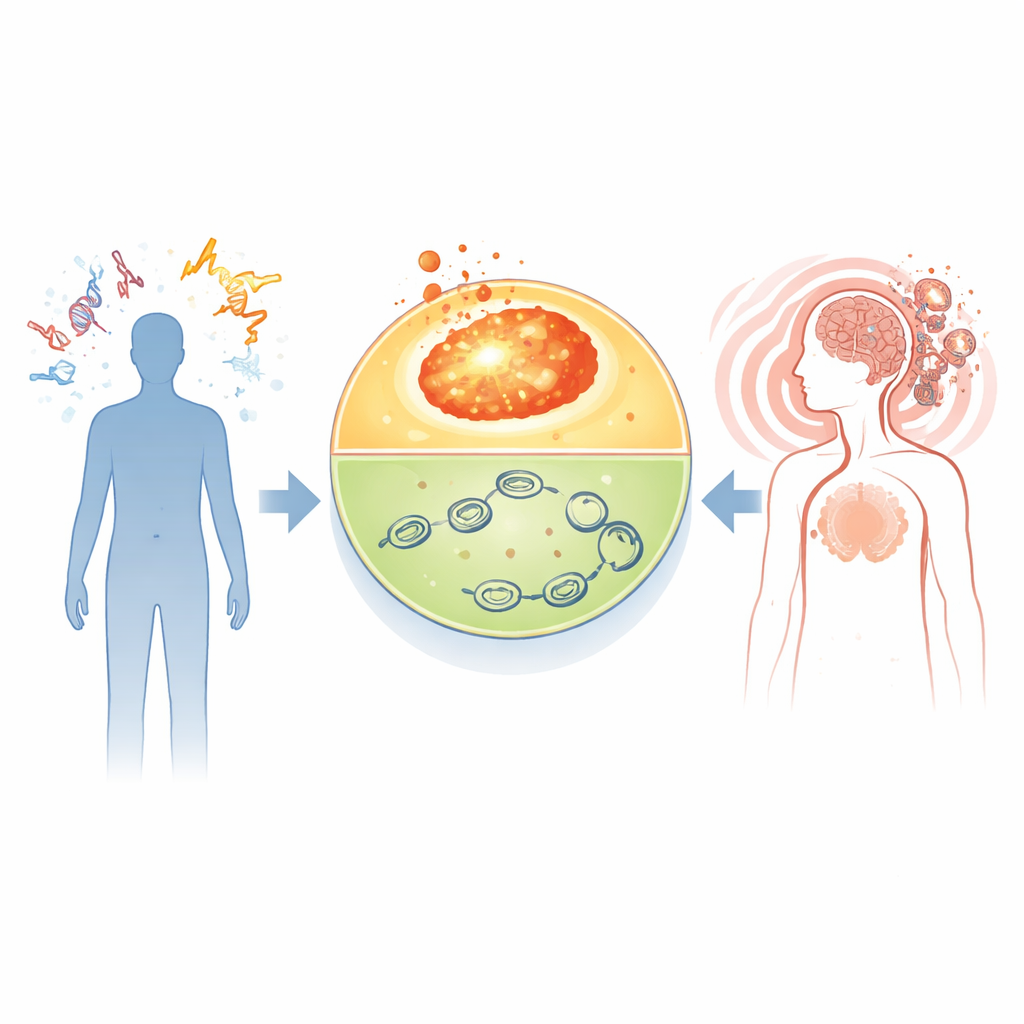
Aicardi-Goutières syndrome (AGS) is a rare but devastating genetic disease that strikes before or soon after birth, damaging the brain and causing lifelong disability. For years, doctors have known that AGS cells act as if they are constantly fighting a viral infection, even when no virus is present. This study asks a deceptively simple question with far-reaching implications: is the way these cells make and use energy helping to fuel that mistaken, self-directed “antiviral” attack—and if so, can changing their energy use calm the inflammation?
Cells stuck in a permanent alarm state
In AGS, inherited mutations affect how cells handle their own DNA and RNA—molecules usually associated with viruses when they appear in the wrong place. As a result, immune cells, especially a group called monocytes and dendritic cells, sense these misplaced nucleic acids as a constant danger signal and turn on a powerful alarm system driven by type I interferons, the same chemical messengers that fight viral infections. The researchers used single-cell RNA sequencing to profile thousands of individual blood cells from AGS patients and healthy people. They confirmed that AGS immune cells carry a strong interferon “signature,” meaning many antiviral genes are chronically switched on, with monocytes and dendritic cells showing the strongest response.
An energy switch gone wrong
Digging deeper into these cells’ gene activity, the team noticed something unexpected: genes that support mitochondrial energy production (oxidative phosphorylation) were turned up, while those that drive sugar-burning through glycolysis were turned down. At the same time, activity of a key regulator of cellular energy balance, a protein called HIF-1α, was markedly reduced. In healthy cells, HIF-1α helps shift energy generation away from mitochondria toward glycolysis when stress builds up, limiting the production of harmful by-products. In AGS monocytes and dendritic cells, that protective shift seemed blocked. The data suggested that these cells are locked into a high-gear mitochondrial mode, generating more reactive oxygen species and showing signs of mitochondrial stress, while being less able to fall back on the safer, glycolytic pathway.
Recreating and probing the problem in the lab
To test whether this energy imbalance was truly part of the disease process rather than just an incidental feature, the authors built laboratory models using healthy donor cells. They silenced three AGS-related genes (SAMHD1, ADAR1, RNASEH2B) in monocytes that had been coaxed into becoming dendritic cells. These engineered cells began to behave like AGS cells: they produced interferon, released high levels of an inflammatory molecule called IP-10, showed reduced glycolytic activity, and displayed increased mitochondrial stress and leakage of mitochondrial DNA and RNA into the cell fluid. Blocking interferon signals in these models partly restored normal energy use, while adding interferon to healthy cells was enough to tilt them away from glycolysis and depress HIF-1α target genes, reinforcing the idea of a two-way link between the alarm system and energy metabolism.
Drug-induced reset of cellular fuel use
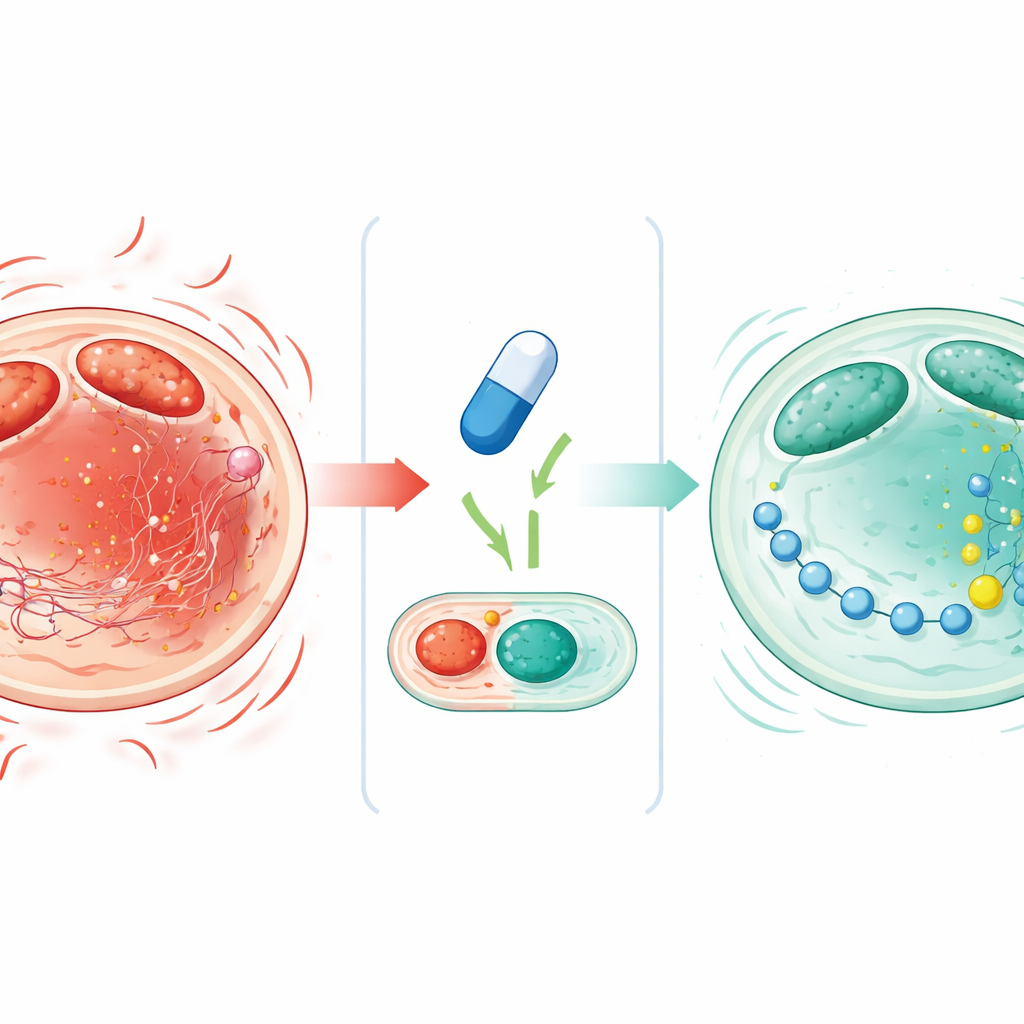
The researchers then asked whether restoring HIF-1α activity could flip the faulty energy switch and cool the inflammatory response. They used a small molecule, DMOG, that stabilizes HIF-1α and mimics a low-oxygen signal. In the AGS-like cell models, DMOG boosted HIF-1α protein, reduced mitochondrial respiration, and increased glycolysis, indicating that cells were now favoring a more “sugar-burning” mode. Markers of mitochondrial stress and oxidative damage fell, and, crucially, the interferon response and IP-10 production dropped sharply. Directly blocking mitochondrial respiration with another compound produced a similar calming effect on interferon activity. Measurements of dozens of metabolites in patient cells and the cell models backed up this picture: AGS cells showed patterns consistent with heavy mitochondrial use and oxidative stress, while DMOG treatment shifted them toward glycolytic and anabolic pathways associated with healthier, more balanced energy handling.
What this means for future treatments
For families living with AGS, current interferon-blocking drugs can lower some inflammatory signals but have limited impact on brain damage and can raise infection risk. This work proposes a complementary strategy: instead of targeting interferon directly, re-tune how immune cells generate energy, using HIF-1α–stabilizing drugs or other molecules that nudge cells away from overactive mitochondria and toward glycolysis. Such compounds are already in clinical use for other conditions, suggesting a realistic path to testing them in interferon-driven diseases. In simple terms, the study reveals that AGS immune cells are running their power plants too hard and too long; by resetting their fuel choice, it may be possible to quiet the false antiviral alarm and ease chronic inflammation.
Citation: Batignes, M., Luka, M., Jagtap, S. et al. Pharmacological stabilization of hypoxia-inducible factor 1-α dampens the interferon response and promotes glycolysis in Aicardi-Goutières syndrome. Nat Commun 17, 3379 (2026). https://doi.org/10.1038/s41467-026-69979-9
Keywords: Aicardi-Goutières syndrome, type I interferon, cell metabolism, mitochondrial stress, HIF-1 alpha