Clear Sky Science · en
Stem-like memory-T maintenance and differentiation into tissue-resident T cells sustain chronic graft-versus-host disease in mice
Why this matters for long-term transplant health
Bone marrow transplantation can cure otherwise lethal blood cancers, but many survivors develop chronic graft-versus-host disease (cGVHD) – a long-lasting, autoimmune-like condition in which donor immune cells slowly damage organs such as the liver, lungs, skin and glands. This study asks a deceptively simple question with big clinical implications: which specific donor immune cells keep this chronic attack going, and can we safely turn off the cells that act like a “renewable source” of trouble without shutting down immunity altogether?
A small group of stubborn immune cells
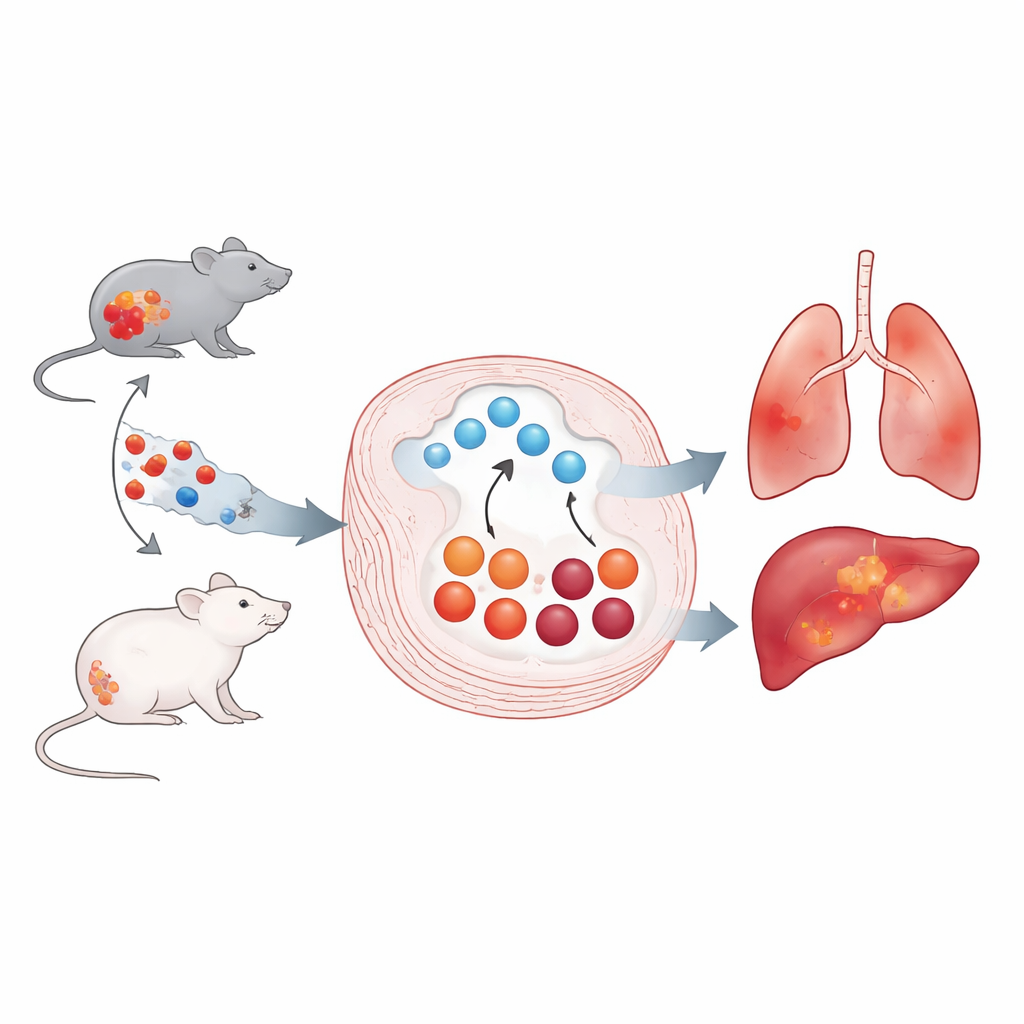
The researchers focused on donor CD4 T cells, a kind of white blood cell that helps coordinate immune responses and can turn into long-lived “memory” cells. In mouse models of cGVHD, they used single-cell RNA sequencing, epigenetic mapping and detailed flow cytometry to dissect these memory cells inside affected organs. They found that the donor CD4 memory pool in diseased tissues is not uniform but instead splits into four distinct groups. One subset, which they call stem-like memory T cells, behaves like a renewable seed population. A second subset shows early steps toward taking up permanent residence in tissues, a third consists of fully settled tissue-resident memory cells, and a fourth appears to be an intermediate group with some features of natural killer cells.
The real culprits and their support system
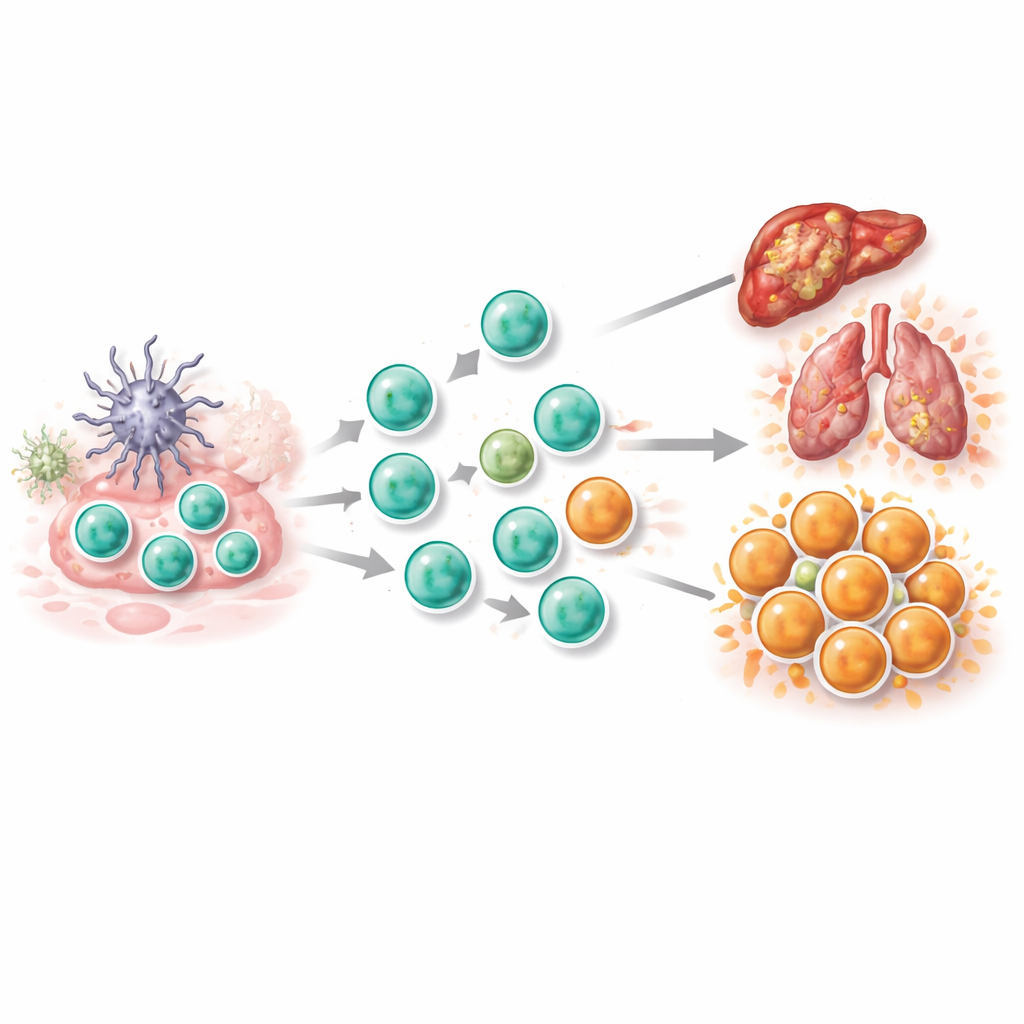
Among these four groups, the fully tissue-resident memory cells turned out to be the main culprits behind chronic damage. They produced high levels of inflammatory molecules and accumulated in target organs, yet were not “exhausted” or turned off, as often happens in chronic infections or cancer. However, these harmful residents depended on the stem-like memory cells to keep their numbers up. Using cell-tracking and adoptive transfer experiments, the team showed that stem-like cells could vigorously self-renew and continually generate new tissue-resident cells, whereas already resident cells mostly maintained themselves and had little capacity to repopulate the system. When stem-like cells were transferred into new recipients, they produced more inflammation and organ scarring than other subsets.
Signals and switches that drive chronic damage
The study then asked what controls the balance between stem-like and tissue-resident cells. Two transcription factors, TCF1 and BCL6, acted as molecular switches that preserve the “stemness” of these memory T cells, allowing them to persist and feed the harmful resident pool. Another factor, BHLHE40, pushed cells along the path toward becoming highly inflammatory, organ-resident attackers. Mice receiving donor T cells lacking TCF1 or BCL6 developed far fewer stem-like cells, fewer resident cells and milder cGVHD. When donor T cells lacked BHLHE40, they accumulated in the stem-like state but failed to efficiently generate the proinflammatory tissue-resident cells, again easing disease. In parallel, the team showed that constant engagement of the T cell receptor with MHC class II molecules on antigen-presenting cells was required to maintain stem-like cells and drive their differentiation into resident effectors, and that interferon-gamma signaling boosted this antigen presentation loop.
From mice to patients and treatment ideas
Importantly, the researchers found similar cell types in people. In blood from patients with active cGVHD, stem-like CD4 memory cells were reduced in circulation while more inflammatory effector cells were increased, suggesting that stem-like cells may be preferentially lodged in tissues. Using advanced imaging of liver biopsies from cGVHD patients, they identified structures resembling miniature lymph nodes packed with donor CD4 memory subsets, including stem-like, progenitor-like, and proinflammatory tissue-resident cells. Together with the mouse experiments, this supports a picture in which a small, persistent pool of stem-like memory T cells continually seeds resident attackers that maintain chronic organ damage over time.
What this means for future therapies
To a lay observer, cGVHD might look like a simple case of an overactive immune system, but this work shows that a specialized, stem-like memory subset is what keeps the fire burning. These cells do not cause most of the damage directly; instead, they act as a renewable source of tissue-resident T cells that do. By pinpointing the molecules and cell-to-cell interactions that sustain this stem-like pool – including TCF1, BCL6, BHLHE40, and MHC class II–dependent signals – the study suggests more precise treatment strategies. Rather than broadly suppressing all T cells, future therapies might selectively target stem-like memory T cells or the pathways that feed their differentiation, potentially calming chronic inflammation while preserving protective immunity.
Citation: Kong, X., Wang, B., Wu, X. et al. Stem-like memory-T maintenance and differentiation into tissue-resident T cells sustain chronic graft-versus-host disease in mice. Nat Commun 17, 3147 (2026). https://doi.org/10.1038/s41467-026-69975-z
Keywords: chronic graft-versus-host disease, tissue-resident memory T cells, stem-like memory T cells, bone marrow transplantation, chronic inflammation