Clear Sky Science · en
The transcription factor EHF promotes the maturation and immunosuppression of conventional dendritic cells
Why calming the immune system can be lifesaving
Our immune system walks a tightrope between defending us from infections and avoiding damage to our own tissues. This paper explores how a single control switch inside specialized immune cells, called dendritic cells, helps decide whether the body hits the brakes or the gas pedal on immune responses. Understanding this switch could open new ways to treat autoimmune diseases, infections, and cancer.
Watchtower cells that can heal or harm
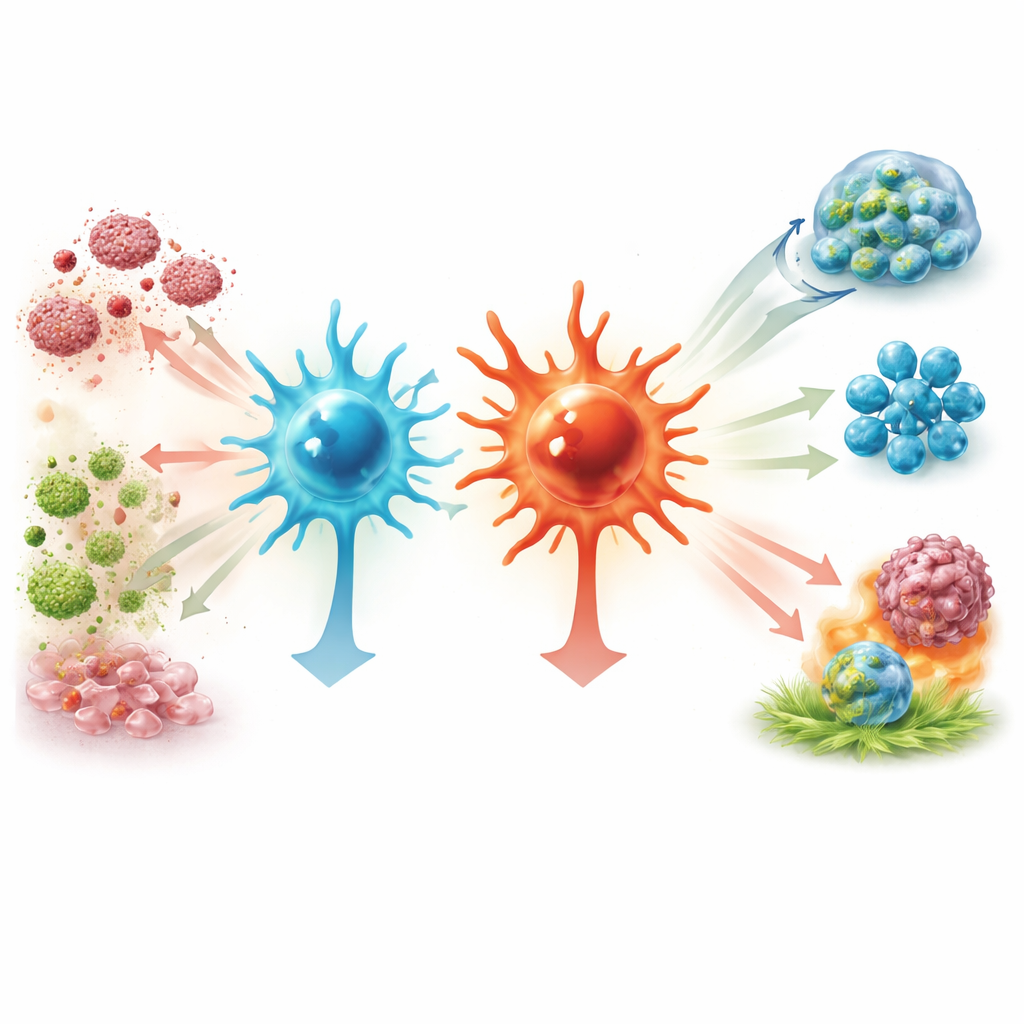
Dendritic cells act as sentinels, patrolling tissues for signs of danger and carrying information to lymph nodes, where they instruct T cells how strongly to respond. A particular group of these cells, known as CCR7-positive conventional dendritic cells, is important not only for fighting infections but also for enforcing immune tolerance so that the body does not attack itself. However, the genetic program that makes these cells calming rather than inflammatory has been poorly understood.
A molecular dimmer switch called EHF
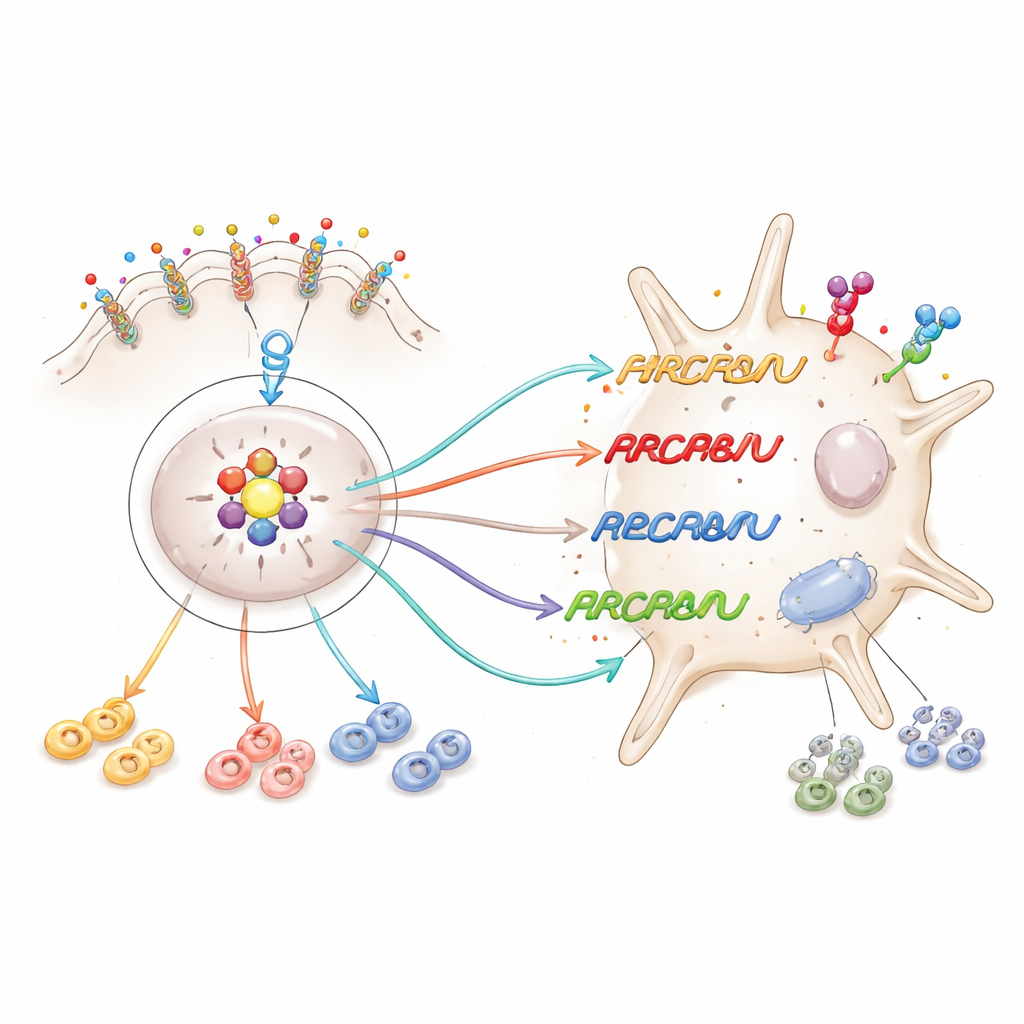
The authors identify a transcription factor named EHF as a central coordinator of this calming program. Transcription factors are proteins that turn genes on or off. In mice, when dendritic cells sense fragments of self or viral genetic material through sensors called TLR7, TLR8, and TLR9, they sharply increase EHF levels. EHF then boosts the production of surface molecules such as CCR7, CD200, and PD-L1, which help the cells travel to lymph nodes and send “slow down” signals to T cells. At the same time, EHF reshapes the internal wiring of the cells by suppressing another regulator, IRF4, and supporting an inhibitory member of the NF-κB family, called Rel, which generally dampens inflammation.
What happens when the brakes are cut
To see what EHF does in living animals, the team engineered mice whose dendritic cells lack EHF. These mice coped unusually well with certain infections and with transplanted melanoma tumors: their T cells were more activated, produced more inflammatory messengers, and infiltrated tumors more effectively, leading to better survival. The trade-off was clear in a model of colitis, where the intestine is chemically damaged. Without EHF, dendritic cells pushed helper T cells toward aggressive Th1 and Th17 types, and the mice developed far more severe gut inflammation, weight loss, and tissue injury. In other words, removing EHF makes immune responses stronger but less controlled.
How EHF rewires dendritic cells
The researchers combined genome-wide DNA–binding assays and single-cell RNA sequencing to map precisely what EHF controls. They showed that EHF physically binds near the genes for CCR7, CD200, PD-L1, IRF4, and Rel, directly tuning their activity. When EHF was experimentally increased in cultured dendritic cells, the same tolerance-associated surface markers rose, IRF4 levels fell, and Rel increased, mirroring the pattern seen in mature, calming dendritic cells inside the body. The team also discovered that EHF-rich cells form a distinct cluster of highly mature, CCR7-high dendritic cells in several mouse organs and in human blood after stimulation. These cells share a signature rich in migration molecules and inhibitory signals, consistent with a role in preventing overactive immunity.
Signals that turn the switch on and off
EHF does not act in isolation. It is turned on when dendritic cells engulf dying cells or encounter particular nucleic-acid–sensing signals, and this depends on the adaptor protein MyD88, a key part of many innate immune pathways. Conversely, other cues such as TLR3 stimulation, the growth factor GM-CSF, and the cytokine interferon-gamma suppress EHF, shutting down this tolerizing program. This dynamic control may explain why EHF’s effects are most obvious in conditions like autoimmunity and certain tumors, but less so during strong viral infections where interferon-gamma is abundant.
Balancing benefit and risk for future therapies
In everyday terms, EHF helps dendritic cells act like careful moderators rather than cheerleaders, especially after they mature and start migrating to lymph nodes. When EHF is present, they encourage restrained, balanced T-cell responses that protect tissues from self-inflicted damage. When EHF is missing or blocked, the immune system becomes more aggressive—useful for clearing tumors or some infections, but risky for autoimmune flare-ups and inflammatory diseases. By learning how to turn this switch up or down using genetic tools or drugs, clinicians may eventually fine-tune immune responses to better treat autoimmunity, chronic infection, or cancer while limiting collateral damage.
Citation: Liu, X., Wang, L., Xiao, Y. et al. The transcription factor EHF promotes the maturation and immunosuppression of conventional dendritic cells. Nat Commun 17, 3094 (2026). https://doi.org/10.1038/s41467-026-69959-z
Keywords: dendritic cells, immune tolerance, autoimmunity, cancer immunology, transcription factors