Clear Sky Science · en
Intestinal pathogens override hunger-driven decision-making via immune regulation of central serotonin signaling in C. elegans
When Hunger Meets Infection in the Gut
Everyday choices, like eating street food despite a queasy stomach, balance the promise of reward against the risk of harm. This study uses a tiny roundworm, C. elegans, to explore a surprisingly familiar question: how does the state of our gut push the brain toward bold risk-taking or cautious avoidance? By watching worms decide whether to cross a dangerous barrier to reach a tempting food smell, the researchers reveal how hunger and gut infection can tug behavior in opposite directions through chemical signals that act a bit like our own serotonin system.
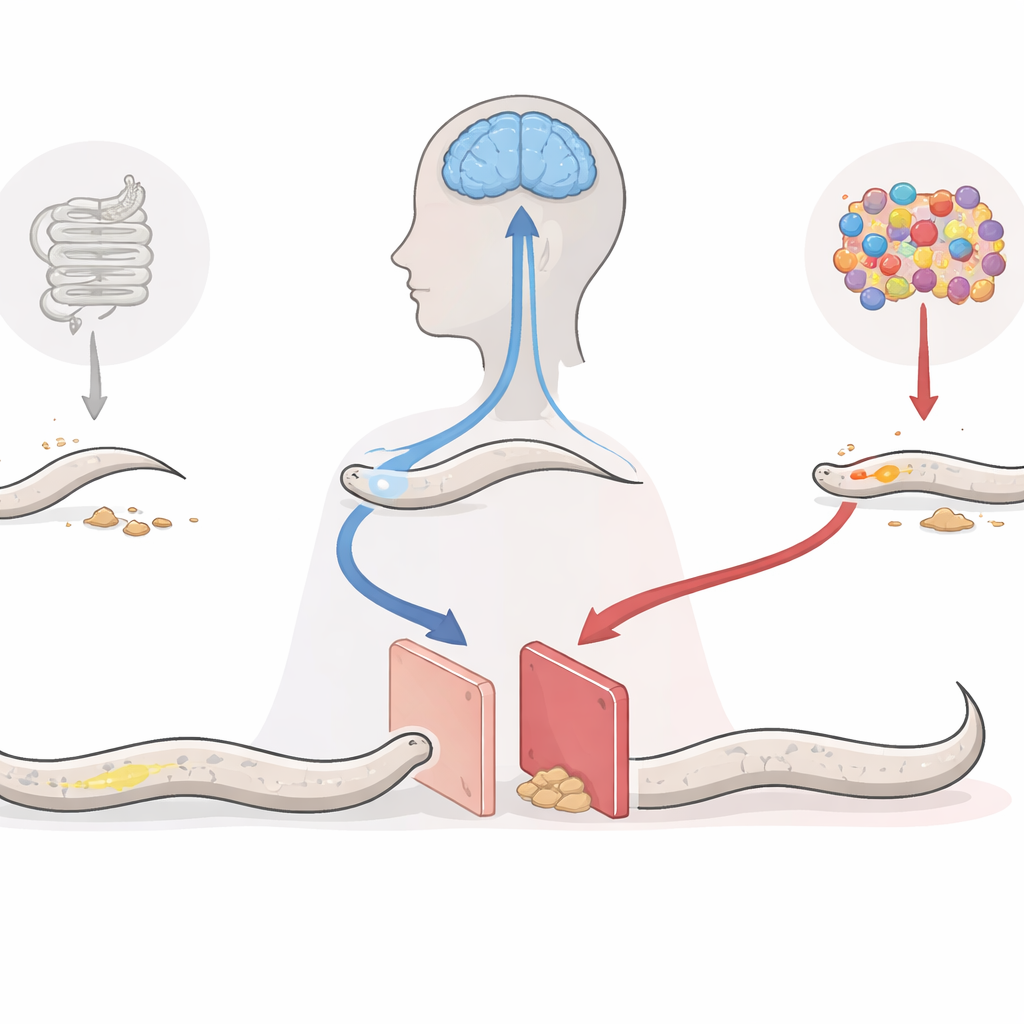
A Simple Animal Facing a Hard Choice
The worms in this study were placed in a controlled dilemma. On one side of a plate sat an attractive food odor, similar to the scent released by rotting fruit. Between the worms and this reward lay a ring of concentrated glycerol that is stressful and potentially lethal. Well-fed worms usually play it safe and stay behind the barrier. After hours without food, however, they become bolder and many will cross the ring to reach the smell. This setup mimics a basic trade-off all animals face in the wild: is it worth risking harm to find dinner?
How a Gut Pathogen Flips the Decision
The team then introduced several bacteria that can colonize the worm’s intestine, including Pseudomonas aeruginosa, a serious human pathogen. When hungry worms carried live, virulent P. aeruginosa in their gut, their behavior changed dramatically. Instead of becoming bolder, they behaved more like well-fed animals and avoided the risky barrier, even though their basic movement and ability to sense the odor or the barrier alone were intact. Dead bacteria, bacterial smells, or weakened strains did not have this effect; worms had to be genuinely infected. This showed that an active intestinal infection can override the usual hunger-driven push toward risk.
A Single Type of Brain Cell as the Switch
To understand how the gut talks to the brain, the researchers focused on serotonin, a signaling chemical that shapes mood and decision-making in many animals, including humans. In worms, one small pair of neurons called ADF releases serotonin. When these cells were disabled, both hunger-induced risk-taking and infection-induced caution were greatly reduced. When ADF’s serotonin production was restored, the behaviors returned. Using fluorescent reporters, the scientists watched these neurons respond to the food odor: fasting made ADF more responsive, while infection cranked this sensitivity up even further. Moderate activation led to modest serotonin release and encouraged crossing the barrier, but very strong activation shut down key downstream neurons and steered the worm away from danger.
Messages from the Intestine to the Brain
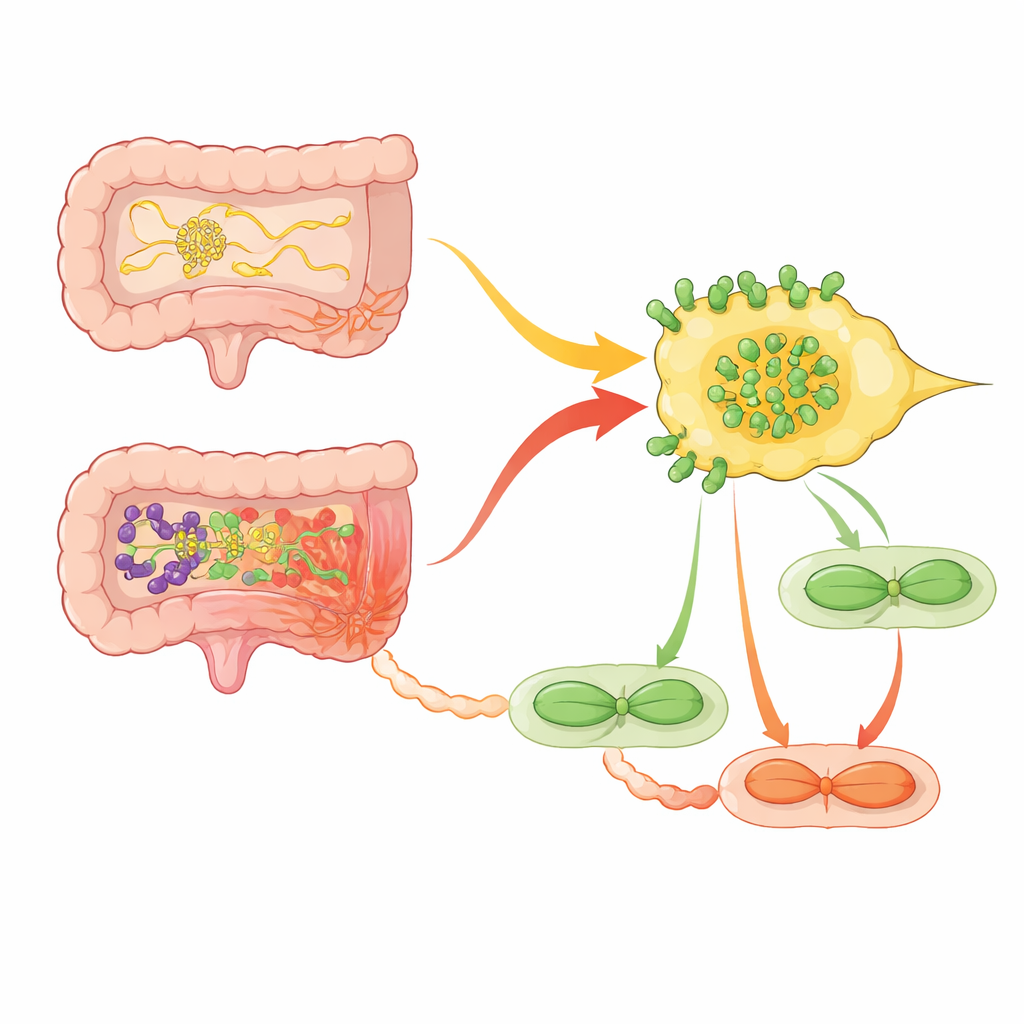
The gut did not act alone. Inside intestinal cells, hunger activated an energy-sensing pathway, while infection triggered a different immune pathway. Both routes led to the release of insulin-like peptide signals from the intestine into the body. These hormone-like molecules traveled to the ADF neurons and controlled the abundance of a specific odor receptor on their surface. During fasting, one intestinal peptide boosted a moderate amount of receptor, making ADF modestly sensitive to the food odor. During infection, another peptide, switched on by immune signaling, drove receptor levels much higher. This pushed the same neuron into an overactive state that flooded the circuit with serotonin, flipping the behavioral output from “seek food despite risk” to “prioritize safety.”
Why This Tiny Worm Matters
Together, these findings outline a clear gut-to-brain pathway in which hunger and intestinal infection converge on a single serotonin-releasing neuron to reshape behavior. Rather than serotonin being simply “good” or “bad,” its effects depend on dosage and context: a moderate rise promotes flexible, risk-taking foraging, whereas excessive release during infection dampens reward-seeking and favors caution. Because serotonin, insulin-like signals, and gut microbes are deeply conserved across evolution, this worm-based circuit offers clues to how our own intestinal state may influence mood, motivation, and sensitivity to reward—and why infections or disruptions of the gut microbiome can contribute to symptoms like loss of pleasure and altered decision-making.
Citation: Lei, Y., Chen, C., Zhan, X. et al. Intestinal pathogens override hunger-driven decision-making via immune regulation of central serotonin signaling in C. elegans. Nat Commun 17, 3144 (2026). https://doi.org/10.1038/s41467-026-69924-w
Keywords: gut brain axis, serotonin, C. elegans, microbiome and behavior, risk taking