Clear Sky Science · en
Context-specific regulatory genetic variation in MTOR dampens neutrophil-T cell crosstalk in pneumonia-associated sepsis
Why this matters for people with severe infections
When a bad lung infection turns into sepsis, the body’s own immune response can tip the balance between life and death. This study asks a deceptively simple question with far-reaching consequences: why do some people’s immune systems spiral into dangerous overdrive, while others ride out pneumonia-associated sepsis and survive? By tracing the influence of a single common genetic difference in a key immune-control gene, the researchers uncover how our DNA can quietly steer the conversation between two crucial white blood cells—and in doing so, shape both sepsis survival and risk of type 2 diabetes.
A traffic controller for immune cells
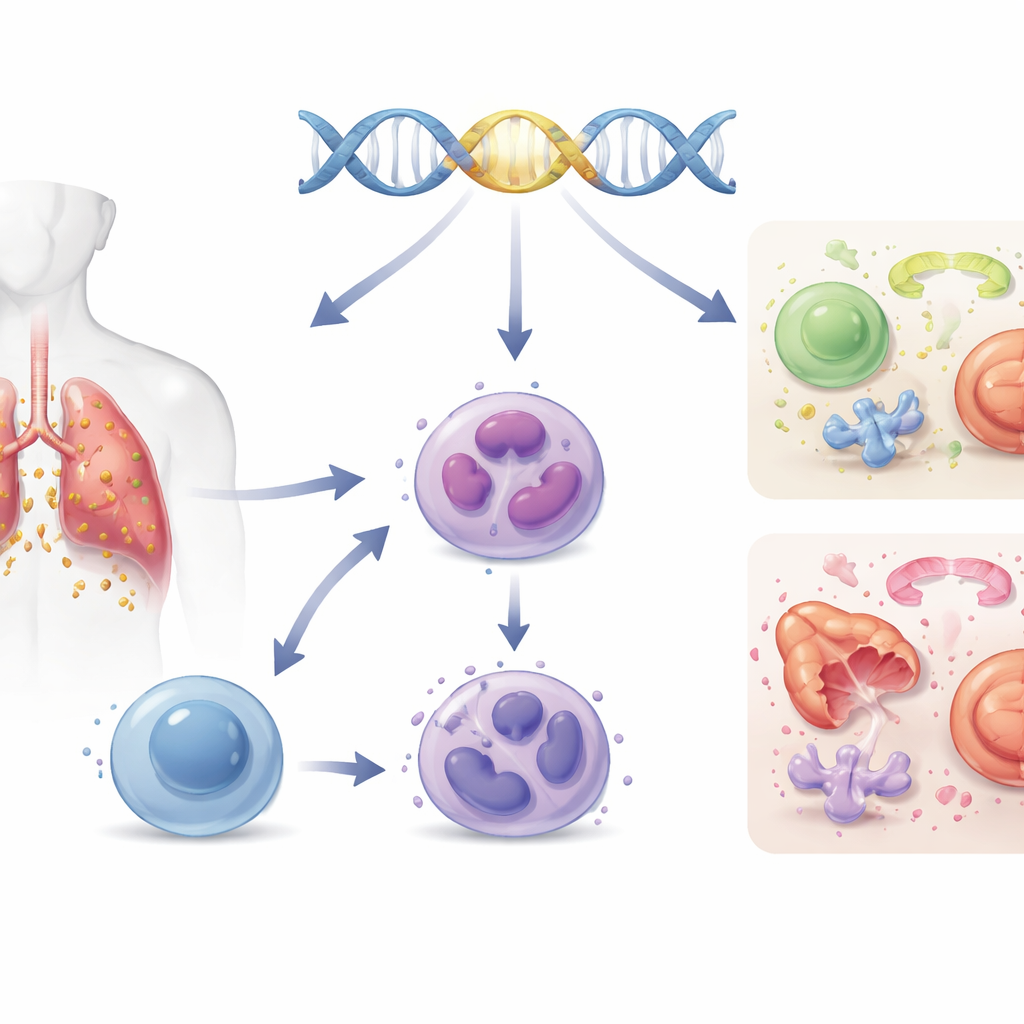
At the center of this story is MTOR, a gene that acts like a traffic controller for cell metabolism and immune activity. The team focused on patients with sepsis caused by pneumonia and found that a specific genetic variant inside MTOR changes how strongly the gene is turned on in different immune cells. In activated T cells—white blood cells that coordinate immune attacks—the protective version of the variant turns MTOR down. In neutrophils—front-line cells that rapidly attack invaders—the same variant turns MTOR up. This opposing effect depends on the patient’s immune state, especially the balance between neutrophils and lymphocytes in the blood. Patients carrying the protective version of the variant are more likely to show a calmer T cell response in less severely deranged immune states, hinting that subtle tuning of MTOR can prevent immune overreaction.
Genetic influence on who survives pneumonia sepsis
The researchers then asked whether this DNA difference actually changes outcomes in real patients. Analysing several large cohorts of people with sepsis from pneumonia, they found that patients carrying at least one copy of the protective allele had a markedly lower risk of dying within 28 days of illness. This survival benefit was specific: it appeared in pneumonia-related sepsis, not in sepsis from other causes, and was strongest in patients who were not already immunosuppressed and did not have advanced cancers. It also faded in people with type 2 diabetes or poor long-term blood sugar control, conditions known to blunt healthy T cell responses. These patterns suggest that the protective variant is most helpful when the immune system is otherwise capable but at risk of overshooting in the lungs.
How T cells push neutrophils into overdrive
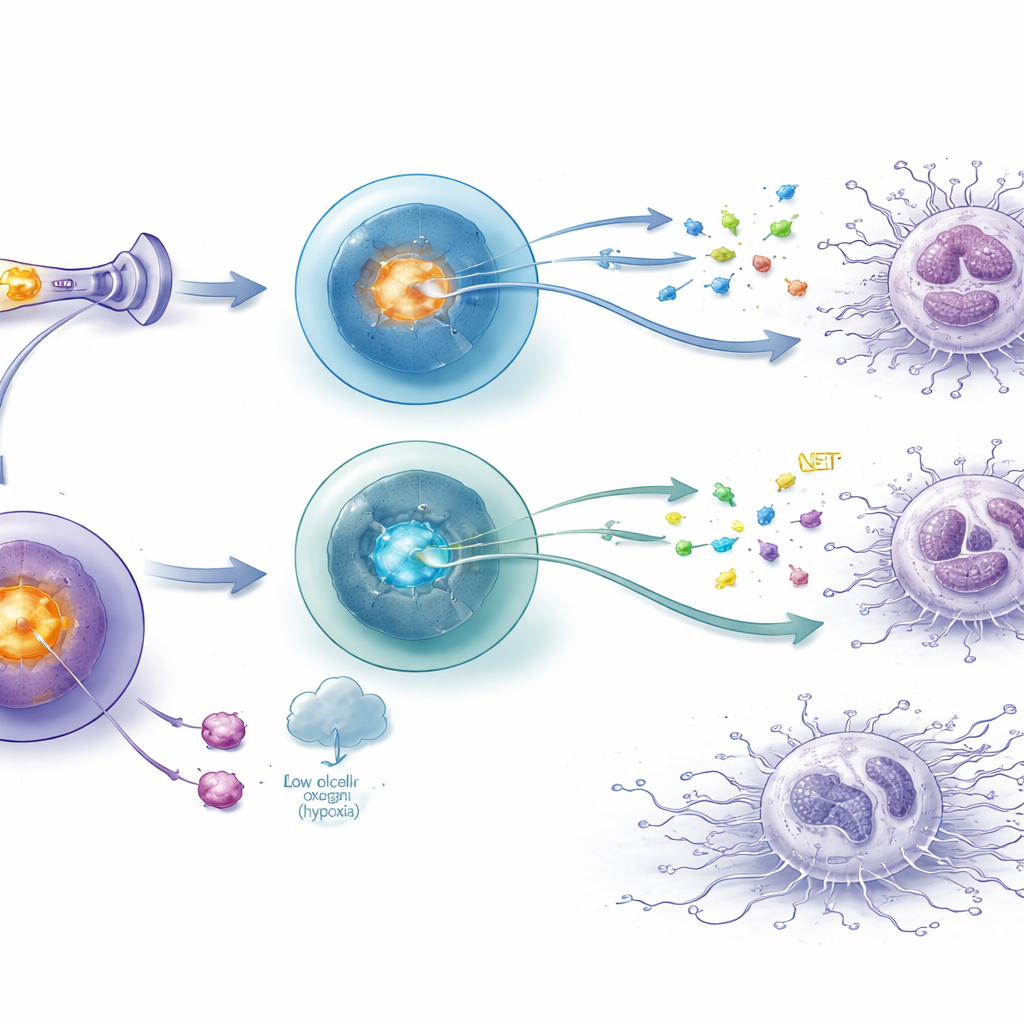
To understand how MTOR and this variant translate into cell behavior, the team recreated sepsis-like conditions using human cells in the lab. When they grew T cells together with neutrophils taken from sepsis patients, activated T cells drove the neutrophils into a hyperactive, harmful state. The neutrophils boosted surface markers linked to severe sepsis and were more prone to forming sticky webs of DNA and toxic molecules, a process that can damage tissues. This effect did not occur with neutrophils from healthy donors, showing that sepsis primes these cells to overreact. Importantly, dampening MTOR activity in T cells—with the drug rapamycin or low-oxygen conditions that naturally slow T cell metabolism—reduced their ability to push neutrophils into this destructive mode, highlighting MTOR as a key dial for this dangerous crosstalk.
A two-way conversation between immune cells
The communication was not one-sided. Sepsis neutrophils, once activated, in turn suppressed T cell activation when placed back into co-culture, but only when they could physically touch T cells rather than merely bathing them in released factors. This created a negative feedback loop: T cells ignite neutrophils; in response, the neutrophils dampen T cell activity, contributing to the paralyzed, exhausted immune state seen in some sepsis patients. By sequencing T cells before and after activation, the authors identified many cytokines—secreted immune messengers—whose production depended on MTOR. Several of these signals directly boosted the same harmful neutrophil markers seen in patients. The protective MTOR variant effectively lowers this T cell “volume knob,” reducing cytokine output, limiting neutrophil hyperactivation, and tipping the loop toward a more balanced response.
Hidden switches in our DNA
Digging deeper, the study reveals how this variant is wired into the genome. It sits within a regulatory element that is open and active in resting memory T cells, helping maintain baseline MTOR levels, but shuts down when T cells are strongly activated. Chemical marks on DNA at this site change with activation and can be shifted by vitamin C, which boosts a class of enzymes that rewrite these marks. Using precise genome-editing tools, the researchers showed that altering the base at the variant site in primary human T cells directly reduces MTOR expression and the release of key cytokines. Intriguingly, the same variant is also linked to lower risk of type 2 diabetes, and its effects on MTOR flip between T cells and fat tissue, hinting at a shared genetic thread between infection responses and metabolic disease.
What this means for future treatment
This work shows that a common genetic variant can fine-tune an internal immune rheostat, shaping how T cells and neutrophils talk to each other during pneumonia-associated sepsis and influencing who survives. It also helps explain why broad treatments, such as high-dose vitamin C, may help some patients but harm others, depending in part on their MTOR genotype and immune state. In the long run, testing for this variant and measuring simple blood markers like the neutrophil-to-lymphocyte ratio could help doctors sort patients into groups more or less likely to benefit from MTOR-targeting drugs or other immune-modulating therapies. Rather than trying to silence the immune system as a whole, this study points toward treatments that selectively quieten harmful T cell–driven neutrophil activation, offering a more tailored and potentially safer path to treating sepsis.
Citation: Zhang, P., MacLean, P., Jia, A. et al. Context-specific regulatory genetic variation in MTOR dampens neutrophil-T cell crosstalk in pneumonia-associated sepsis. Nat Commun 17, 3201 (2026). https://doi.org/10.1038/s41467-026-69919-7
Keywords: pneumonia-associated sepsis, MTOR genetic variant, T cell–neutrophil crosstalk, immune regulation, type 2 diabetes risk