Clear Sky Science · en
Non-Markovian relaxation spectroscopy of fluxonium qubits
Why tiny flaws matter for quantum computers
Quantum computers promise to solve certain problems far faster than today’s machines, but their basic units of information—qubits—are fragile. This article explores why some of the best-performing superconducting qubits, called fluxonium qubits, sometimes lose energy in a way that remembers their past. The authors show that hidden microscopic flaws in the material can quietly store and release energy over milliseconds, subtly disturbing the qubit and challenging standard ways of measuring and improving quantum hardware.
Hidden culprits inside superconducting circuits
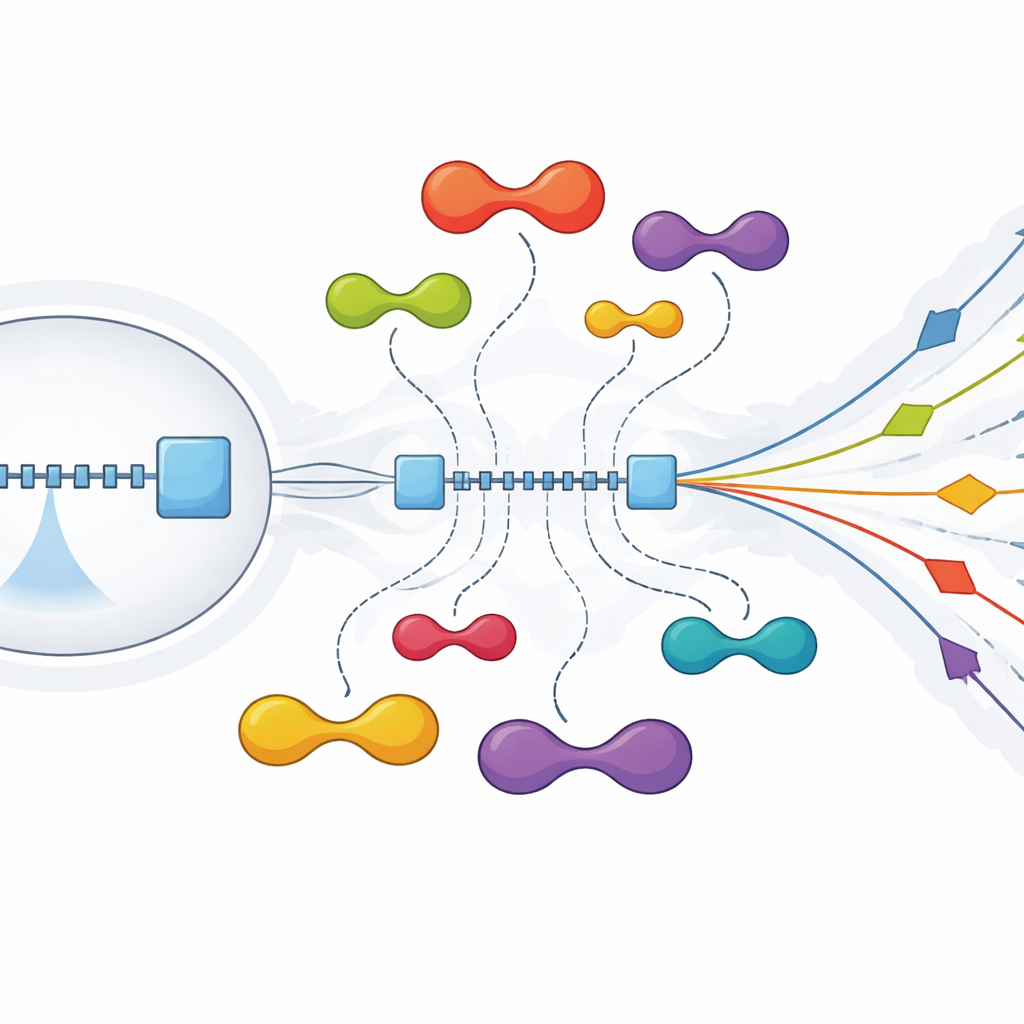
In most textbook pictures, a qubit sits in a featureless environment that instantly forgets every interaction, so its energy decay looks like a simple, smooth exponential curve. Real devices are messier. In the thin glassy layers of aluminum oxide used to build superconducting circuits, countless atomic-scale defects can behave as tiny two-state systems. Each of these “two-level systems” can trade energy with a qubit and then relax only slowly, acting as a kind of microscopic memory element in the surrounding material. Earlier work hinted that such defects can have lifetimes even longer than the qubit itself, but standard lifetime measurements assume a forgetful environment and can easily miss this hidden memory.
A new way to listen on two clocks at once
The authors introduce a measurement method they call two-timescale relaxometry, designed to track both the qubit and its environment at the same time. Instead of preparing the qubit once and watching it decay, they repeatedly reset and measure the qubit in many short, T1-like snippets while deliberately pushing the surrounding defects toward either higher or lower energy over a much longer period. By fitting how fast the qubit initially relaxes during each short snippet, and then watching how that apparent rate drifts over tens of milliseconds, they can separately identify fast qubit decay and slow rearrangements in the bath of defects. Crucially, this protocol works even when the qubit readout is imperfect and somewhat disruptive, making it suitable for typical experimental setups.
What they find inside fluxonium qubits
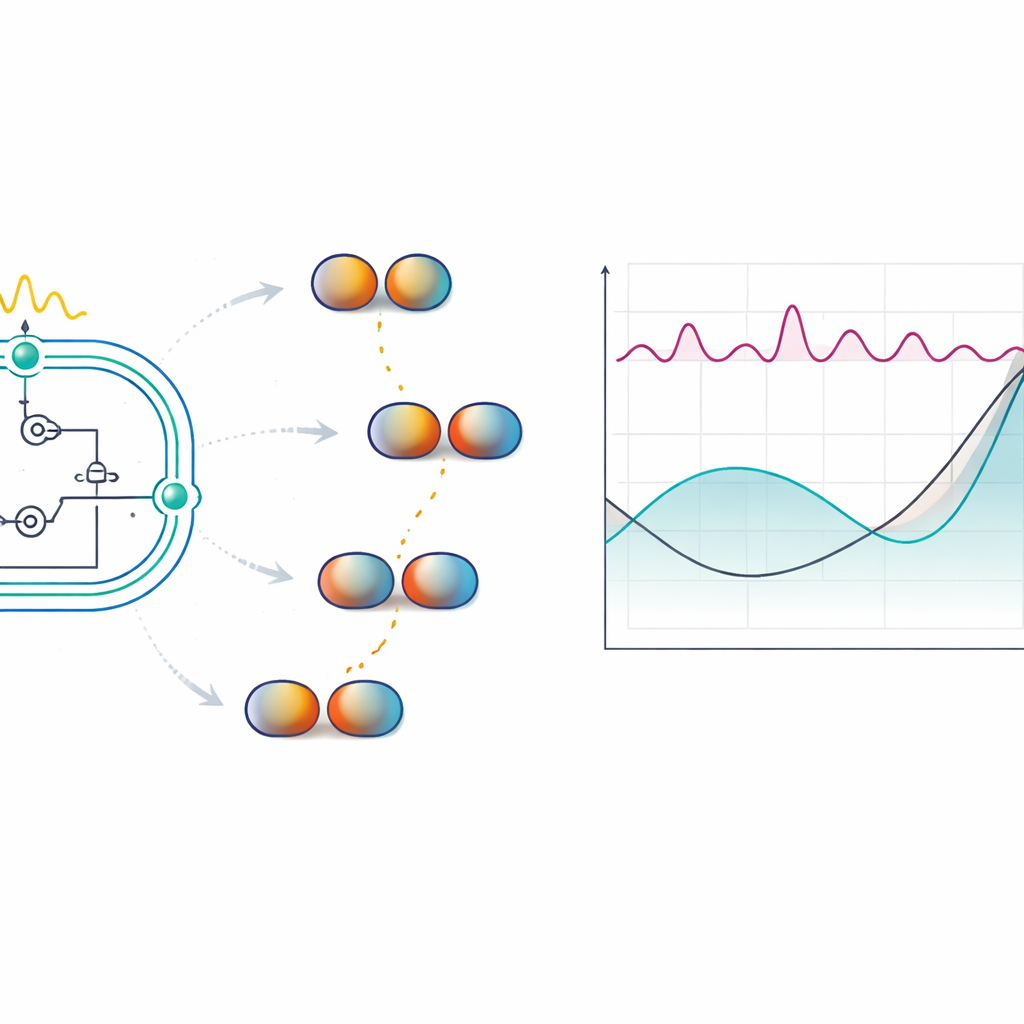
Applying this method to high-coherence fluxonium qubits operating at unusually low frequencies (about 0.1–0.4 gigahertz), the team uncovers a forest of discrete defects whose fingerprints appear as sharp peaks in the qubit’s relaxation spectrum. Many of these defects hold on to energy for milliseconds, yet they lose phase coherence quickly, so they exchange energy with the qubit in a noisy, incoherent way rather than as clean oscillations. By comparing the observed spectra with computer simulations of the electric field inside the circuits, the authors conclude that the dominant defects likely live in the tunnel barriers of the long chain of Josephson junctions that forms the fluxonium’s superinductance, rather than on broader chip surfaces.
Defect properties across devices and designs
The researchers perform similar measurements on a second fluxonium device built in a planar architecture and again find roughly a dozen strong defects with lifetimes ranging from hundreds of microseconds to milliseconds. From the number and strength of the observed resonances, they infer that these defects have area densities and electric dipole moments remarkably similar to those reported for aluminum-oxide defects at much higher microwave frequencies. This suggests a common physical origin that spans nearly two decades in frequency. At the same time, the background loss from more conventional dielectric surfaces appears low enough that, in the absence of resonant defects, fluxoniums could routinely achieve millisecond lifetimes or better.
Implications for future quantum hardware
Overall, the study paints a sobering but actionable picture: the limiting factor for fluxonium qubits is not generic material loss, but a dense landscape of long-lived microscopic defects embedded in the junction chains. Because these defects introduce slow, history-dependent dynamics, they complicate efforts to stabilize and scale up noise-protected qubit designs that rely on long junction arrays or other high-impedance elements. The authors argue that reducing defect density in the junction oxides, or replacing junction chains with alternative, low-loss inductive structures, will be essential for further gains in coherence. At the same time, their two-timescale relaxometry method offers a practical tool for routinely detecting non-Markovian behavior in qubits of many kinds, helping engineers diagnose and eventually tame the hidden memories in quantum devices.
Citation: Zhuang, ZT., Rosenstock, D., Liu, BJ. et al. Non-Markovian relaxation spectroscopy of fluxonium qubits. Nat Commun 17, 3209 (2026). https://doi.org/10.1038/s41467-026-69910-2
Keywords: fluxonium qubits, two-level systems, non-Markovian relaxation, superconducting quantum circuits, qubit decoherence