Clear Sky Science · en
Efficiency hierarchy and optimization of waste incineration in China to balance disposal and energy supply
Turning Trash into Power
Household garbage is often seen as a problem to get rid of, but it also holds a surprising amount of energy. In fast-growing countries such as China, big cities are struggling both with mounting piles of municipal solid waste and with the challenge of providing enough electricity and heat for residents. This study explores how burning waste in specialized plants can safely turn trash into a steady power source, how well current plants are performing, and what upgrades could make them cleaner and more useful in the future.
How Waste Incineration Helps Cities
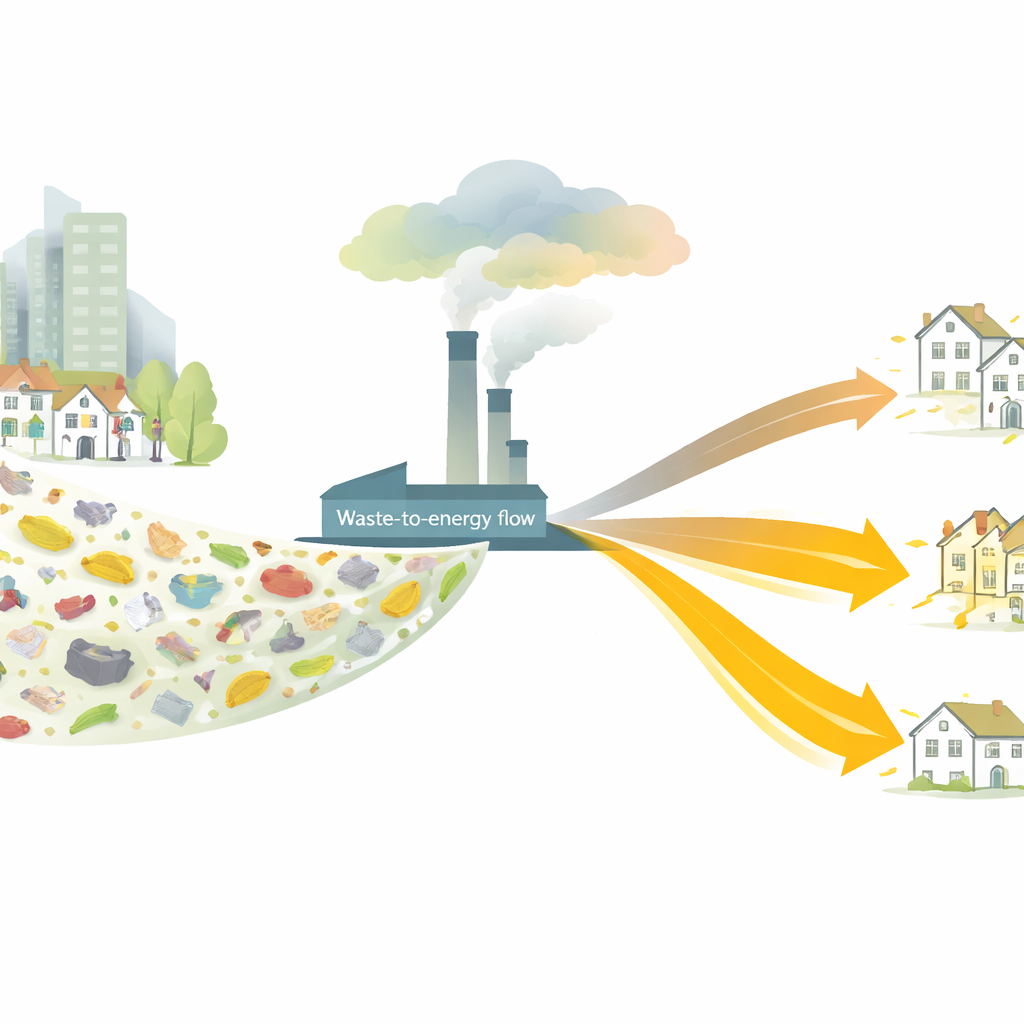
Modern waste-to-energy plants burn everyday rubbish in controlled furnaces and use the heat to produce steam, which then drives turbines to generate electricity and, in some cases, district heating. In China, this approach has rapidly become the main way to handle municipal waste, now treating over four-fifths of household garbage. By 2023, nearly a thousand plants with more than two thousand incinerators supplied enough electricity to cover up to 7% of the nation’s residential power use. Because big, dense cities both produce more waste and need more power, these plants often sit at the intersection of two urgent problems: where to put the trash and how to keep the lights on.
Why Efficiency Matters
Simply burning waste is not enough; what counts is how much useful energy can be recovered from each ton of trash. The authors show that Chinese plants, on average, generate less electricity per ton of waste than similar facilities in Europe or the United States. Several reasons explain this gap. The makeup of the waste is crucial: wetter waste with lots of food scraps burns poorly, while drier waste with more paper and plastics releases more heat. The size and design of the furnaces also matter, with very large units and higher steam temperatures performing better. Operational know-how plays a big role as well; plants run by more experienced teams, with stable combustion and fewer shutdowns, deliver noticeably higher energy returns and cleaner exhaust.
Sorting Plants into an Efficiency Ladder
To make sense of these many influences, the researchers built a national database for every incineration line in China and created an efficiency index that treats electricity and heat on the same footing. They then adjusted this index to account for conditions that operators cannot control, such as local climate, altitude, and whether there is nearby demand for waste heat. Using this corrected score, plants were grouped into three tiers: basic disposal facilities, energy-recovery plants, and top-performing green energy plants. Roughly four in ten facilities currently serve mostly as disposal units with modest energy gain, while only the best fifth qualify as green energy plants. This ladder makes it easier for policymakers to set targets, reward leaders, and identify where upgrades will pay off most.
Future Potential and Smart Upgrades
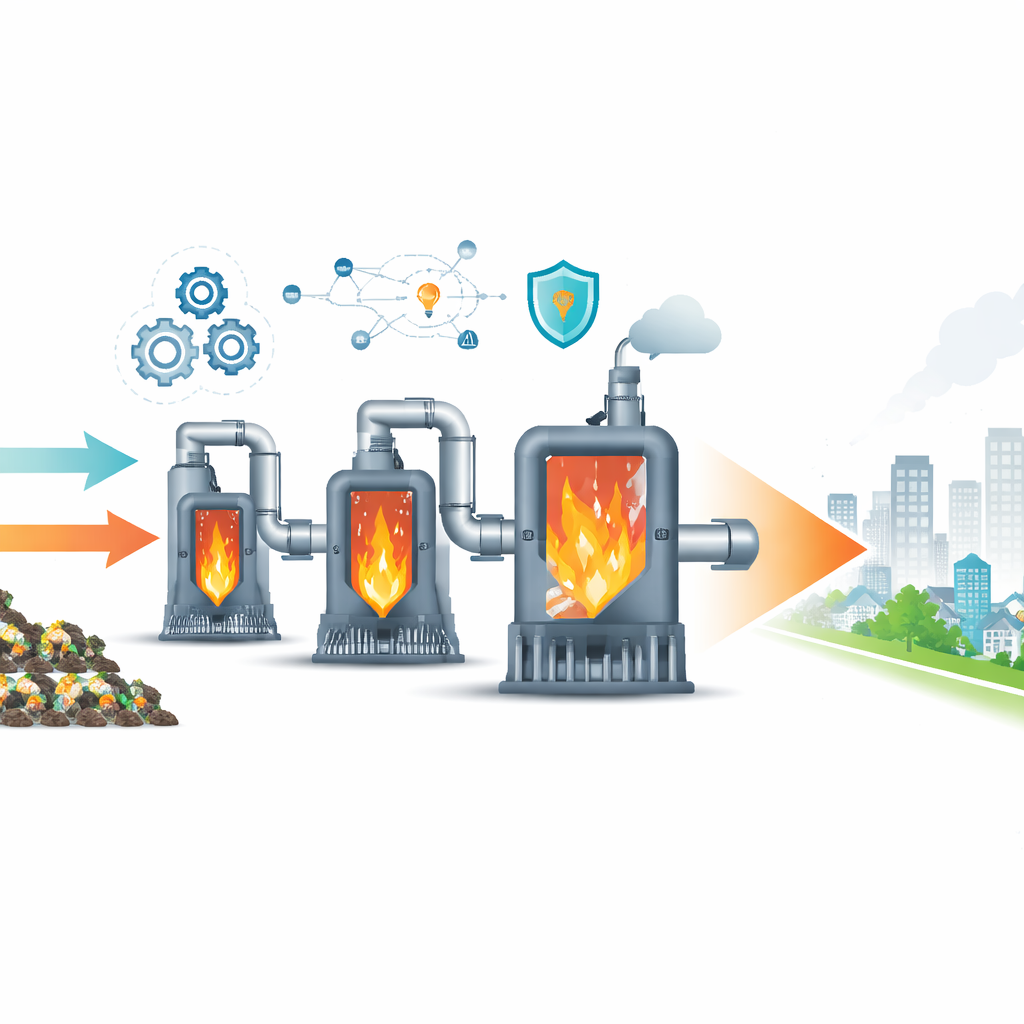
Looking ahead to 2035, the team combined population and economic forecasts with models of future waste quantities and composition under five global development pathways. Under a business-as-usual path, Chinese waste incineration could supply around 8% of household electricity, even as the waste becomes more energy-rich due to growing use of packaging and disposable goods. However, if plants are actively improved—through better operation, smarter controls, and more complete use of leftover steam for heating—waste incineration could generate as much as 259 terawatt-hours per year, enough to cover up to 13% of residential electricity. Among many possible measures, artificial-intelligence-based control systems and recovery of low-temperature waste heat stand out as especially cost-effective options.
Cleaning Up Emissions While Boosting Power
Burning waste inevitably releases greenhouse gases and other pollutants, but the study shows that more efficient plants can actually lower climate and air-quality impacts by replacing dirtier fossil-fuel power and by running their furnaces more cleanly. In 2023, Chinese waste-to-energy plants already emitted far less particulate matter and acidic gases than national limits allow, and better combustion tended to coincide with lower pollutant levels. If the efficiency upgrades envisioned for 2035 are carried out, the researchers estimate that net greenhouse gas emissions from the sector could fall by up to 60% compared with a no-improvement scenario, even though more waste is being burned. This would also trim emissions of key smokestack pollutants such as nitrogen oxides and carbon monoxide.
What This Means for the Energy and Waste Future
For non-specialists, the core message is that garbage can be more than just a burden; it can become a meaningful, steady contributor to clean energy systems if handled wisely. The study argues that with the right designs, smart controls, and better use of heat, waste incineration can help countries like China cope with rising trash volumes, cut reliance on fossil fuels, and reduce air pollution. While it cannot replace recycling, composting, or waste prevention, making existing and future plants more efficient could help bridge energy gaps in many emerging economies and support broader climate and sustainability goals.
Citation: Cui, J., Cui, Y., Li, J. et al. Efficiency hierarchy and optimization of waste incineration in China to balance disposal and energy supply. Nat Commun 17, 3069 (2026). https://doi.org/10.1038/s41467-026-69897-w
Keywords: waste-to-energy, municipal solid waste, energy efficiency, China incineration, greenhouse emissions