Clear Sky Science · en
Strategies for synergistic reduction of plastic leakage and greenhouse gas emissions in China
Why Plastic and Climate Matter Together
Plastics are woven into nearly every part of daily life, from food packaging and clothing to building materials and electronics. But in China, as in much of the world, this convenience comes with two hidden bills: piles of discarded plastics leaking into rivers, fields and oceans, and large amounts of greenhouse gases released when plastics are made and disposed of. This study asks a simple but powerful question: can China tackle plastic pollution and climate-warming emissions at the same time, and do it cost-effectively?
Following Plastics from Cradle to Grave
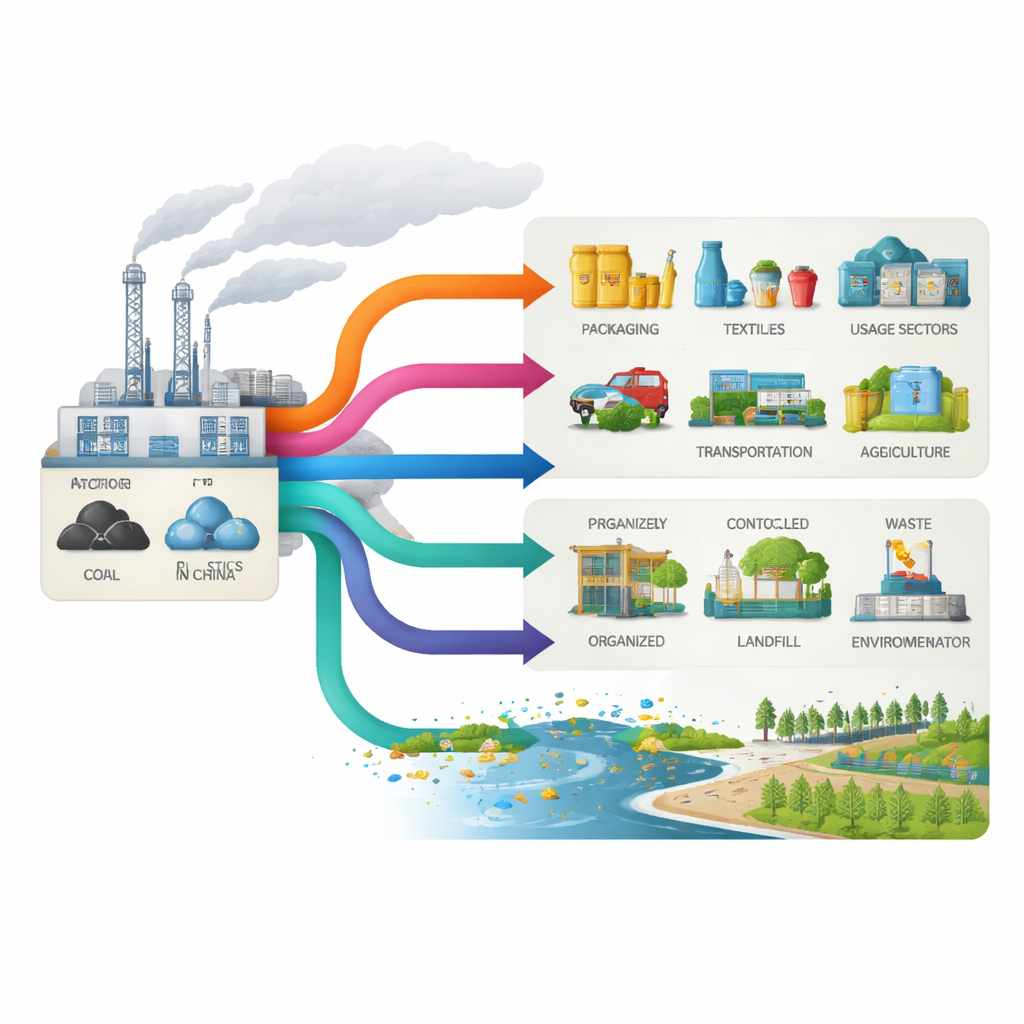
The researchers built a detailed map of how plastics move through China’s economy over three decades, from 1992 to 2021. They tracked 14 major types of plastic, from familiar packaging materials to engineering plastics used in cars and electronics. The team followed these materials through four stages: production of plastics from fossil fuels, manufacturing and transport, use in everyday products, and finally disposal through recycling, incineration, landfilling, or mismanagement. For each step, they estimated how much plastic escapes into the environment as litter or microplastics and how much greenhouse gas is released to the atmosphere.
Different Plastics, Different Problems
The analysis shows that not all plastics are equal in their impacts. Five types—PET (used in bottles and textiles), PP, LDPE, HDPE and PVC—dominate both pollution and climate footprints. Production is responsible for most greenhouse gas emissions, because it relies heavily on fossil fuels and energy-intensive processes. In contrast, the biggest source of plastic leakage is the disposal stage, when waste is not properly collected or treated. Microplastics from clothing fibers, personal care products and household dust increasingly contaminate waterways, while larger plastic items leak out of dumps, landfills and informal burning sites. Over time, policies like China’s plastic bag restrictions and recycling initiatives have curbed some leakage, but booming demand has continued to drive up total emissions.
Imagining Future Pathways
To see what might happen next, the authors modeled 14 future scenarios out to 2060. Some focused on isolated measures, such as cleaner energy for industry, cutting demand for packaging, better product design to use less plastic, or boosting collection, recycling, incineration or landfilling. Others combined several measures into broader strategies. Under a business-as-usual path, plastic leakage and climate emissions both keep rising. Single measures help only partially: for example, cleaner energy slashes greenhouse gases but does little to stop plastic escaping into the environment, while more incineration can reduce leakage but adds to total climate emissions. No single lever, on its own, fixes both problems.
A Full-System Makeover
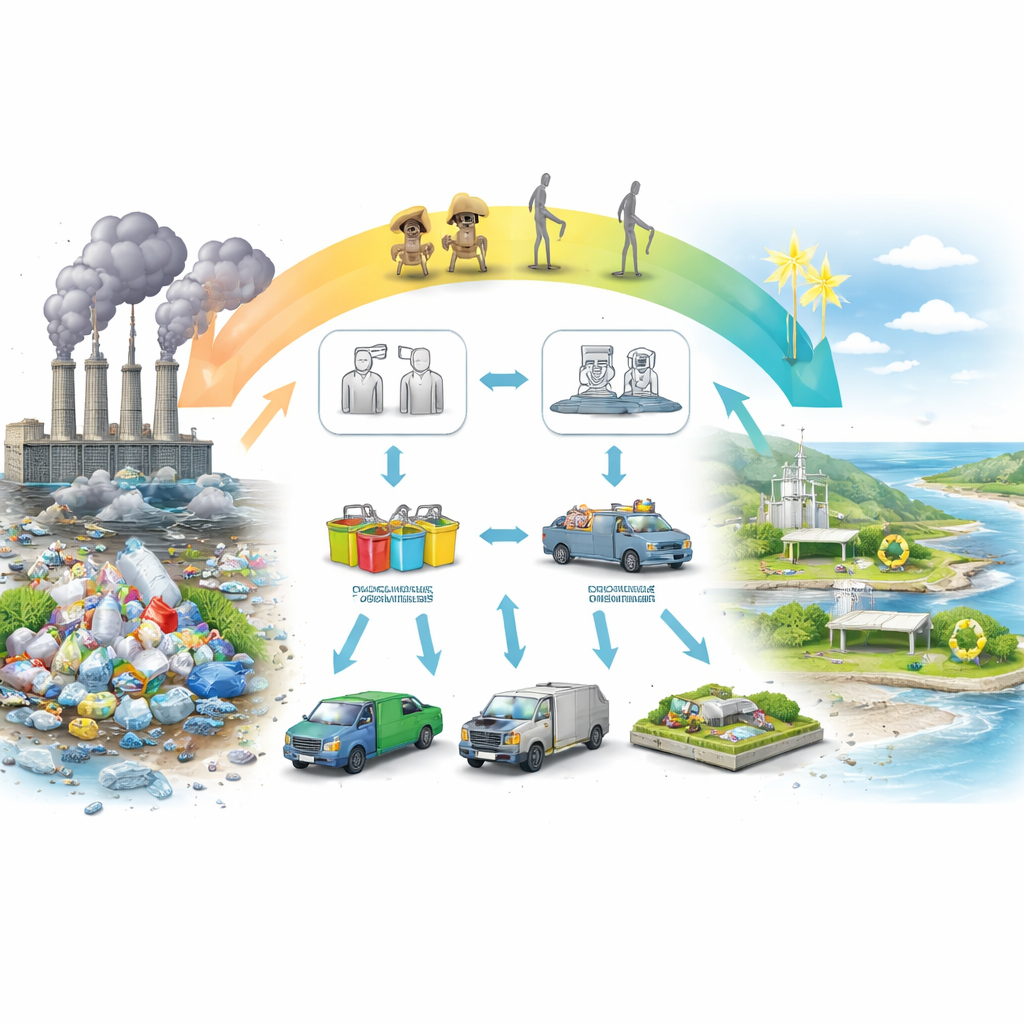
The most powerful option is what the authors call a system change scenario, which layers multiple actions across the plastic life cycle. It includes dramatic cuts in unnecessary packaging, bans on ultra-thin agricultural films and microbead cosmetics, a cleaner power and fuel mix, much better collection systems, and expanded mechanical and chemical recycling alongside controlled incineration and landfilling. With this integrated approach, by 2060 plastic leakage could fall by about 80% and net greenhouse gas emissions by roughly 63%, compared with business as usual. The biggest gains come from reducing how much new plastic is needed in the first place and from improving end-of-life management so that less plastic escapes and more value is recovered.
What This Means for Policy and Daily Life
For a lay reader, the core message is that there is no single magic technology that will make plastics harmless. Instead, the study shows that a coordinated mix of smarter product design, reduced demand, better recycling, cleaner energy and strict control of waste can dramatically cut both plastic pollution and climate damage, and even save money overall. Because a handful of common plastics and uses—especially packaging and textiles—drive most of the harm, targeting these first could yield big benefits. While the work focuses on China, the lessons are global: with thoughtful planning and investment, societies can keep many of the conveniences of plastic while sharply shrinking its footprint on rivers, oceans and the climate.
Citation: Bai, J., Huang, Z., Liu, X. et al. Strategies for synergistic reduction of plastic leakage and greenhouse gas emissions in China. Nat Commun 17, 3178 (2026). https://doi.org/10.1038/s41467-026-69893-0
Keywords: plastic pollution, greenhouse gas emissions, circular economy, waste management, China climate policy