Clear Sky Science · en
Plant traits explain variation in symbiotic nitrogen fixation responses to global nitrogen enrichment: a meta-analysis
Why farmers and nature lovers should care
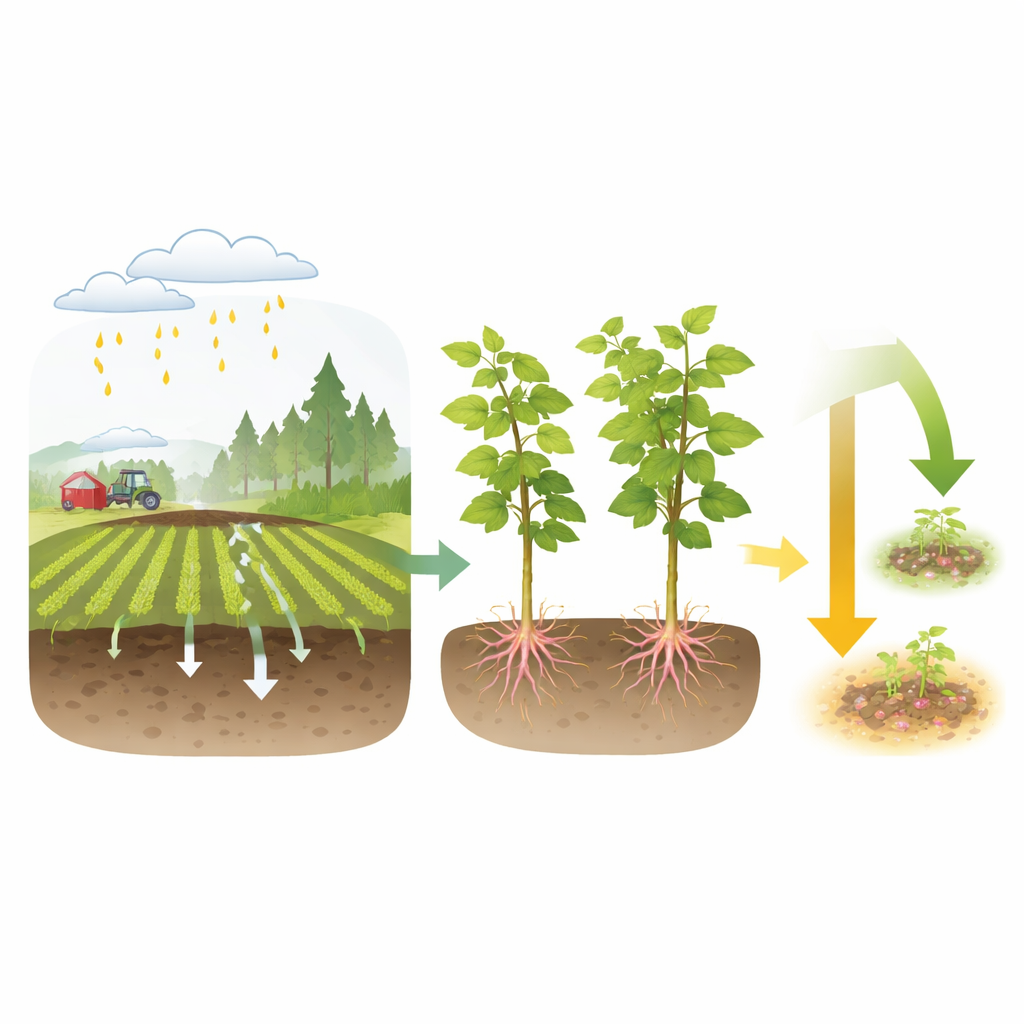
Modern farming and air pollution are quietly changing how plants get the nitrogen they need to grow. Many trees, shrubs, and crops host friendly microbes on their roots that turn nitrogen from the air into a natural fertilizer, a process called symbiotic nitrogen fixation. This study asks a simple but crucial question: as humans add more nitrogen to soils through fertilizer and air pollution, how much does this natural self-fertilizing system shut down, and what role do the plants themselves play in softening that blow?
How plants and microbes team up for free fertilizer
In many ecosystems, plants—especially legumes like clover, peas, and some trees—form partnerships with soil microbes that live in small root structures called nodules. These microbes draw nitrogen from the air and convert it into forms plants can use, supporting everything from crop yields to forest growth. Globally, this teamwork supplies tens of millions of tons of nitrogen to croplands and wild landscapes each year, making it a major natural input to the planet’s nutrient budget. At the same time, human activities have rapidly increased nitrogen inputs through synthetic fertilizers and atmospheric deposition, raising suspicions that plants might rely less on their microbial partners when ready-made nitrogen is abundant.
What a global data sweep reveals
The authors combined 908 field measurements from 67 studies worldwide, covering both croplands and non-croplands such as forests and grasslands. They compared plots with added nitrogen to nearby plots left at background levels, and calculated how strongly symbiotic nitrogen fixation changed. On average, nitrogen fixation fell by about one third when extra nitrogen was added. The decline grew stronger at higher fertilization rates and toward higher latitudes. However, when the researchers tried to explain this variation using only environmental factors—like climate, soil chemistry, and microbial biomass—the models could account for only about a third of the observed differences from place to place. Clearly, something important was missing.
Plant growth habits change the story
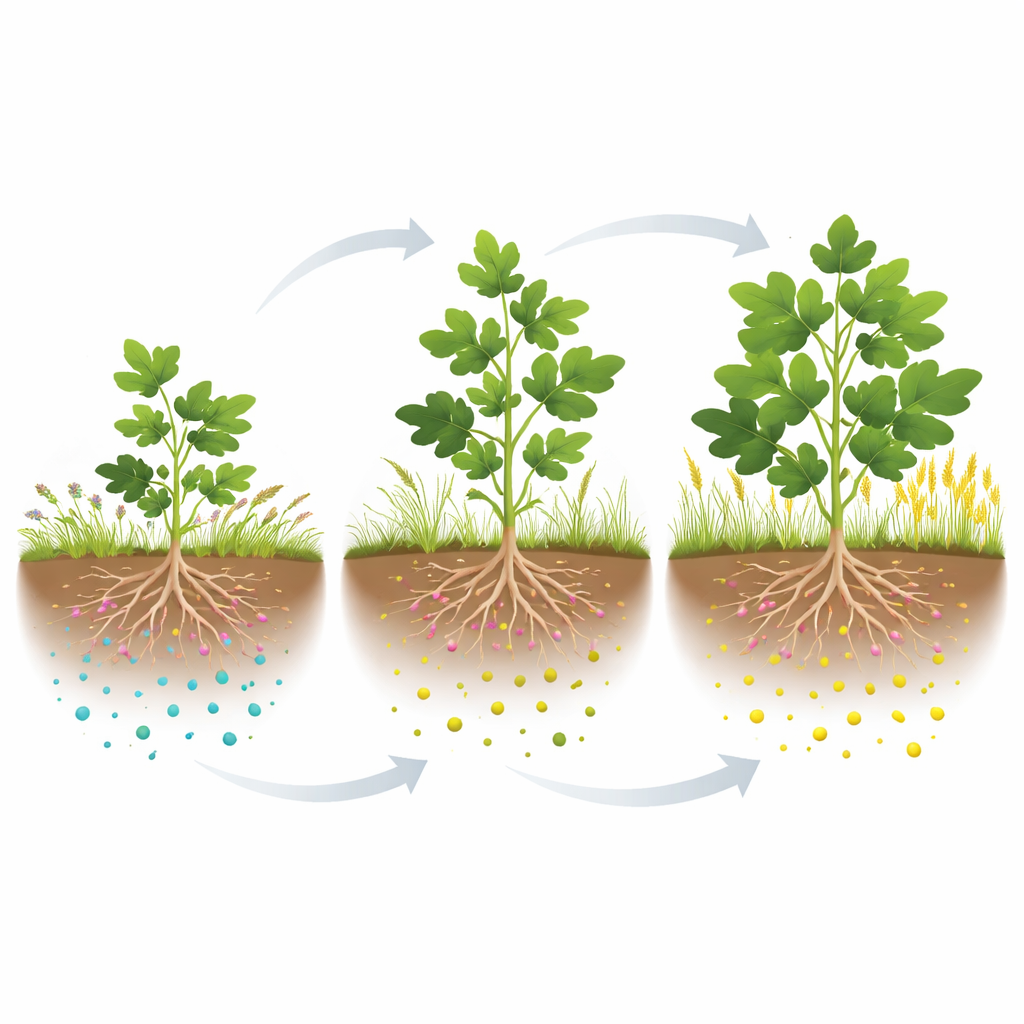
The missing piece turned out to be how the plants themselves respond. The team examined plant performance traits, such as total biomass (how big the plants grow) and how they divide that biomass between shoots and roots. Across species, when nitrogen addition caused nitrogen-fixing plants to grow more and shift more biomass aboveground, the drop in natural nitrogen fixation was noticeably smaller. In other words, bigger, more vigorous nitrogen-fixing plants—with higher shoot-to-root ratios—could partially offset the suppressing effect of added nitrogen on their microbial partners. When these plant traits were added to the models alongside environmental factors, the ability to predict real-world changes in nitrogen fixation improved by about 43 percent.
Different responses in farms and wildlands
The study also found that croplands and non-croplands do not respond in the same way. In forests and grasslands, symbiotic nitrogen fixation fell more sharply under added nitrogen than it did in farmed fields. Wild systems often start with higher natural fixation and more limited phosphorus in the soil, so a surge of nitrogen can disrupt plant–microbe partnerships and deepen other nutrient shortages, leading to strong suppression. Croplands, by contrast, have long histories of fertilization. Their soils are closer to nitrogen saturation, and many crop varieties have been bred to rely more on soil nitrogen and less on microbial partners, which makes additional nitrogen somewhat less disruptive to the remaining fixation. Even so, in both system types, changes in nitrogen-fixing plant biomass were among the most important predictors of how strongly fixation declined.
What this means for future food and climate
For a lay audience, the main message is that human-added nitrogen does not simply stack on top of nature’s own nitrogen supply. Extra nitrogen tends to dial down natural fixation, especially in wild ecosystems, so the boost we get from fertilizers and air pollution has built-in limits. Yet plants are not passive: when nitrogen-fixing species grow larger and adjust how they invest in shoots and roots, they can partially compensate for this loss. By building these plant traits into large-scale Earth system models, scientists can better estimate how much “free” nitrogen ecosystems will keep generating under continued fertilizer use and pollution. That, in turn, will sharpen forecasts of crop production, forest growth, and the planet’s ability to store carbon in a warming, human-dominated world.
Citation: Yao, Y., Han, B., Bodegom, P.M.v. et al. Plant traits explain variation in symbiotic nitrogen fixation responses to global nitrogen enrichment: a meta-analysis. Nat Commun 17, 2976 (2026). https://doi.org/10.1038/s41467-026-69876-1
Keywords: symbiotic nitrogen fixation, nitrogen enrichment, plant traits, croplands and grasslands, ecosystem nutrient cycling