Clear Sky Science · en
Small heterodimer partner protects against osteoarthritis by inhibiting IKKβ/NF-κB-mediated matrix-degrading enzymes in chondrocytes
Why joint wear and tear matters
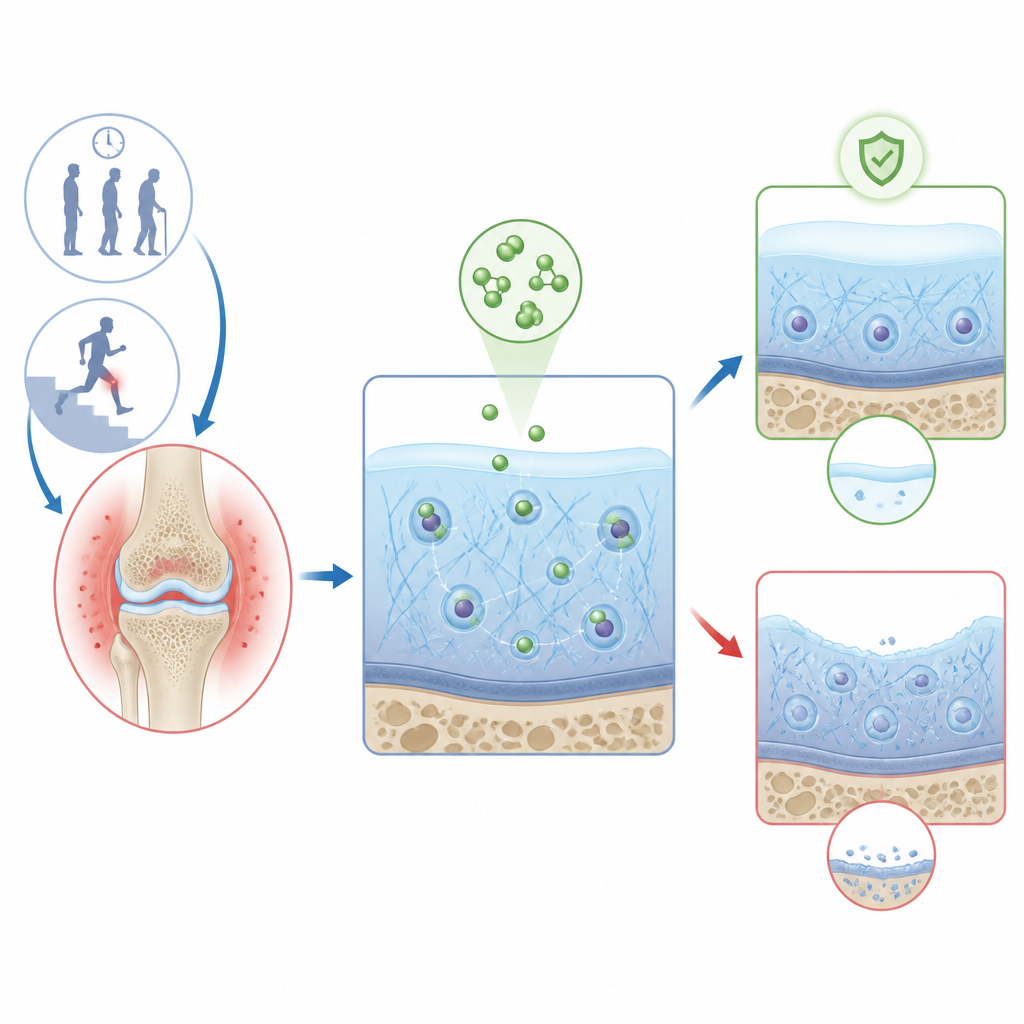
Stiff, painful knees and hips are a growing problem as people live longer and stay active later in life. Osteoarthritis is the most common cause of this joint pain, yet current treatments mainly ease symptoms without stopping the disease from slowly eating away at the smooth cartilage that lets bones glide. This study uncovers a natural protective switch inside cartilage cells that helps keep that damage in check and explores how boosting this switch might one day slow or soften osteoarthritis.
A hidden guardian inside cartilage cells
Cartilage is packed with a tough but springy mesh of proteins that cushion our joints. Its upkeep is handled by chondrocytes, the only cells living inside this tissue. In healthy joints these cells balance building and breakdown. In osteoarthritis the balance tilts toward destruction as chondrocytes pump out enzymes that chew up the cartilage mesh. The researchers focused on a little-known protein called small heterodimer partner, or NR0B2, which acts as a kind of brake on gene activity in other tissues. They discovered that NR0B2 levels were much lower in the damaged cartilage of people with severe knee osteoarthritis, and in mice with an injury-based form of the disease, hinting that loss of this brake could make joints more vulnerable.
What happens when the guardian is removed
To test this idea, the team bred mice that completely lacked NR0B2 or lacked it only in their cartilage cells. They then surgically destabilized the knee, a standard method for triggering a slow, osteoarthritis-like process. Compared with normal mice, animals missing NR0B2 developed stronger signs of pain, more severe thinning and cracking of cartilage, thickening of the underlying bone, and larger bony outgrowths at the joint edge. Under the microscope, their cartilage contained fewer living chondrocytes and many more cells stained for two powerful cartilage-cutting enzymes, MMP-3 and MMP-13. This showed that NR0B2 is not needed to build joints in the first place but becomes crucial when they are challenged by injury and inflammation.
Turning the guardian back on
The scientists then asked whether extra NR0B2 could flip the damage balance back toward protection. They used two gene-delivery tools, adenovirus and adeno-associated virus, to raise NR0B2 levels directly in mouse knee joints. In both normal and NR0B2-deficient animals, this local boost lessened pain behaviors and preserved a smoother cartilage surface after joint injury. Treated knees showed fewer cells making MMP-3 and MMP-13 and better preservation of structural proteins such as type II collagen and aggrecan. These results suggest that enhancing NR0B2 in cartilage does not simply mask symptoms but actually slows the structural deterioration that defines osteoarthritis in this model.
A closer look at the damage pathway
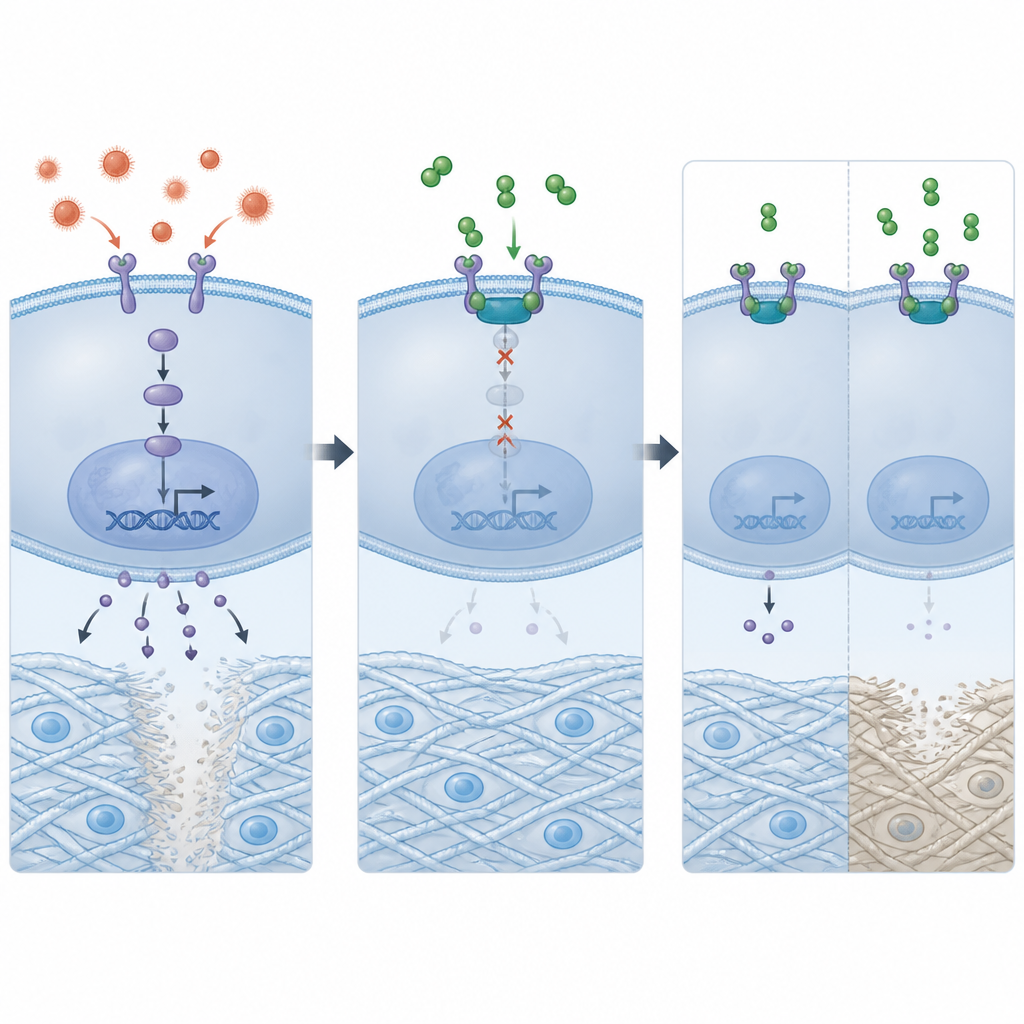
Inside chondrocytes, many damaging signals converge on a well-known relay system called NF-kB, which switches on inflammatory genes and the enzymes that dismantle cartilage. The study revealed that NR0B2 interferes with this relay at a key control point. In cell experiments, loss of NR0B2 led to stronger activation of NF-kB and greater movement of its main subunit into the nucleus when chondrocytes were exposed to inflammatory molecules. Blocking NF-kB with a chemical inhibitor erased the difference between normal and NR0B2-deficient cells, confirming that this pathway lies at the heart of NR0B2’s protective role. Further biochemical work showed that NR0B2 physically binds to the IKK complex, the molecular “on switch” for NF-kB, and selectively dampens the activity of its IKKβ subunit, reducing the chain reaction that ends in cartilage breakdown.
What this could mean for aching joints
To a lay reader, the takeaway is that cartilage cells carry a built-in anti-damage switch, NR0B2, which helps them resist inflammatory signals that would otherwise drive them to digest their own surroundings. When this switch is lost or turned down, joints are more easily damaged. When it is turned back up in mice, joints tolerate injury better and hurt less. While much work remains before such an approach could be tried in people, this study points to NR0B2 and its control over the NF-kB pathway as a promising route toward treatments that do more than just numb osteoarthritis pain and instead help protect the joint itself.
Citation: Kang, EJ., Noh, JR., Kim, JH. et al. Small heterodimer partner protects against osteoarthritis by inhibiting IKKβ/NF-κB-mediated matrix-degrading enzymes in chondrocytes. Nat Commun 17, 4270 (2026). https://doi.org/10.1038/s41467-026-69864-5
Keywords: osteoarthritis, cartilage, NF-kB signaling, gene therapy, chondrocytes