Clear Sky Science · en
Target-stabilized base editors enable robust high-fidelity RNA editing
Editing Messages, Not the Blueprint
Most of today’s gene-editing buzz focuses on rewriting DNA, the body’s master blueprint. But what if we could safely correct disease-causing errors one step downstream, in RNA—the temporary "messages" that cells actually read to make proteins? This paper introduces a new RNA editing system called RECODE that aims to do just that: fix genetic typos with high precision while sharply cutting down on unwanted, off-target changes that could cause side effects.
Why Fixing RNA Can Be Safer
Every cell constantly copies information from DNA into RNA, which in turn guides protein production. Because RNA is short-lived, changes to it are naturally temporary and adjustable—features that make RNA editing attractive for treating diseases where you might want a reversible or tunable effect. One powerful class of tools uses enzymes that convert a single RNA letter, adenosine, into a different letter that the cell reads as guanosine. This can correct many disease-linked mutations without touching the underlying DNA. The catch is that when these enzymes are simply poured into cells, they tend to wander and alter many RNAs they were never meant to touch.
Teaching Enzymes to Self-Destruct Off Target
To solve this, the researchers designed a molecular “kill switch” that makes the editing enzyme unstable unless it is in exactly the right place. They built a tiny protein tag, called UDeg3a, that marks any free enzyme for rapid destruction by the cell’s waste-disposal machinery. Then they paired this tag with a short designer RNA structure, nicknamed Pepper, that can shelter and stabilize the tagged enzyme—but only when the enzyme is bound to a specific guide RNA. That guide RNA in turn is programmed to pair with a chosen target RNA sequence. The result is RECODE version 1: an editor that is degraded almost everywhere in the cell, but becomes stable and active only when anchored to its intended RNA target. 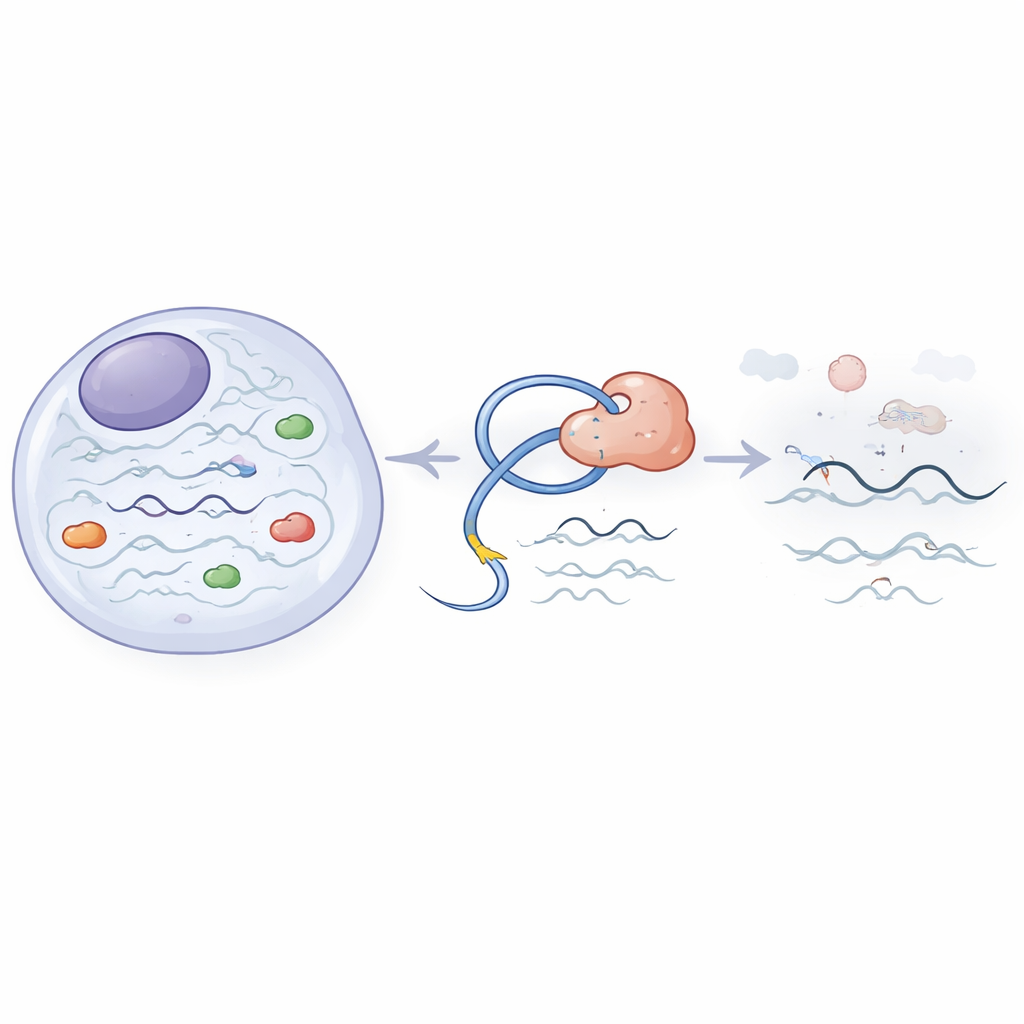
Smart Guides That Wake Up Only on Target
RECODE version 2 adds another safeguard directly into the guide RNA itself. Borrowing ideas from molecular beacons used in imaging, the team folded Pepper into a “locked” hairpin stem that keeps it inactive. This lock is built from a sequence that base-pairs with part of the guide. When the guide encounters its matching RNA inside the cell, it preferentially pairs with that RNA, opening up the hairpin and switching Pepper into an active shape. Only then does it grab and stabilize the tagged enzyme at that spot. By tuning how strong the hairpin is, the authors showed they could dial in how much enzyme accumulates and how much editing occurs, favoring precise hits while minimizing unwanted bystander changes nearby and across the transcriptome.
Making the Editor Smaller, Stronger, and Cleaner
The team did not stop at control; they also boosted raw editing power. Using protein-structure predictions from AlphaFold and evolutionary comparisons across species, they focused on a flexible loop in the human ADAR1 enzyme that touches the RNA duplex. Swapping this loop for consensus sequences from cold-blooded animals, and then fine-tuning key amino acids, yielded a hyperactive variant that edits stubborn sites more efficiently. Fusing this improved enzyme to UDeg3a through an optimized linker created a compact editor small enough to fit into standard viral delivery vehicles, and predictions suggest it may be less likely to trigger immune reactions than bulkier CRISPR-based systems. When benchmarked against leading RNA-editing platforms, RECODE achieved high on-target activity with fewer off-target and bystander edits.
From Neurons to Blood Lipids: First Therapeutic Tests
To show what RECODE could do in real disease settings, the authors turned to two medically important targets. In amyotrophic lateral sclerosis (ALS), some mutations in the FUS gene truncate a nuclear “address tag,” causing the FUS protein to pile up in nerve cell axons where it can be toxic. Using RECODEv2, the team converted a premature stop signal in FUS RNA back into a working codon in cells and in mouse brains, largely restoring the protein’s proper nuclear localization and reducing its buildup in axons. In a separate experiment, they used RECODEv1 to introduce a naturally protective variant into Angptl3, a liver gene that regulates blood lipids. Editing this site in mice lowered circulating Angptl3 protein and led to meaningful drops in triglycerides and cholesterol, without obvious liver damage or weight changes. 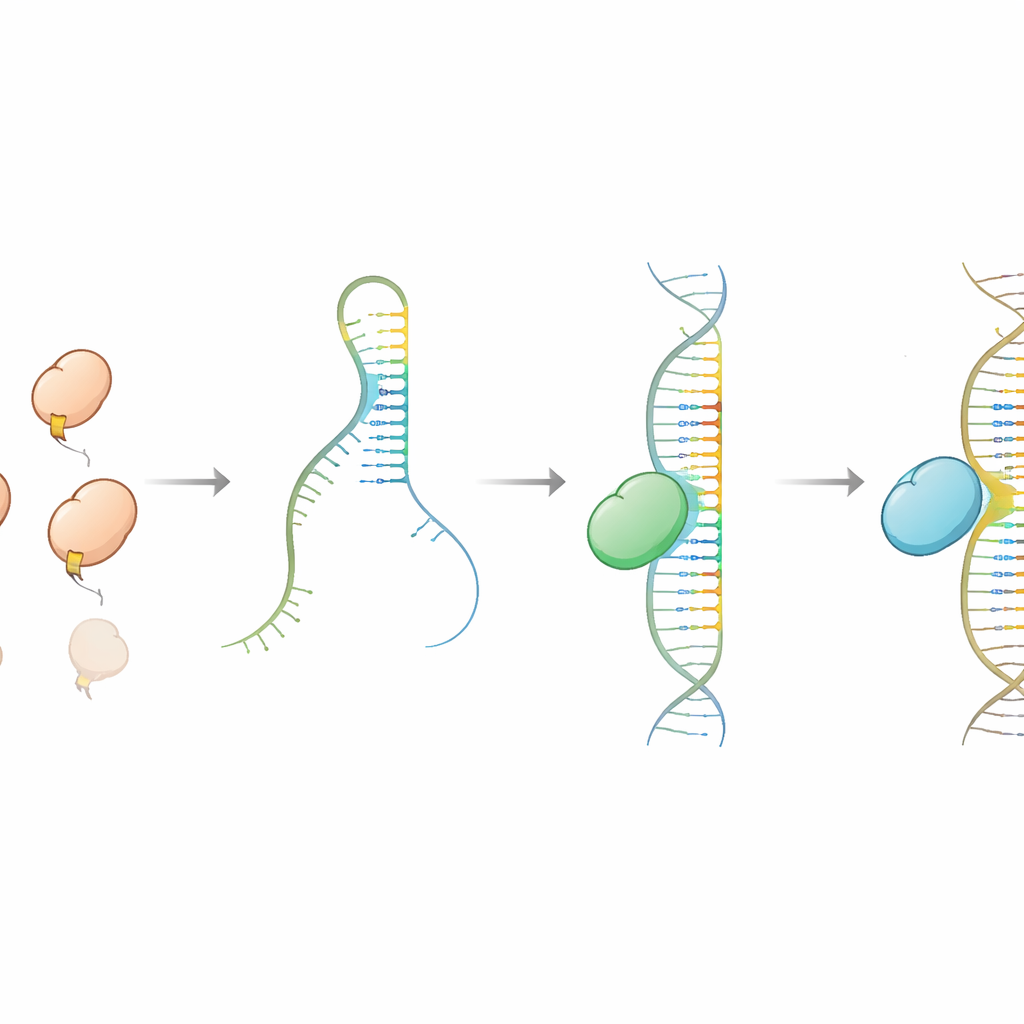
What This Means for Future Treatments
Taken together, the work outlines a general strategy: tie the stability—and therefore the activity—of powerful RNA-modifying enzymes tightly to their guide RNAs and, through them, to the intended RNA targets. Free-roaming enzymes are quickly destroyed; only those sitting at the right address are spared long enough to act. By layering this control with smarter guide designs and better-tuned enzyme variants, RECODE delivers strong editing where it is wanted and sharply limits it elsewhere. For patients, that could eventually translate into RNA-based therapies that are potent yet reversible, precise enough to minimize side effects, and compact enough to deliver to many tissues, bringing RNA “message repair” a step closer to the clinic.
Citation: Liu, T., Lin, Y., Liu, Q. et al. Target-stabilized base editors enable robust high-fidelity RNA editing. Nat Commun 17, 3176 (2026). https://doi.org/10.1038/s41467-026-69835-w
Keywords: RNA editing, ADAR enzymes, gene therapy, ALS, lipid metabolism